LCMS
More information
WebinarsAbout usContact usTerms of use
LabRulez s.r.o. All rights reserved. Content available under a CC BY-SA 4.0 Attribution-ShareAlike
Author
Organomation
Organomation
Organomation, founded in 1959, designs and manufactures high-quality nitrogen evaporators and extraction systems. Known for innovation and durability, their lab instruments are used globally for efficient sample preparation with strong customer support.
Tags
Interview
Video
Scientists
Science and research
LinkedIn Logo

PFAS Research Challenges: From Sampling to LC-MS Analysis

Fr, 21.11.2025
| Original article from: Concentrating on Chromatography / David Oliva
Discover how USC researcher Bianca Costa tackles PFAS contamination through advanced LC-MS methods, innovative sampling, and emerging biotransformation strategies in the engineered water cycle.
Video placeholder
  • Photo: Concentrating on Chromatography: PFAS Research Challenges: From Sampling to LC-MS Analysis
  • Video: Concentrating on Chromatography: PFAS Research Challenges: From Sampling to LC-MS Analysis

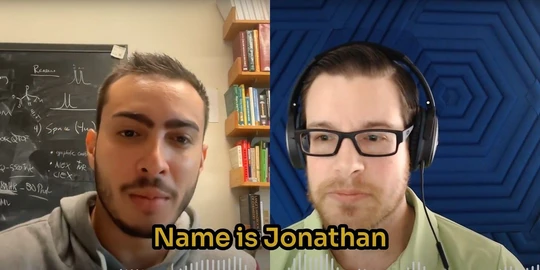
Join Organomation's General Manager David Oliva as he interviews Bianca Costa, a PhD researcher from the University of Southern California, about her groundbreaking work on PFAS (per- and polyfluoroalkyl substances). In this in-depth discussion, Bianca shares her experiences and insights on:

  • The complexities of PFAS sampling and analysis in various environmental matrices
  • Challenges in method development for PFAS extraction and detection
  • The use of advanced analytical techniques like LC-MS for PFAS research
  • Emerging biotechnologies for PFAS remediation and the potential for microbial transformation
  • Community engagement efforts to assess PFAS exposure in Southern California

Discover the latest advancements in PFAS research and the interdisciplinary approach needed to tackle this widespread environmental challenge. Whether you're a researcher, environmental professional, or simply interested in cutting-edge science, this interview offers valuable insights into the world of PFAS and environmental chemistry.

Video Transcription

PFAS in the engineered water cycle

Research examined:

  1. Where PFAS currently exist in the engineered water cycle, especially in drinking water systems.
    We conducted a community engagement study to evaluate PFAS levels directly at the point of distribution in Southern California communities that rely on groundwater.
  2. How we can remediate PFAS.
    I love biology, and many water reclamation facilities rely on biological processes. So a major component of my research investigated biotechnologies and biotransformation pathways for degrading PFAS—something many people think is impossible.
  3. Understanding PFAS behavior in treatment plants.
    We studied how PFAS distribute throughout the facility and how we can mitigate their presence. This is extremely difficult because there are thousands of PFAS compounds, and measuring, extracting, and categorizing them across different matrices is complex.

Chromatography and sample preparation are essential tools that help expand our understanding of PFAS distribution and evaluate new treatment methods.

EPA Method 1633 and Sample Preparation Challenges

  • David: Some of your research is derived from EPA Method 1633, correct?
  • Bianca: Yes. EPA Method 1633 finally came out after years in draft form. It's designed to guide PFAS extraction from wastewater, solids, and tissues, complementing Methods 533 and 537 for drinking water.

However, every matrix behaves differently—soil, sludge, wastewater, tissues—and PFAS extraction is always a challenge. Method 1633 provides a starting point, but real-world accuracy requires significant method development.

For wastewater:

  • We begin with methanolic extraction.
  • Samples undergo sonication and centrifugation.
  • The methanol extract is concentrated, reconstituted in aqueous solution, and passed through weak anion exchange SPE (standard for PFAS).
  • SPE is followed by nitrogen blowdown to concentrate samples to the parts-per-trillion (ppt) range.

Wastewater matrices can contain high suspended solids and inhibitors, requiring adjustments such as dewatering or modified extraction volumes.

Optimizing sample prep can take years, and PFAS analysis requires managing a long sequence of manual steps—SPE, nitrogen blowdown, reconstitution—each with opportunities for error.

Freeze Drying vs. Nitrogen Blowdown

  • David: You mentioned freeze drying earlier. How do you decide between freeze drying and nitrogen blowdown?
  • Bianca: Freeze drying is suitable for large volumes and removes only water, preserving organic compounds. It’s energy-intensive but allows processing of up to liters of sample.

Nitrogen blowdown is for organic solvents, smaller volumes, and evaporates methanol or other organics efficiently. Blowdown is cheaper, faster, and ideal for methanol-based PFAS extracts.

For PFAS, we often freeze-dry wastewater, extract with methanol, then use nitrogen blowdown to concentrate.

Community Sampling Efforts and Challenges

  • Bianca: One of our biggest projects involved sampling tap water and household dust from 75 homes in Southeast Los Angeles to assess PFAS exposure.

Challenges included:

  • Designing contamination-free sampling kits
  • Coordinating with households
  • Staying within EPA sample holding times (especially for water)
  • Training multiple samplers
  • Managing hundreds of samples
  • Creating extraction protocols for dust—an extremely complex and variable matrix

Dust contains everything from cleaning residues to pet hair, and extracting trace-level PFAS from dust requires intensive optimization beyond Method 1633.

Why LC-MS/MS (and HRMS) Is Essential for PFAS Analysis

Bianca: PFAS cannot be measured reliably with UV-Vis, ion chromatography, or most other environmental chemistry tools. PFAS often:

  • Do not absorb UV light,
  • Are non-polar,
  • Are present at extremely low concentrations (ppt).

This leaves essentially one option:

LC-MS/MS or High-Resolution LC-MS (HRMS)

PFAS analysis depends on:

  1. LC separation based on polarity, using C18 columns
  2. Soft ionization
  3. Mass spectrometric detection based on mass-to-charge ratio
  4. High-resolution accuracy (±5 ppm)

It’s the only technique capable of accurately identifying and quantifying dozens of PFAS simultaneously.

But LC-MS instruments are expensive, delicate, and require constant maintenance—“Elsa,” our mass spec, has a personality.

Non-targeted analysis (NTA) adds further complexity, requiring big-data algorithms, curated workflows, and tools like FluoroMatch.

Bio-Inspired Solutions for PFAS?

  • David: What about biological solutions?
  • Bianca: PFAS were invented in the 1940s and contain the strongest bond in organic chemistry: the carbon–fluorine bond. Microbes have no evolutionary precedent for degrading these molecules.

But in 2019, a groundbreaking study showed that Acidimicrobium A6 could defluorinate PFOS and PFOA under anaerobic, iron-reducing conditions.

This inspires hope:

  • Microbes might be capable of short-chain breakdown or partial defluorination.
  • Biology could complement chemical/physical treatment.
  • Synthetic biology or enzyme engineering may eventually create new PFAS-degrading pathways.

We’re still in the very early stages, but initial findings are promising.

Upcoming Work for 2025

Bianca:
We expect to publish new results this year on:

  • PFAS biotransformation pathways
  • Anaerobic biological systems and their ability to defluorinate
  • Community PFAS exposure in Los Angeles
  • New method-development strategies for dust and wastewater

PFAS is a global, long-term challenge. Solving it will require chemistry, engineering, biology, computation, and AI working together.

Closing

Bianca: If you’re working on PFAS—extraction, LC-MS, method development—you’re not alone. Everyone in the PFAS world understands the struggle. We’re moving slowly but surely toward solutions, and hopefully toward debunking the idea that PFAS really are “forever.”

This text has been automatically transcribed from a video presentation using AI technology. It may contain inaccuracies and is not guaranteed to be 100% correct.

Concentrating on Chromatography Podcast

Dive into the frontiers of chromatography, mass spectrometry, and sample preparation with host David Oliva. Each episode features candid conversations with leading researchers, industry innovators, and passionate scientists who are shaping the future of analytical chemistry. From decoding PFAS detection challenges to exploring the latest in AI-assisted liquid chromatography, this show uncovers practical workflows, sustainability breakthroughs, and the real-world impact of separation science. Whether you’re a chromatographer, lab professional, or researcher you'll discover inspiring content!

You can find Concentrating on Chromatography Podcast in podcast apps:

and on YouTube channel

Organomation
LinkedIn Logo
 

Related content

Overcoming Strong Solvent Effects in the Analysis of Vepdegestrant

Applications
| 2026 | Agilent Technologies
Instrumentation
HPLC
Manufacturer
Agilent Technologies
Industries
Pharma & Biopharma

Identification of Double Bond Positions and Relative Acyl Chain Positions in Egg Yolk Phosphatidylcholines Using OAD-TOF System

Applications
| 2026 | Shimadzu
Instrumentation
LC/MS, LC/MS/MS, LC/TOF, LC/HRMS
Manufacturer
Shimadzu
Industries
Food & Agriculture

High Molecular-Weight Polysaccharide Characterization by SEC-MALS Using GTxResolve™ 1000 and 2000 Å SEC Columns

Applications
| 2026 | Waters
Instrumentation
GPC/SEC, Consumables, LC columns
Manufacturer
Waters
Industries
Pharma & Biopharma, Food & Agriculture

Development and Optimization for a Comprehensive LC/MS/MS Method for the Detection of 74 PFAS Compounds

Applications
| 2026 | Agilent Technologies
Instrumentation
LC/MS, LC/MS/MS, LC/QQQ
Manufacturer
Agilent Technologies
Industries
Food & Agriculture

PFAS in Biota: Risk Context & Robust Analytical Solutions

Others
| 2026 | ALS Europe
Instrumentation
Laboratory analysis, LC/MS, LC/MS/MS
Manufacturer
Industries
Environmental
 

Related articles

Unlocking Hemoglobin Variant Detection: LC-HR-MS Breakthrough with Ainslie Chen
Interview | Science and research

Unlocking Hemoglobin Variant Detection: LC-HR-MS Breakthrough with Ainslie Chen

Interview with Ainslie Chen on using LC-HRMS and C4 reversed-phase chromatography for precise hemoglobin variant detection and future clinical proteomics applications.
Organomation
tag
share
more
Webinars LabRulezLCMS Week 08/2026
Article | Webinars

Webinars LabRulezLCMS Week 08/2026

11 webinars: AAV genome analysis, amino acid panel, capillary LC, data integrity, InfinityLab Assist, LC-MS proteomics, Orbitrap Astral, PFAS testing, peptide mapping, USP <621>
LabRulez
tag
share
more
Imaging of Protein Assemblies up to 231 kDa in Tissues with Nano-DESI Mass Spectrometry
Scientific article | Science and research

Imaging of Protein Assemblies up to 231 kDa in Tissues with Nano-DESI Mass Spectrometry

This study extends nano-DESI mass spectrometry imaging to intact protein assemblies up to 231 kDa, enabling direct identification of large complexes in tissue.
LabRulez
tag
share
more
Unlocking Phytoplankton Metallomes with Comparative Analysis of Metal Quotas, Quantitative Proteomics, and Inferred Metalloproteomes
Scientific article | Science and research

Unlocking Phytoplankton Metallomes with Comparative Analysis of Metal Quotas, Quantitative Proteomics, and Inferred Metalloproteomes

This study integrates metal quotas, quantitative proteomics, and inferred metalloproteomes to reveal trace metal requirements and adaptation strategies in phytoplankton.
LabRulez
tag
share
more
 

Related content

Overcoming Strong Solvent Effects in the Analysis of Vepdegestrant

Applications
| 2026 | Agilent Technologies
Instrumentation
HPLC
Manufacturer
Agilent Technologies
Industries
Pharma & Biopharma

Identification of Double Bond Positions and Relative Acyl Chain Positions in Egg Yolk Phosphatidylcholines Using OAD-TOF System

Applications
| 2026 | Shimadzu
Instrumentation
LC/MS, LC/MS/MS, LC/TOF, LC/HRMS
Manufacturer
Shimadzu
Industries
Food & Agriculture

High Molecular-Weight Polysaccharide Characterization by SEC-MALS Using GTxResolve™ 1000 and 2000 Å SEC Columns

Applications
| 2026 | Waters
Instrumentation
GPC/SEC, Consumables, LC columns
Manufacturer
Waters
Industries
Pharma & Biopharma, Food & Agriculture

Development and Optimization for a Comprehensive LC/MS/MS Method for the Detection of 74 PFAS Compounds

Applications
| 2026 | Agilent Technologies
Instrumentation
LC/MS, LC/MS/MS, LC/QQQ
Manufacturer
Agilent Technologies
Industries
Food & Agriculture

PFAS in Biota: Risk Context & Robust Analytical Solutions

Others
| 2026 | ALS Europe
Instrumentation
Laboratory analysis, LC/MS, LC/MS/MS
Manufacturer
Industries
Environmental
 

Related articles

Unlocking Hemoglobin Variant Detection: LC-HR-MS Breakthrough with Ainslie Chen
Interview | Science and research

Unlocking Hemoglobin Variant Detection: LC-HR-MS Breakthrough with Ainslie Chen

Interview with Ainslie Chen on using LC-HRMS and C4 reversed-phase chromatography for precise hemoglobin variant detection and future clinical proteomics applications.
Organomation
tag
share
more
Webinars LabRulezLCMS Week 08/2026
Article | Webinars

Webinars LabRulezLCMS Week 08/2026

11 webinars: AAV genome analysis, amino acid panel, capillary LC, data integrity, InfinityLab Assist, LC-MS proteomics, Orbitrap Astral, PFAS testing, peptide mapping, USP <621>
LabRulez
tag
share
more
Imaging of Protein Assemblies up to 231 kDa in Tissues with Nano-DESI Mass Spectrometry
Scientific article | Science and research

Imaging of Protein Assemblies up to 231 kDa in Tissues with Nano-DESI Mass Spectrometry

This study extends nano-DESI mass spectrometry imaging to intact protein assemblies up to 231 kDa, enabling direct identification of large complexes in tissue.
LabRulez
tag
share
more
Unlocking Phytoplankton Metallomes with Comparative Analysis of Metal Quotas, Quantitative Proteomics, and Inferred Metalloproteomes
Scientific article | Science and research

Unlocking Phytoplankton Metallomes with Comparative Analysis of Metal Quotas, Quantitative Proteomics, and Inferred Metalloproteomes

This study integrates metal quotas, quantitative proteomics, and inferred metalloproteomes to reveal trace metal requirements and adaptation strategies in phytoplankton.
LabRulez
tag
share
more
 

Related content

Overcoming Strong Solvent Effects in the Analysis of Vepdegestrant

Applications
| 2026 | Agilent Technologies
Instrumentation
HPLC
Manufacturer
Agilent Technologies
Industries
Pharma & Biopharma

Identification of Double Bond Positions and Relative Acyl Chain Positions in Egg Yolk Phosphatidylcholines Using OAD-TOF System

Applications
| 2026 | Shimadzu
Instrumentation
LC/MS, LC/MS/MS, LC/TOF, LC/HRMS
Manufacturer
Shimadzu
Industries
Food & Agriculture

High Molecular-Weight Polysaccharide Characterization by SEC-MALS Using GTxResolve™ 1000 and 2000 Å SEC Columns

Applications
| 2026 | Waters
Instrumentation
GPC/SEC, Consumables, LC columns
Manufacturer
Waters
Industries
Pharma & Biopharma, Food & Agriculture

Development and Optimization for a Comprehensive LC/MS/MS Method for the Detection of 74 PFAS Compounds

Applications
| 2026 | Agilent Technologies
Instrumentation
LC/MS, LC/MS/MS, LC/QQQ
Manufacturer
Agilent Technologies
Industries
Food & Agriculture

PFAS in Biota: Risk Context & Robust Analytical Solutions

Others
| 2026 | ALS Europe
Instrumentation
Laboratory analysis, LC/MS, LC/MS/MS
Manufacturer
Industries
Environmental
 

Related articles

Unlocking Hemoglobin Variant Detection: LC-HR-MS Breakthrough with Ainslie Chen
Interview | Science and research

Unlocking Hemoglobin Variant Detection: LC-HR-MS Breakthrough with Ainslie Chen

Interview with Ainslie Chen on using LC-HRMS and C4 reversed-phase chromatography for precise hemoglobin variant detection and future clinical proteomics applications.
Organomation
tag
share
more
Webinars LabRulezLCMS Week 08/2026
Article | Webinars

Webinars LabRulezLCMS Week 08/2026

11 webinars: AAV genome analysis, amino acid panel, capillary LC, data integrity, InfinityLab Assist, LC-MS proteomics, Orbitrap Astral, PFAS testing, peptide mapping, USP <621>
LabRulez
tag
share
more
Imaging of Protein Assemblies up to 231 kDa in Tissues with Nano-DESI Mass Spectrometry
Scientific article | Science and research

Imaging of Protein Assemblies up to 231 kDa in Tissues with Nano-DESI Mass Spectrometry

This study extends nano-DESI mass spectrometry imaging to intact protein assemblies up to 231 kDa, enabling direct identification of large complexes in tissue.
LabRulez
tag
share
more
Unlocking Phytoplankton Metallomes with Comparative Analysis of Metal Quotas, Quantitative Proteomics, and Inferred Metalloproteomes
Scientific article | Science and research

Unlocking Phytoplankton Metallomes with Comparative Analysis of Metal Quotas, Quantitative Proteomics, and Inferred Metalloproteomes

This study integrates metal quotas, quantitative proteomics, and inferred metalloproteomes to reveal trace metal requirements and adaptation strategies in phytoplankton.
LabRulez
tag
share
more
 

Related content

Overcoming Strong Solvent Effects in the Analysis of Vepdegestrant

Applications
| 2026 | Agilent Technologies
Instrumentation
HPLC
Manufacturer
Agilent Technologies
Industries
Pharma & Biopharma

Identification of Double Bond Positions and Relative Acyl Chain Positions in Egg Yolk Phosphatidylcholines Using OAD-TOF System

Applications
| 2026 | Shimadzu
Instrumentation
LC/MS, LC/MS/MS, LC/TOF, LC/HRMS
Manufacturer
Shimadzu
Industries
Food & Agriculture

High Molecular-Weight Polysaccharide Characterization by SEC-MALS Using GTxResolve™ 1000 and 2000 Å SEC Columns

Applications
| 2026 | Waters
Instrumentation
GPC/SEC, Consumables, LC columns
Manufacturer
Waters
Industries
Pharma & Biopharma, Food & Agriculture

Development and Optimization for a Comprehensive LC/MS/MS Method for the Detection of 74 PFAS Compounds

Applications
| 2026 | Agilent Technologies
Instrumentation
LC/MS, LC/MS/MS, LC/QQQ
Manufacturer
Agilent Technologies
Industries
Food & Agriculture

PFAS in Biota: Risk Context & Robust Analytical Solutions

Others
| 2026 | ALS Europe
Instrumentation
Laboratory analysis, LC/MS, LC/MS/MS
Manufacturer
Industries
Environmental
 

Related articles

Unlocking Hemoglobin Variant Detection: LC-HR-MS Breakthrough with Ainslie Chen
Interview | Science and research

Unlocking Hemoglobin Variant Detection: LC-HR-MS Breakthrough with Ainslie Chen

Interview with Ainslie Chen on using LC-HRMS and C4 reversed-phase chromatography for precise hemoglobin variant detection and future clinical proteomics applications.
Organomation
tag
share
more
Webinars LabRulezLCMS Week 08/2026
Article | Webinars

Webinars LabRulezLCMS Week 08/2026

11 webinars: AAV genome analysis, amino acid panel, capillary LC, data integrity, InfinityLab Assist, LC-MS proteomics, Orbitrap Astral, PFAS testing, peptide mapping, USP <621>
LabRulez
tag
share
more
Imaging of Protein Assemblies up to 231 kDa in Tissues with Nano-DESI Mass Spectrometry
Scientific article | Science and research

Imaging of Protein Assemblies up to 231 kDa in Tissues with Nano-DESI Mass Spectrometry

This study extends nano-DESI mass spectrometry imaging to intact protein assemblies up to 231 kDa, enabling direct identification of large complexes in tissue.
LabRulez
tag
share
more
Unlocking Phytoplankton Metallomes with Comparative Analysis of Metal Quotas, Quantitative Proteomics, and Inferred Metalloproteomes
Scientific article | Science and research

Unlocking Phytoplankton Metallomes with Comparative Analysis of Metal Quotas, Quantitative Proteomics, and Inferred Metalloproteomes

This study integrates metal quotas, quantitative proteomics, and inferred metalloproteomes to reveal trace metal requirements and adaptation strategies in phytoplankton.
LabRulez
tag
share
more
Other projects
GCMS
ICPMS
Follow us
More information
WebinarsAbout usContact usTerms of use
LabRulez s.r.o. All rights reserved. Content available under a CC BY-SA 4.0 Attribution-ShareAlike