Mapping Cancer's Blueprint: How Spatial Proteomics is Revolutionizing Detection
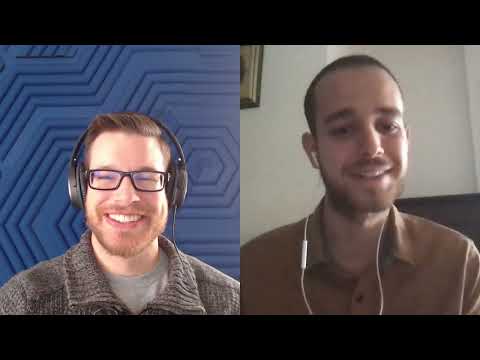
- Photo: Concentrating on Chromatography: Mapping Cancer's Blueprint: How Spatial Proteomics is Revolutionizing Detection
- Video: Concentrating on Chromatography: Mapping Cancer's Blueprint: How Spatial Proteomics is Revolutionizing Detection
🎤Andreas Metousis
In this episode of Concentrating on Chromatography, we sit down with Andreas Metousis, a PhD researcher at the Max Planck Institute of Biochemistry, to explore cutting-edge spatial proteomics and its role in understanding ovarian cancer development.
Andreas discusses how Deep Visual Proteomics (DVP)—a method combining artificial intelligence, laser micro-dissection, and advanced mass spectrometry—is revolutionizing cancer research by providing unprecedented insight into the earliest molecular events in disease progression.
Key Topics Covered:
- How transcriptomics and proteomics differ and why both matter for cancer research
- Deep Visual Proteomics (DVP): AI-driven cell identification and high-resolution protein analysis
- Why high-throughput automation (384-well plates, EVOSEP, Thermo Fisher Orbital Astral Mass Spectrometer) is essential for modern proteomics
- The IDO1 paradox: why an "immune evasion" protein actually protects cancer cells—and why that matters for failed clinical trials
- Translating lab discoveries into real-world therapeutics: the drug development pipeline
- Applying spatial proteomics beyond ovarian cancer (lung cancer, skin cancer, osteoarthritis, muscle biology)
- Advice for students entering cancer research and academia
Why This Matters:
Andreas's work demonstrates how multi-modal omics integration and spatial resolution can identify novel drug targets and explain why some promising therapies fail in clinical practice. This episode bridges fundamental science with practical lab methodology and therapeutic impact.
Perfect for: Analytical chemistry professionals, cancer researchers, graduate students, and anyone interested in how cutting-edge mass spectrometry and AI are transforming biomedical research.
Video Transcription
In this interview, Andreas discusses his research focused on uncovering early molecular events in ovarian cancer. By studying tissue samples ranging from early precursor lesions to advanced metastatic disease, his team applies spatial proteomics and transcriptomics to track how proteins and gene expression change along the disease progression. These approaches help identify potential diagnostic biomarkers and therapeutic targets that could ultimately improve patient outcomes.
A key methodological innovation highlighted is deep visual proteomics (DVP), which integrates artificial intelligence with mass spectrometry-based workflows. Using deep learning, researchers can identify and classify specific cell populations within tissue sections, isolate them via laser microdissection, and analyze their protein composition in high detail. This targeted approach overcomes limitations of traditional bulk tissue analysis, where signals from different cell types can mask biologically relevant changes.
The interview also explores the importance of high-throughput laboratory infrastructure. Automated liquid handling systems, robust LC workflows, and high-resolution mass spectrometry platforms enable the processing of hundreds of low-volume samples daily while maintaining sensitivity and reproducibility. Such technological integration allows researchers to study complex biological processes at unprecedented depth and scale.
A major scientific insight from the work concerns the enzyme IDO1. Although previously considered a target for cancer inhibition, Andreas’ findings suggest that suppressing IDO1 may paradoxically protect cancer cells from death, helping explain failures in clinical trials of IDO1 inhibitors. While promising new therapeutic targets have been identified, he emphasizes that translating discoveries into clinical treatments requires extensive validation and long-term development. The interview concludes with reflections on resilience in scientific research and the broader applicability of spatial proteomics methods across multiple diseases.
This text has been automatically transcribed from a video presentation using AI technology. It may contain inaccuracies and is not guaranteed to be 100% correct.
Concentrating on Chromatography Podcast
Dive into the frontiers of chromatography, mass spectrometry, and sample preparation with host David Oliva. Each episode features candid conversations with leading researchers, industry innovators, and passionate scientists who are shaping the future of analytical chemistry. From decoding PFAS detection challenges to exploring the latest in AI-assisted liquid chromatography, this show uncovers practical workflows, sustainability breakthroughs, and the real-world impact of separation science. Whether you’re a chromatographer, lab professional, or researcher you'll discover inspiring content!
You can find Concentrating on Chromatography Podcast in podcast apps:
and on YouTube channel