Drug Discovery Where the Market Doesn’t Go: Targeting Neglected & Opportunistic Pathogens
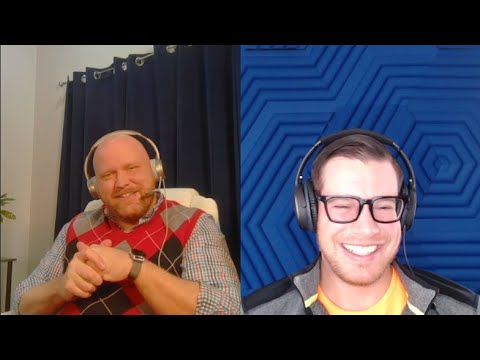
- Photo: Concentrating on Chromatography: Drug Discovery Where the Market Doesn’t Go: Targeting Neglected & Opportunistic Pathogens
- Video: Concentrating on Chromatography: Drug Discovery Where the Market Doesn’t Go: Targeting Neglected & Opportunistic Pathogens
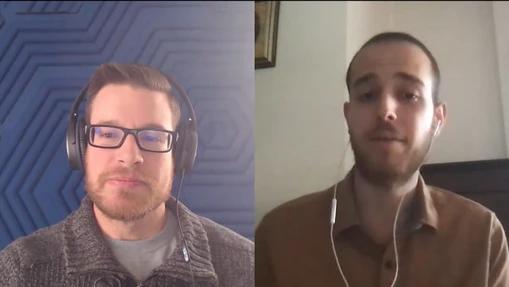
🎤Brad Haubrich (Touro University Nevada )
Neglected and opportunistic infectious diseases affect some of the world’s most vulnerable populations—but often receive the least attention from traditional drug discovery pipelines.
In this episode of Concentrating on Chromatography, host David Oliva sits down with Brad Haubrich to explore how early-stage drug discovery is being applied to fungal and parasitic pathogens, including those responsible for neglected tropical diseases and infections that disproportionately affect immunocompromised patients.
Brad shares how his lab approaches drug discovery when the pathogen is eukaryotic—and therefore biologically similar to humans—making selectivity one of the biggest challenges. The conversation covers:
- What defines neglected and opportunistic diseases—and why commercial incentives often fall short
- Target-based vs. phenotypic drug discovery and when each approach makes sense
- Using binding kinetics and residence time to improve selectivity and reduce off-target effects
- Where chromatography, metabolomics, and mass spectrometry still play a critical role—even when not front-and-center
- The growing (and realistic) role of AI in drug discovery, especially for underfunded disease areas
- Why World Neglected Tropical Diseases Day (January 30) matters for raising awareness and accelerating progress
This episode highlights how analytical chemistry, separation science, and biological insight intersect in the earliest stages of drug discovery—and why progress in this space depends as much on collaboration and curiosity as it does on technology.
Video Transcription
In this interview, Dr. Brad Haubrich discusses his research focus on neglected tropical diseases (NTDs) and opportunistic infections. His interest in this field originated during graduate and postdoctoral studies, particularly through work on African sleeping sickness. Neglected diseases are defined as conditions that predominantly affect populations in low- and middle-income countries, where both healthcare infrastructure and commercial incentives for drug development are limited. Similarly, opportunistic infections disproportionately impact immunocompromised individuals, including patients with cancer, transplant recipients, and those undergoing immunosuppressive therapy.
A key challenge in this area is the limited commercial interest in drug discovery, resulting in fewer therapeutic options despite significant unmet medical needs. The research emphasizes fungal and parasitic pathogens, which present distinct challenges compared to bacterial targets, particularly due to shared biological pathways between pathogens and human hosts.
Drug Discovery Strategies and Challenges
The discussion highlights two complementary approaches used in the lab: target-based and phenotypic drug discovery. Target-based strategies involve identifying and biochemically characterizing specific pathogen proteins, while phenotypic approaches assess compound activity directly in living cells. Each approach has advantages and limitations, particularly in identifying molecular targets and ensuring biological relevance.
A major scientific challenge is achieving selectivity. Because eukaryotic pathogens share many proteins with human cells, identifying compounds that selectively inhibit pathogen targets without affecting host systems is difficult. To address this, the lab incorporates binding kinetics as an early screening parameter. Instead of relying solely on traditional potency metrics, this approach evaluates how long a compound interacts with its target, enabling the identification of molecules with prolonged, selective binding (pseudo-irreversible inhibition), which may improve therapeutic specificity.
Role of Analytical Techniques and Chromatography
Although chromatography is not central to all workflows in the lab, it remains critical in several areas. It is widely used by collaborators for compound purification and plays an important role in emerging projects focused on pharmacognosy, where bioactive compounds are isolated from natural sources such as desert flora.
Chromatography, coupled with mass spectrometry, is also essential for metabolomics-based target identification. In phenotypic screening, where the molecular target is initially unknown, changes in metabolite profiles can provide insight into biochemical pathways affected by candidate compounds, supporting target deconvolution.
Impact, Training, and Future Directions
The success of research in neglected diseases is not solely measured by commercial outcomes but also by contributions to scientific knowledge and global health. Even incremental findings can support future therapeutic breakthroughs.
The interview also emphasizes the role of students, particularly in academic medical settings, where participation in early-stage drug discovery provides valuable insight into the full pipeline from molecular discovery to clinical application.
Looking ahead, artificial intelligence (AI) is identified as a key driver of innovation in drug discovery. AI tools can accelerate compound screening, predict bioactivity, and even suggest synthetic pathways. However, their effectiveness in neglected disease research is currently limited by the availability of large, high-quality datasets.
This text has been automatically transcribed from a video presentation using AI technology. It may contain inaccuracies and is not guaranteed to be 100% correct.
Concentrating on Chromatography Podcast
Dive into the frontiers of chromatography, mass spectrometry, and sample preparation with host David Oliva. Each episode features candid conversations with leading researchers, industry innovators, and passionate scientists who are shaping the future of analytical chemistry. From decoding PFAS detection challenges to exploring the latest in AI-assisted liquid chromatography, this show uncovers practical workflows, sustainability breakthroughs, and the real-world impact of separation science. Whether you’re a chromatographer, lab professional, or researcher you'll discover inspiring content!
You can find Concentrating on Chromatography Podcast in podcast apps:
and on YouTube channel