Author
KNAUER
KNAUER
Based in Berlin, KNAUER is a medium-sized, owner-managed company that has been serving the sciences since 1962. We develop and manufacture scientific instruments of superior quality for liquid chromatography, including: Analytical HPLC/UHPLC, Preparative HPLC, Fast protein liquid chromatography (FPLC), Multi-column chromatography/Simulated moving bed (SMB) chromatography. High pressure dosing, in-line detection systems, and osmometry are additional business areas.
Tags
Article
Academy
LinkedIn Logo

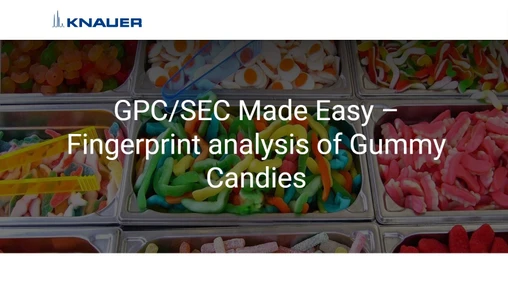
GPC/SEC Made Easy – Unmask Ghost Peaks
We, 8.4.2026
| Original article from: KNAUER / Julia Wesolowski
Ghost peaks in LC and GPC/SEC can distort chromatograms and complicate data interpretation. Learn what causes them, how to minimize their impact, and how to correctly identify them.
<p>KNAUER: GPC/SEC Made Easy – Unmask Ghost Peaks</p>

KNAUER: GPC/SEC Made Easy – Unmask Ghost Peaks

Even in chromatography, appearances can be misleading. If you have ever performed a Liquid Chromatography (LC) or Gel Permeation Chromatography/Size Exclusion Chromatography (GPC/SEC) analysis and noticed unexpected signals appearing in your chromatogram, you may have encountered so-called chromatographic “ghosts.” These unanticipated peaks can complicate data interpretation and challenge even experienced analysts. Fortunately, these ghost peaks are not supernatural phenomena. In this Halloween-themed overview, we explore their origin, discuss strategies to minimize their occurrence, and describe practical approaches to identify them.

What are ghost peaks?

When a chromatogram displays additional peaks that cannot be directly attributed to analytes of interest, these signals are commonly referred to as ghost peaks or system peaks [1]. They arise when the equilibrium between the mobile phase and stationary phase is temporarily disturbed [1]. Such disturbances often occur during sample injection, when the system experiences a transient compositional or physical imbalance [1][2].

Ghost peaks are particularly evident when using refractive index (RI) detection, where even injections of pure mobile phase can generate detectable signals (see Fig. 1). In GPC/SEC applications, these peaks frequently appear toward the end of the chromatogram, corresponding to the transition between size-based separation and interaction-driven effects [2]. Their appearance can closely resemble genuine analyte peaks and, in some cases, they may partially overlap with them, further complicating interpretation.
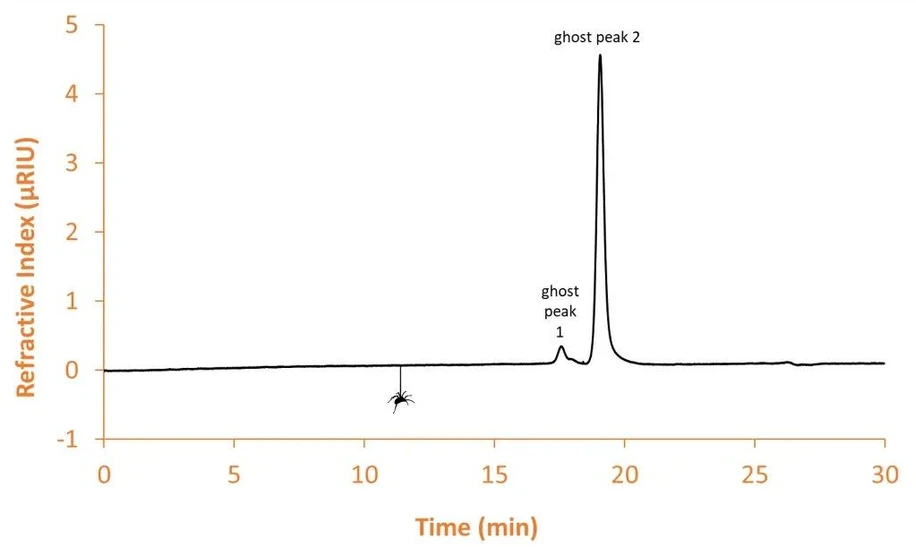
KNAUER: Fig. 1 Chromatogram of a 20 µl blank injection (= mobile phase) with RI detection. Graphic by KNAUER.KNAUER: Fig. 1 Chromatogram of a 20 µl blank injection (= mobile phase) with RI detection. Graphic by KNAUER.

How to minimize ghost peaks?

Ghost peaks may manifest as either positive or negative signals. While their retention time typically remains consistent, their intensity, shape, and area can vary depending on injection conditions, sample composition, and injection volume (see Fig. 2). Due to this variability, they are not suitable as reference markers, for example in GPC/SEC analyses.
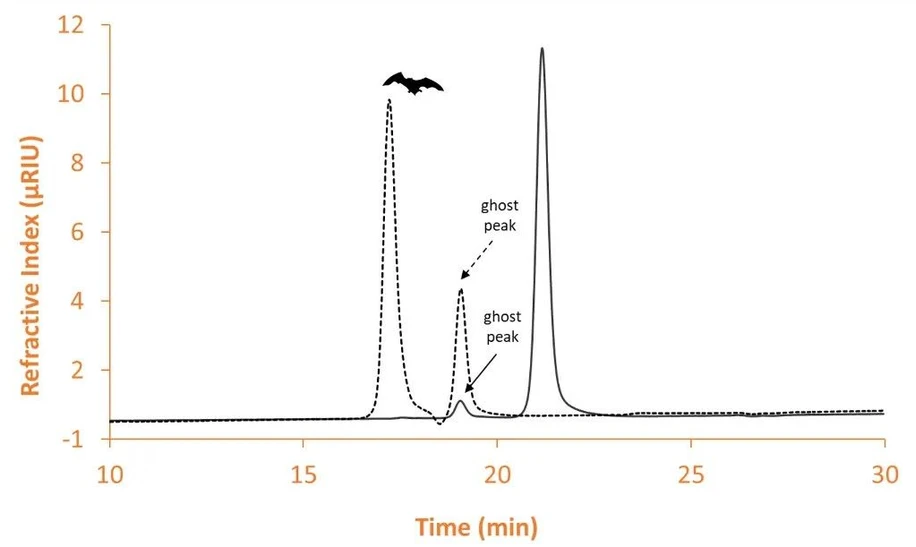
KNAUER: Fig. 2 Overlay chromatograms measured with RID and 20 µl injection volume. Dotted black: citric acid; solid black: ethylene glycol. Graphic by KNAUER.KNAUER: Fig. 2 Overlay chromatograms measured with RID and 20 µl injection volume. Dotted black: citric acid; solid black: ethylene glycol. Graphic by KNAUER.

To reduce their impact, several practical measures can be implemented:

  • Ensure that samples are dissolved in the same mobile phase used in the chromatographic system
  • Use smaller injection volumes to limit system disturbance
  • Allow sufficient equilibration time for the system before analysis

Despite these precautions, ghost peaks cannot be completely eliminated. Therefore, recognizing and correctly assigning them is essential for reliable data interpretation. Failure to do so may lead to misinterpretation of chromatographic results.

How to unmask ghost peaks?

A systematic approach can help identify the origin of ghost peaks. One effective strategy involves preparing each component of the mobile phase individually, spiking them into the mobile phase, and injecting them separately.

For example, in an aqueous SEC method using phosphate-buffered saline (PBS), individual injections of buffer components such as NaCl, KCl, KH₂PO₄, and Na₂HPO₄ can be compared with a blank injection (see Fig. 3). By overlaying these chromatograms, it becomes possible to assign specific ghost peaks to individual buffer constituents. This not only clarifies their origin but also provides an opportunity to optimize the method by adjusting buffer composition or concentration.
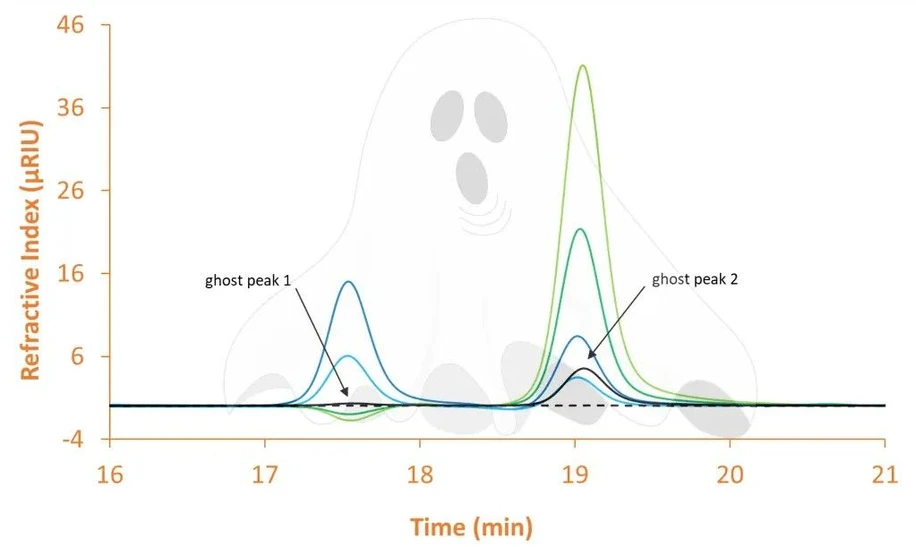
KNAUER: Fig. 3 Overlay chromatograms measured with RID and 20 µl injection volume. Black: blank (mobile phase = PBS); light green: sodium chloride; dark green: potassium chloride; light blue: potassium dihydrogen phosphate; dark blue: disodium hydrogen phosphate. Graphic by KNAUER.KNAUER: Fig. 3 Overlay chromatograms measured with RID and 20 µl injection volume. Black: blank (mobile phase = PBS); light green: sodium chloride; dark green: potassium chloride; light blue: potassium dihydrogen phosphate; dark blue: disodium hydrogen phosphate. Graphic by KNAUER.

Another practical approach involves comparing a blank chromatogram (mobile phase only) with that of the sample. Peaks that appear at identical retention times in both chromatograms can be confidently identified as ghost peaks.

This concept is illustrated in Fig. 4 for an aqueous SEC system using PBS. Blank injections reveal two small peaks detected by the RI detector. In the case of citric acid, only two distinct peaks are observed instead of three, as one ghost peak coelutes with the analyte, forming a subtle shoulder (Fig. 4A). This demonstrates how ghost peaks can distort peak shapes and affect interpretation.
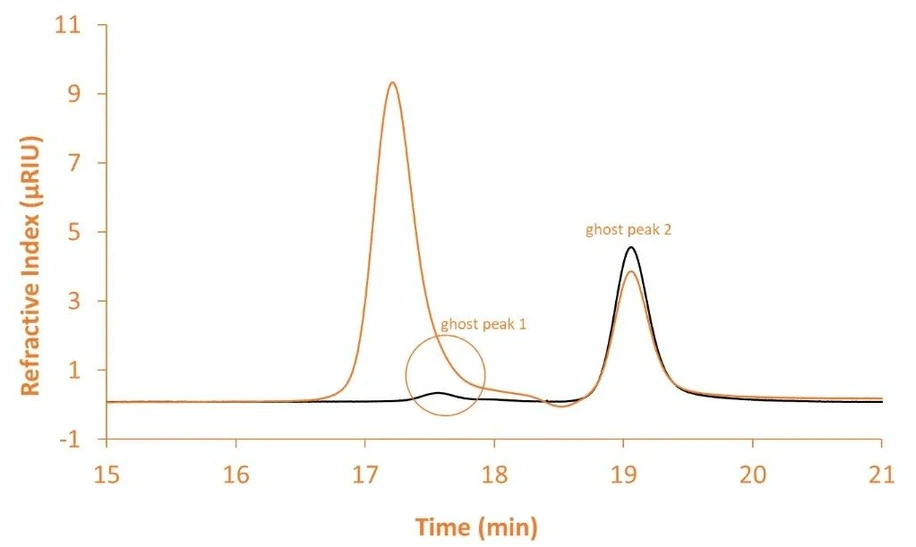
KNAUER: Fig. 4 Left (4a): Overlay of chromatograms recorded with the RID using a 20 µL injection volume. Orange: citric acid; black: blank (mobile phase = PBS)KNAUER: Fig. 4 Left (4a): Overlay of chromatograms recorded with the RID using a 20 µL injection volume. Orange: citric acid; black: blank (mobile phase = PBS)

In contrast, ethylene glycol produces three clearly resolved peaks (Fig. 4B), where ghost peaks do not interfere directly with the analyte signal. Nevertheless, their identification remains crucial to ensure accurate evaluation of the chromatographic data.
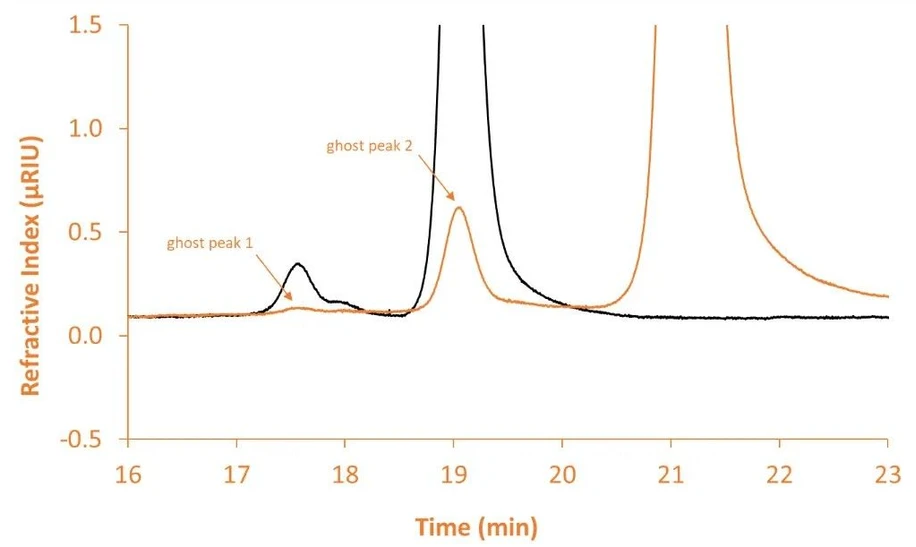
KNAUER: Fig. 4b - Overlay of chromatograms recorded with the RID using a 20 µL injection volume. Orange: ethylene glycol; black: blank (mobile phase = PBS). Graphic by KNAUER.KNAUER: Fig. 4b - Overlay of chromatograms recorded with the RID using a 20 µL injection volume. Orange: ethylene glycol; black: blank (mobile phase = PBS). Graphic by KNAUER.

Conclusion

Ghost peaks are a common yet often misunderstood phenomenon in LC and GPC/SEC analyses. Although they may initially appear mysterious, they are the result of predictable physicochemical processes within the chromatographic system. By understanding their origin, applying appropriate experimental strategies, and using systematic identification approaches, analysts can effectively distinguish them from true analyte signals. Recognizing these “ghosts” ensures more accurate data interpretation and helps prevent misleading conclusions in chromatographic analysis.

  • If you’d like to learn more about detecting and minimizing system or ghost peaks in practice, take a look at our Technical Note VTN0046 on identifying and reducing system peaks in GPC/SEC.
  • If you're planning to set up or optimize your GPC/SEC workflow, feel free to contact us at [email protected]
  • For further information on this topic, please contact our author: [email protected]
This version of the article was adapted from the original text using AI-assisted rewriting and editorial review.
Resources

[1] Srbek J., Coufal P., Bosáková Z. & Tesařová E. (2005). System peaks and their positive and negative aspects in chromatographic techniques. Journal Of Separation Science, Vol. 28 (12), 1263 - 1270.

[2] Held D. & Gores F. (2019). Tips & Tricks GPC/SEC: System Peaks or Ghost Peaks in GPC/SEC. LCGC International. https://www.chromatographyonline.com/view/tips-tricks-gpcsec-system-peaks-or-ghost-peaks-gpcsec (Last access: 21.10.2025).

KNAUER
LinkedIn Logo
 

Related content

Simultaneous Quantitation and Discovery analysis: Combining targeted and untargeted metabolomics on Orbitrap mass spectrometers

Applications
| 2026 | Thermo Fisher Scientific
Instrumentation
LC/MS, LC/MS/MS, LC/Orbitrap, LC/HRMS
Manufacturer
Thermo Fisher Scientific
Industries
Metabolomics

Analysis of Per- and Polyfluoroalkyl Substances (PFAS) in Wastewater

Applications
| 2026 | Agilent Technologies
Instrumentation
LC/MS, LC/MS/MS, LC/QQQ
Manufacturer
Agilent Technologies
Industries
Environmental

Non-Targeted Screening of Biosolids with the Xevo™ MRT Mass Spectrometer Reveals New Isoforms of PFAS

Applications
| 2026 | Waters
Instrumentation
LC/MS, LC/MS/MS, LC/TOF, LC/HRMS
Manufacturer
Waters
Industries
Environmental

High Resolution Characterization of Lipid Nanoparticles Using the Xevo™ Charge Detection Mass Spectrometry (CDMS) Instrument - Single Particle Mass Analysis of Intact LNP-mRNA Formulations

Applications
| 2026 | Waters
Instrumentation
LC/MS, LC/MS/MS, LC/HRMS, Particle characterization, LC/IT
Manufacturer
Waters
Industries
Lipidomics

Out-of-the-box workflow for PFAS quantitation using a fullscan high-resolution approach with the Orbitrap Exploris EFOX Mass Detector

Applications
| 2025 | Thermo Fisher Scientific
Instrumentation
LC/MS, LC/MS/MS, LC/Orbitrap, LC/HRMS
Manufacturer
Thermo Fisher Scientific
Industries
Environmental
 

Related articles

News from LabRulezLCMS Library - Week 11, 2025
Article | Application

News from LabRulezLCMS Library - Week 11, 2025

This week we bring you application notes by Agilent Technologies, Knauer, Shimadzu, Thermo Fisher Scientific and Waters Corporation!
LabRulez
tag
share
more
Modeling indirectly detected analyte peaks in ion-pair reversed-phase chromatography
Scientific article | Science and research

Modeling indirectly detected analyte peaks in ion-pair reversed-phase chromatography

This study models indirect detection using co- and counter-ion probes in chromatography. New isotherm models accurately predicted elution and sensitivity, with errors mostly under 4.72%.
LabRulez
tag
share
more
Oligos Made Easy - Part 9: 2D-LC
Article | Academy

Oligos Made Easy - Part 9: 2D-LC

Discover how 2D-LC enhances oligonucleotide analysis by improving resolution, separating complex impurities, and enabling deeper insight beyond conventional 1D-LC methods.
KNAUER
tag
share
more
News from LabRulezLCMS Library - Week 15, 2026
Article | Application

News from LabRulezLCMS Library - Week 15, 2026

This week we bring you application notes by Agilent Technologies, KNAUER, Shimadzu and Waters Corporation and brochure by Thermo Fisher Scientific!
LabRulez
tag
share
more
 

Related content

Simultaneous Quantitation and Discovery analysis: Combining targeted and untargeted metabolomics on Orbitrap mass spectrometers

Applications
| 2026 | Thermo Fisher Scientific
Instrumentation
LC/MS, LC/MS/MS, LC/Orbitrap, LC/HRMS
Manufacturer
Thermo Fisher Scientific
Industries
Metabolomics

Analysis of Per- and Polyfluoroalkyl Substances (PFAS) in Wastewater

Applications
| 2026 | Agilent Technologies
Instrumentation
LC/MS, LC/MS/MS, LC/QQQ
Manufacturer
Agilent Technologies
Industries
Environmental

Non-Targeted Screening of Biosolids with the Xevo™ MRT Mass Spectrometer Reveals New Isoforms of PFAS

Applications
| 2026 | Waters
Instrumentation
LC/MS, LC/MS/MS, LC/TOF, LC/HRMS
Manufacturer
Waters
Industries
Environmental

High Resolution Characterization of Lipid Nanoparticles Using the Xevo™ Charge Detection Mass Spectrometry (CDMS) Instrument - Single Particle Mass Analysis of Intact LNP-mRNA Formulations

Applications
| 2026 | Waters
Instrumentation
LC/MS, LC/MS/MS, LC/HRMS, Particle characterization, LC/IT
Manufacturer
Waters
Industries
Lipidomics

Out-of-the-box workflow for PFAS quantitation using a fullscan high-resolution approach with the Orbitrap Exploris EFOX Mass Detector

Applications
| 2025 | Thermo Fisher Scientific
Instrumentation
LC/MS, LC/MS/MS, LC/Orbitrap, LC/HRMS
Manufacturer
Thermo Fisher Scientific
Industries
Environmental
 

Related articles

News from LabRulezLCMS Library - Week 11, 2025
Article | Application

News from LabRulezLCMS Library - Week 11, 2025

This week we bring you application notes by Agilent Technologies, Knauer, Shimadzu, Thermo Fisher Scientific and Waters Corporation!
LabRulez
tag
share
more
Modeling indirectly detected analyte peaks in ion-pair reversed-phase chromatography
Scientific article | Science and research

Modeling indirectly detected analyte peaks in ion-pair reversed-phase chromatography

This study models indirect detection using co- and counter-ion probes in chromatography. New isotherm models accurately predicted elution and sensitivity, with errors mostly under 4.72%.
LabRulez
tag
share
more
Oligos Made Easy - Part 9: 2D-LC
Article | Academy

Oligos Made Easy - Part 9: 2D-LC

Discover how 2D-LC enhances oligonucleotide analysis by improving resolution, separating complex impurities, and enabling deeper insight beyond conventional 1D-LC methods.
KNAUER
tag
share
more
News from LabRulezLCMS Library - Week 15, 2026
Article | Application

News from LabRulezLCMS Library - Week 15, 2026

This week we bring you application notes by Agilent Technologies, KNAUER, Shimadzu and Waters Corporation and brochure by Thermo Fisher Scientific!
LabRulez
tag
share
more
 

Related content

Simultaneous Quantitation and Discovery analysis: Combining targeted and untargeted metabolomics on Orbitrap mass spectrometers

Applications
| 2026 | Thermo Fisher Scientific
Instrumentation
LC/MS, LC/MS/MS, LC/Orbitrap, LC/HRMS
Manufacturer
Thermo Fisher Scientific
Industries
Metabolomics

Analysis of Per- and Polyfluoroalkyl Substances (PFAS) in Wastewater

Applications
| 2026 | Agilent Technologies
Instrumentation
LC/MS, LC/MS/MS, LC/QQQ
Manufacturer
Agilent Technologies
Industries
Environmental

Non-Targeted Screening of Biosolids with the Xevo™ MRT Mass Spectrometer Reveals New Isoforms of PFAS

Applications
| 2026 | Waters
Instrumentation
LC/MS, LC/MS/MS, LC/TOF, LC/HRMS
Manufacturer
Waters
Industries
Environmental

High Resolution Characterization of Lipid Nanoparticles Using the Xevo™ Charge Detection Mass Spectrometry (CDMS) Instrument - Single Particle Mass Analysis of Intact LNP-mRNA Formulations

Applications
| 2026 | Waters
Instrumentation
LC/MS, LC/MS/MS, LC/HRMS, Particle characterization, LC/IT
Manufacturer
Waters
Industries
Lipidomics

Out-of-the-box workflow for PFAS quantitation using a fullscan high-resolution approach with the Orbitrap Exploris EFOX Mass Detector

Applications
| 2025 | Thermo Fisher Scientific
Instrumentation
LC/MS, LC/MS/MS, LC/Orbitrap, LC/HRMS
Manufacturer
Thermo Fisher Scientific
Industries
Environmental
 

Related articles

News from LabRulezLCMS Library - Week 11, 2025
Article | Application

News from LabRulezLCMS Library - Week 11, 2025

This week we bring you application notes by Agilent Technologies, Knauer, Shimadzu, Thermo Fisher Scientific and Waters Corporation!
LabRulez
tag
share
more
Modeling indirectly detected analyte peaks in ion-pair reversed-phase chromatography
Scientific article | Science and research

Modeling indirectly detected analyte peaks in ion-pair reversed-phase chromatography

This study models indirect detection using co- and counter-ion probes in chromatography. New isotherm models accurately predicted elution and sensitivity, with errors mostly under 4.72%.
LabRulez
tag
share
more
Oligos Made Easy - Part 9: 2D-LC
Article | Academy

Oligos Made Easy - Part 9: 2D-LC

Discover how 2D-LC enhances oligonucleotide analysis by improving resolution, separating complex impurities, and enabling deeper insight beyond conventional 1D-LC methods.
KNAUER
tag
share
more
News from LabRulezLCMS Library - Week 15, 2026
Article | Application

News from LabRulezLCMS Library - Week 15, 2026

This week we bring you application notes by Agilent Technologies, KNAUER, Shimadzu and Waters Corporation and brochure by Thermo Fisher Scientific!
LabRulez
tag
share
more
 

Related content

Simultaneous Quantitation and Discovery analysis: Combining targeted and untargeted metabolomics on Orbitrap mass spectrometers

Applications
| 2026 | Thermo Fisher Scientific
Instrumentation
LC/MS, LC/MS/MS, LC/Orbitrap, LC/HRMS
Manufacturer
Thermo Fisher Scientific
Industries
Metabolomics

Analysis of Per- and Polyfluoroalkyl Substances (PFAS) in Wastewater

Applications
| 2026 | Agilent Technologies
Instrumentation
LC/MS, LC/MS/MS, LC/QQQ
Manufacturer
Agilent Technologies
Industries
Environmental

Non-Targeted Screening of Biosolids with the Xevo™ MRT Mass Spectrometer Reveals New Isoforms of PFAS

Applications
| 2026 | Waters
Instrumentation
LC/MS, LC/MS/MS, LC/TOF, LC/HRMS
Manufacturer
Waters
Industries
Environmental

High Resolution Characterization of Lipid Nanoparticles Using the Xevo™ Charge Detection Mass Spectrometry (CDMS) Instrument - Single Particle Mass Analysis of Intact LNP-mRNA Formulations

Applications
| 2026 | Waters
Instrumentation
LC/MS, LC/MS/MS, LC/HRMS, Particle characterization, LC/IT
Manufacturer
Waters
Industries
Lipidomics

Out-of-the-box workflow for PFAS quantitation using a fullscan high-resolution approach with the Orbitrap Exploris EFOX Mass Detector

Applications
| 2025 | Thermo Fisher Scientific
Instrumentation
LC/MS, LC/MS/MS, LC/Orbitrap, LC/HRMS
Manufacturer
Thermo Fisher Scientific
Industries
Environmental
 

Related articles

News from LabRulezLCMS Library - Week 11, 2025
Article | Application

News from LabRulezLCMS Library - Week 11, 2025

This week we bring you application notes by Agilent Technologies, Knauer, Shimadzu, Thermo Fisher Scientific and Waters Corporation!
LabRulez
tag
share
more
Modeling indirectly detected analyte peaks in ion-pair reversed-phase chromatography
Scientific article | Science and research

Modeling indirectly detected analyte peaks in ion-pair reversed-phase chromatography

This study models indirect detection using co- and counter-ion probes in chromatography. New isotherm models accurately predicted elution and sensitivity, with errors mostly under 4.72%.
LabRulez
tag
share
more
Oligos Made Easy - Part 9: 2D-LC
Article | Academy

Oligos Made Easy - Part 9: 2D-LC

Discover how 2D-LC enhances oligonucleotide analysis by improving resolution, separating complex impurities, and enabling deeper insight beyond conventional 1D-LC methods.
KNAUER
tag
share
more
News from LabRulezLCMS Library - Week 15, 2026
Article | Application

News from LabRulezLCMS Library - Week 15, 2026

This week we bring you application notes by Agilent Technologies, KNAUER, Shimadzu and Waters Corporation and brochure by Thermo Fisher Scientific!
LabRulez
tag
share
more
Other projects
GCMS
ICPMS
Follow us
FacebookX (Twitter)LinkedInYouTube
More information
WebinarsAbout usContact usTerms of use
LabRulez s.r.o. All rights reserved. Content available under a CC BY-SA 4.0 Attribution-ShareAlike