Improving Oligonucleotide Conjugate Recovery with Clarity XRO

- Photo: Phenomenex: Improving Oligonucleotide Conjugate Recovery with Clarity XRO
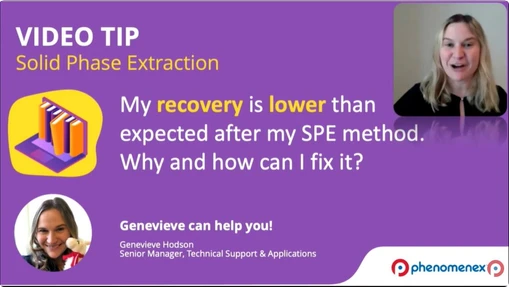
- Video: Phenomenex: How to Improve Oligonucleotide & Oligo Conjugate Recovery Using Clarity XRO | Phenomenex Tips
This technical note explains how to improve recovery of oligonucleotides and oligonucleotide conjugates using the Clarity™ XRO extraction kit. The workflow focuses on optimizing sample preparation and solid-phase extraction (SPE) conditions to achieve higher recovery, reproducibility, and efficiency when working with complex biological matrices.
Clarity XRO is a next-generation extraction kit designed for isolating oligonucleotides and their conjugates. The Pro version specifically addresses variability in daily workflows and reduces method optimization time.
Materials and Tools
- Clarity™ XRO extraction kit
- Lysis loading buffer
- Proteinase K (included in kit)
- Optional antioxidants (e.g., cyanide-based additives mentioned in video)
- Ceramic beads (for tissue homogenization)
- SPE tubes or plates
- Equilibration buffer
- Wash buffer solution
- Elution buffer (MS-compatible)
- Vacuum system (for SPE plates)
- Lyophilizer (optional for concentration)
Principle of the Method
The workflow consists of three main stages:
- Sample lysis using a specialized buffer
- Protein digestion using Proteinase K
- Solid-phase extraction (SPE) based on weak ionic interactions
This approach enhances oligonucleotide stability by inhibiting nuclease activity and enables efficient enrichment from complex biological samples.
Step-by-Step Procedure
1. Sample Pre-Treatment (Lysis)
Sample pre-treatment is a critical step for recovery.
- Use a lysis loading buffer-to-sample ratio of 3:1 as a starting condition
- For complex samples, higher ratios may be required
- For specific cases (e.g., siRNA), a 1:1 ratio may be optimal
- Incubate samples for 5–15 minutes to ensure complete lysis
- Add antioxidants if oxidation is an issue
- For tissue samples:
- Perform homogenization using ceramic beads
- Use the Clarity Protein Cleanup Kit to improve protein digestion
2. Solid-Phase Extraction (SPE)
Conditioning and Equilibration
- Condition and equilibrate SPE material before loading
- Skipping this step reduces recovery
Sample Loading
- Adjust sample pH to ~5.5 for optimal binding
- Load sample slowly, especially in small formats (e.g., 2 mg plates)
- Apply sample near the top frit
- Use low flow rates to improve:
- Recovery
- Accuracy
- Reproducibility
3. Washing Steps
- Perform two wash steps:
- Equilibration buffer
- Stronger wash buffer
- Optimization may be required depending on format
- For small plate formats (≤25 mg):
- Start with low vacuum
- Gradually increase vacuum to fully remove wash solution
4. Elution
- Use the new MS-compatible elution buffer
- Dilute 1:1 with water for direct injection
Optional concentration step:
- Use a lyophilizer if lower detection limits are required
- Avoid drying to complete dryness (difficult reconstitution)
5. Troubleshooting Recovery Issues
If recovery is lower than expected:
- Perform two elution steps
- Increase organic content in the elution solvent
Discussion and Key Considerations
- Sample pre-treatment is the most critical factor for recovery
- Buffer ratios and incubation conditions may require optimization
- Proper SPE conditioning and controlled flow rates significantly affect performance
- Washing and elution conditions must be adapted to sample complexity and format
The method emphasizes reproducibility and robustness while minimizing variability in routine workflows.
Conclusion
Clarity™ XRO provides a streamlined and effective workflow for extracting oligonucleotides from complex biological samples. By carefully optimizing lysis conditions, SPE parameters, and elution strategies, users can significantly improve recovery, reproducibility, and overall analytical performance.