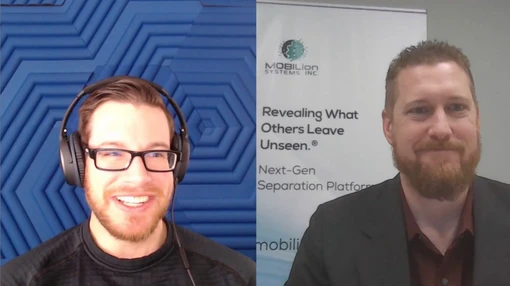
Mass Spec Without Chromatography? How DART is Changing Clinical & Forensic Testing
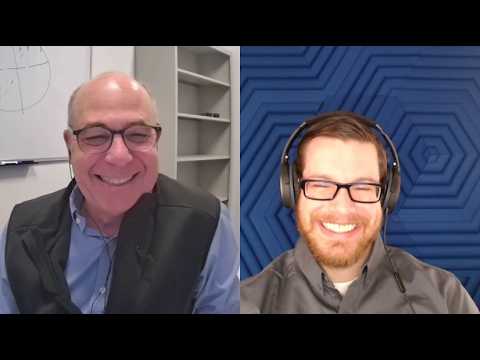
- Photo: Concentrating on Chromatography: Mass Spec Without Chromatography? How DART is Changing Clinical & Forensic Testing
- Video: Concentrating on Chromatography: Mass Spec Without Chromatography? How DART is Changing Clinical & Forensic Testing
🎤Jeff Zonderman (Bruker)
Can mass spectrometry work without chromatography?
In this episode of Concentrating on Chromatography, host David Oliva speaks with Jeff Zonderman of Bruker about how Direct Analysis in Real Time (DART) mass spectrometry is enabling rapid sample analysis with little or no chromatography.
Traditional LC-MS workflows rely on chromatography, solvent-intensive sample preparation, and complex instrumentation. DART offers a different approach—allowing laboratories to analyze samples directly, reducing solvent use, hazardous waste, and overall cost of ownership. As Jeff explains in this conversation, the technology is gaining traction in drug testing, forensic analysis, clinical diagnostics, and high-throughput screening environments.
David and Jeff discuss how DART works, where it fits within modern analytical workflows, and why many laboratories are exploring chromatography-free mass spectrometry to simplify operations and improve speed.
Topics covered in this episode
- What DART mass spectrometry is and how it works
- When laboratories can eliminate chromatography from workflows
- Reducing solvent consumption and hazardous waste
- Applications in drug testing and forensic analysis
- Opportunities for clinical diagnostics and high-throughput screening
- The future of chromatography-free mass spectrometry
About the Podcast
Concentrating on Chromatography is an analytical chemistry podcast featuring conversations with scientists and industry leaders working at the forefront of chromatography, mass spectrometry, and laboratory technology.
Hosted by David Oliva, the series explores the real-world workflows, innovations, and challenges shaping modern analytical laboratories.
Keywords
- DART mass spectrometry
- mass spectrometry without chromatography
- LC-MS alternative
- analytical chemistry podcast
- drug testing mass spectrometry
- forensic mass spectrometry
- Bruker mass spectrometry
Video Transcription
In this episode, Jeff Zonderman discusses how mass spectrometry workflows are evolving beyond traditional chromatography-based approaches. Drawing on more than 30 years of experience in mass spectrometry and separation science, he explains how technologies such as DART (Direct Analysis in Real Time), ion mobility, and MALDI are enabling faster, simpler, and more sustainable analytical workflows. The conversation explores applications ranging from clinical testing and toxicology to environmental analysis and forensic science.
Chromatography: Essential but Not Always Necessary
Jeff explains that chromatography has played a critical role in the success of modern mass spectrometry. The introduction of electrospray ionization and LC-MS transformed fields such as toxicology, clinical diagnostics, food safety, environmental analysis, proteomics, and metabolomics.
However, chromatography also introduces complexity, cost, maintenance requirements, solvent consumption, and workflow bottlenecks. While it remains indispensable for highly complex separations, Jeff argues that many routine assays may no longer require chromatographic separation.
According to Jeff, chromatography should be viewed as a powerful tool rather than a universal requirement. Emerging technologies now allow laboratories to perform certain analyses more efficiently without relying on LC or GC systems.
Why DART Was Developed
As former CEO of IonSense, Jeff focused on solving three key challenges routinely faced by analytical laboratories:
- Cost per sample
- Speed of analysis
- Ease of operation and robustness
Traditional LC-MS workflows often require:
- Expensive consumables
- Large solvent volumes
- Waste disposal infrastructure
- Specialized chromatography expertise
DART technology was developed to reduce these burdens while maintaining analytical performance. The goal was not simply to generate high-quality data, but to create workflows that are faster, more affordable, and easier to operate in high-throughput environments.
Sustainability Benefits of Chromatography-Free Workflows
One of the most significant advantages Jeff highlights is sustainability.
High-throughput LC-MS laboratories may operate dozens or even hundreds of instruments, each consuming large volumes of organic solvents such as acetonitrile and generating substantial hazardous waste.
Chromatography-free workflows can dramatically reduce:
- Solvent consumption
- Hazardous waste generation
- Laboratory operating costs
- Environmental impact
Jeff believes these benefits will become increasingly important as laboratories place greater emphasis on green laboratory initiatives and sustainable analytical practices.
The Role of Ion Mobility
While DART removes the need for chromatography in many applications, Jeff emphasizes that alternative separation technologies remain important.
He identifies ion mobility spectrometry (IMS) as one of the most exciting developments in mass spectrometry today. Ion mobility offers:
- Rapid gas-phase separations
- High reproducibility
- Additional molecular resolution
- Enhanced confidence in compound identification
Bruker's TIMS (Trapped Ion Mobility Spectrometry) technology represents one example of how ion mobility can complement both chromatography-free and chromatography-based workflows.
Where Chromatography Still Dominates
Jeff is careful not to suggest that chromatography will disappear.
Applications involving:
- Hundreds of analytes
- Extremely complex matrices
- Comprehensive metabolomics studies
- Large-scale pesticide screening
still require chromatographic separation.
For example, multi-residue food testing involving hundreds of pesticides or metabolomics studies targeting thousands of compounds remain heavily dependent on LC-MS and GC-MS workflows.
In these situations, chromatography continues to provide unmatched separation power. DART is best suited to targeted, routine, and high-throughput analyses where the analytical targets are already known.
Common Misconceptions About DART
One of the most common misconceptions is that chromatography is always required to eliminate matrix effects.
Jeff explains that DART workflows still utilize sample preparation when necessary. However, many users incorrectly assume that chromatography is the only way to achieve acceptable selectivity and robustness.
DART can leverage:
- Simplified sample preparation
- Mass spectrometric selectivity
- Thermally controlled desorption
- Alternative separation mechanisms
to achieve reliable analytical performance without conventional LC or GC systems.
He stresses that the goal is not to eliminate sample preparation entirely, but to eliminate unnecessary chromatographic complexity.
Forensic Science: Addressing Growing Backlogs
One of the most compelling applications discussed is forensic drug analysis.
Forensic laboratories worldwide face growing backlogs caused by:
- Rising drug seizure volumes
- Increasing numbers of novel psychoactive substances (NPS)
- Limited laboratory resources
Jeff highlights examples where DART has been adopted to dramatically increase throughput.
Instead of developing new chromatographic methods for every emerging substance, analysts can rapidly screen seized materials using DART-MS workflows.
Organizations such as NIST have played a major role in validating and promoting DART-based forensic applications, helping laboratories process evidence faster while maintaining confidence in results.
Bringing Mass Spectrometry into the Field
Another exciting development is the use of DART in mobile laboratories.
Traditional LC-MS systems are poorly suited to field deployment due to:
- Solvent requirements
- Waste management needs
- Instrument complexity
- Chromatographic equilibration times
DART enables portable workflows that can bring laboratory-quality mass spectrometry closer to the point of need.
Potential applications include:
- Drug seizure investigations
- Environmental monitoring
- Food testing
- Emergency response
Jeff sees field-deployable mass spectrometry as one of the next major growth areas for the technology.
Clinical Applications and Drug Testing
Jeff identifies clinical testing as one of the most important future markets for DART.
Bruker has invested heavily in this area through acquisitions such as:
- Recipe
- Pinpoint
The company's strategy involves converting established LC-MS clinical assays into DART-based workflows while maintaining analytical performance.
Particular focus areas include:
- Therapeutic drug monitoring (TDM)
- Drugs of abuse testing
- Clinical toxicology
- Vitamin analysis
The objective is to provide faster, more economical workflows that remain compatible with regulatory requirements and routine laboratory operation.
Kits and Complete Workflow Solutions
Jeff emphasizes that technology alone is not enough.
Modern laboratories increasingly prefer complete workflow solutions rather than assembling systems from multiple vendors.
Bruker's approach combines:
- Instrumentation
- Software
- Reagents
- Sample preparation materials
- Validated methods
into integrated solutions designed for routine laboratories.
This shift toward complete kits and workflow packages simplifies implementation and improves consistency across laboratories.
Looking Ahead
Looking five years into the future, Jeff expects the largest impact of DART technology to occur in:
- Clinical diagnostics
- Drug testing
- Forensic toxicology
- Environmental contaminant monitoring
He believes growing concerns surrounding:
- PFAS contamination
- Microplastics
- Emerging drugs
- Public health monitoring
will continue driving demand for rapid, cost-effective analytical solutions.
Combined with advances in ion mobility and automation, chromatography-free mass spectrometry has the potential to significantly expand the reach of mass spectrometry into new applications, laboratories, and field environments.
Key Takeaways
- Chromatography remains essential for highly complex separations but is not required for every analytical workflow.
- DART enables faster, lower-cost, and more sustainable mass spectrometry workflows.
- Forensic laboratories are using DART to address growing drug analysis backlogs.
- Ion mobility is emerging as a powerful complementary separation technology.
- Chromatography-free workflows can significantly reduce solvent consumption and hazardous waste.
- Clinical testing, environmental analysis, and field-deployable mass spectrometry are expected to be major growth areas in the coming years.
- The future of routine mass spectrometry lies not only in instrumentation, but in complete workflow solutions that simplify laboratory operations.
This text has been automatically transcribed from a video presentation using AI technology. It may contain inaccuracies and is not guaranteed to be 100% correct.
Concentrating on Chromatography Podcast
Dive into the frontiers of chromatography, mass spectrometry, and sample preparation with host David Oliva. Each episode features candid conversations with leading researchers, industry innovators, and passionate scientists who are shaping the future of analytical chemistry. From decoding PFAS detection challenges to exploring the latest in AI-assisted liquid chromatography, this show uncovers practical workflows, sustainability breakthroughs, and the real-world impact of separation science. Whether you’re a chromatographer, lab professional, or researcher you'll discover inspiring content!
You can find Concentrating on Chromatography Podcast in podcast apps:
and on YouTube channel