LC-MS Is Throwing Away 99% of Your Signal — Can Ion Mobility Fix It?

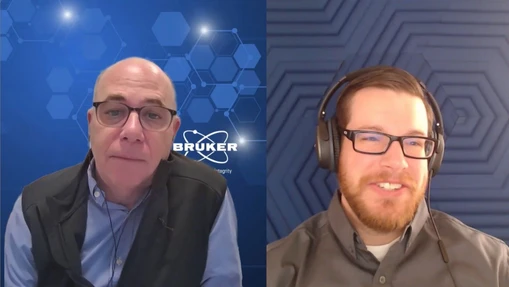
- Photo: Concentrating on Chromatography: LC-MS Is Throwing Away 99% of Your Signal — Can Ion Mobility Fix It?
- Video: Concentrating on Chromatography: LC-MS Is Throwing Away 99% of Your Signal — Can Ion Mobility Fix It?
🎤Daniel DeBord (Chief Technology Officer at MOBILion Systems)
Liquid chromatography–mass spectrometry (LC-MS) has been the backbone of modern analytical workflows for decades — but what if one of its most trusted components is also its biggest bottleneck?
In Episode 50 of Concentrating on Chromatography, host Dave Oliva sits down with Daniel DeBord to explore how high-resolution ion mobility may be changing the way scientists think about precursor isolation in tandem MS.
Traditional MS/MS workflows rely on quadrupole filtering to isolate precursor ions prior to fragmentation. But because quadrupoles operate as mass filters, they routinely discard the vast majority of incoming ions — often more than 99% — contributing to signal loss, slower acquisition speeds, and chimeric spectra in complex mixtures.
Daniel explains how Structures for Lossless Ion Manipulations (SLIM) technology introduces an additional gas-phase separation step between LC and MS — enabling:
- Near-lossless ion transmission through the instrument
- Separation based on size-to-charge rather than mass-to-charge
- Cleaner MS/MS spectra with reduced spectral chimerism
- LC gradient compression without sacrificing analytical resolution
- Peak capacities comparable to 20–30 minute LC separations — achieved in milliseconds
For chromatographers, this raises an important question:
If critical separations can occur in the mobility domain, how much chromatography do we actually need?
Daniel also discusses:
- Whether HRIM could supplement or replace quadrupoles in future instruments
- Applications in proteomics, metabolomics, and environmental analysis
- Integrating ion mobility into triple quadrupole workflows
- Challenges around method development and data processing
- What the next generation of LC-ion mobility-MS platforms may look like
Video Transcription
From Chemistry to Instrument Development
Nelson’s path into analytical chemistry combined interests in chemistry, mathematics, engineering, and instrumentation design. During graduate studies at Texas A&M University, he became fascinated by the ability to build custom instruments capable of measuring molecules invisible to the naked eye.
Unlike laboratories relying primarily on commercial systems, his research environment involved designing and constructing mass spectrometers from the ground up. This experience provided exposure to:
- Mechanical design
- Electronics
- Software development
- Vacuum systems
- Instrument integration
The ability to understand multiple engineering disciplines proved valuable later in industry, where instrument development requires collaboration among specialists from numerous technical fields.
Transforming a Research Prototype into a Commercial Instrument
When Nelson joined MOBILion Systems in 2018, the company’s primary challenge was converting a laboratory prototype licensed from the Pacific Northwest National Laboratory into a robust commercial platform.
The original system was essentially a research prototype requiring substantial redesign before deployment in routine laboratories. The development team focused on improving:
- Safety
- Reliability
- Reproducibility
- Manufacturability
- User friendliness
- Scalability
Within approximately eighteen months, the company transformed the prototype into a commercial ion mobility platform suitable for integration with modern mass spectrometry workflows.
What Is SLIM Technology?
SLIM (Structures for Lossless Ion Manipulations) is a form of high-resolution ion mobility spectrometry that separates ions in the gas phase before mass analysis.
Nelson describes ion mobility as conceptually similar to chromatography:
| Chromatography | Ion Mobility |
|---|---|
| Retention time | Arrival time |
| Stationary/mobile phase interactions | Gas-phase ion transport |
| Gradient elution | Voltage ramping |
| Peak capacity | Mobility peak capacity |
Instead of separating molecules based on interactions with a stationary phase, ion mobility separates ions according to their size-to-charge ratio using carefully controlled electric fields.
A key advantage is speed. While chromatographic separations typically require minutes, ion mobility separations occur on millisecond timescales, often making them approximately one thousand times faster than conventional LC separations.
How SLIM Differs from Traditional Ion Mobility
Several ion mobility approaches already exist, including:
- Drift tube ion mobility (DTIMS)
- Trapped ion mobility spectrometry (TIMS)
- Other mobility-based separation technologies
According to Nelson, SLIM was designed specifically to overcome traditional trade-offs between:
- Resolution
- Sensitivity
- Ion transmission efficiency
The technology enables:
- Near-complete ion transmission
- Extended separation path lengths
- Resolving powers exceeding 2,000
- Separation of extremely subtle molecular differences
Examples include distinguishing molecules that differ only by the position of a single isotopic atom—an analytical challenge beyond the capabilities of conventional chromatography or mass spectrometry alone.
What Does “Lossless” Really Mean?
The phrase Lossless Ion Manipulations is central to the SLIM concept.
Traditional ion mobility systems often sacrifice sensitivity because a significant fraction of ions are lost during transport through the device. SLIM was designed to minimize these losses and maintain nearly complete ion transmission.
To verify this claim, MOBILion evaluates mass spectrometer sensitivity before and after integration of SLIM modules. According to Nelson, the technology can add meters of ion travel distance while preserving the sensitivity specifications of the original instrument.
The practical implication is straightforward:
The ions entering the system are largely the same ions reaching the detector.
This enables high-resolution separations without sacrificing analytical sensitivity.
Why Challenge the Quadrupole?
One of the interview’s most provocative ideas is Nelson’s statement that:
“The problem is the quadrupole.”
Although intentionally provocative, the comment highlights limitations associated with traditional precursor isolation.
Limitation 1: Isobaric Co-Isolation
Quadrupoles isolate ions based on mass-to-charge ratio (m/z).
When multiple compounds share identical or nearly identical masses:
- They may be isolated simultaneously.
- Fragmentation produces mixed spectra.
- Interpretation becomes more difficult.
High-resolution ion mobility introduces an orthogonal separation mechanism based on size-to-charge ratio, allowing some compounds with identical masses to be separated before fragmentation. This generates cleaner MS/MS spectra and reduces spectral interference.
Faster MS/MS Acquisition Through Ion Mobility
Quadrupole performance is constrained by the speed at which electrical fields can change and stabilize.
Modern high-resolution tandem mass spectrometers typically achieve acquisition rates around:
- 50–270 Hz for MS/MS workflows
In contrast, Nelson reports that mobility-based precursor selection can exceed:
- 1,300 Hz
This improvement is possible because ion mobility packets are separated on millisecond timescales and introduced rapidly into the collision cell and time-of-flight analyzer.
The result is:
- Faster MS/MS acquisition
- Higher precursor sampling rates
- Improved utilization of available ion signal
Where Do the Missing Ions Go?
A striking point discussed during the interview concerns ion utilization.
Conventional quadrupole isolation inherently filters out most ions entering the instrument. According to Nelson, approximately 99% of ions may be discarded during precursor selection. These rejected ions typically accumulate on quadrupole rods and other internal surfaces, contributing to contamination and maintenance requirements.
Ion mobility operates differently:
- Ions are separated temporally rather than discarded.
- Much larger fractions of the ion population reach the detector.
- Signal utilization increases substantially.
This improves sensitivity while reducing waste of potentially informative ions.
Is Ion Mobility Another Dimension Like 2D-LC?
Nelson compares ion mobility to adding an additional orthogonal separation dimension, much like two-dimensional liquid chromatography (2D-LC).
Combining:
- Liquid chromatography
- Ion mobility
- Mass spectrometry
creates a multidimensional analytical workflow capable of resolving complex mixtures with greater specificity than any single technique alone.
However, unlike conventional multidimensional chromatography, ion mobility separations occur in milliseconds and therefore integrate seamlessly into standard LC-MS experiments without significantly increasing analysis time.
Can Ion Mobility Reduce Chromatography Time?
One of the most practical advantages discussed is the possibility of shortening LC methods.
Many chromatographic methods are designed primarily to separate a few difficult analytes. Achieving adequate chromatographic resolution often requires:
- Long gradients
- Extended run times
- Reduced sample throughput
If critical analytes can instead be separated in the ion mobility dimension, chromatographic requirements become less stringent.
Potential benefits include:
- Shorter LC gradients
- Increased throughput
- Reduced solvent consumption
- Simplified method development
while maintaining analytical specificity and quantitative performance.
Applications Driving Adoption
The current commercial focus of MOBILion technology spans several sectors:
Biopharmaceutical Analysis
- Characterization of complex biologics
- Enhanced molecular specificity
Environmental Analysis
- Untargeted contaminant screening
- Improved identification confidence
Food and Beverage Testing
- Analysis of complex sample matrices
Proteomics
- Data-independent acquisition (DIA)
- High-throughput peptide identification
Metabolomics
- Characterization of unknown metabolites
- Improved confidence in untargeted studies
Nelson identifies metabolomics as one of the most promising future growth areas because of its reliance on identifying unknown compounds within highly complex biological matrices.
Challenges and Limitations
Despite its advantages, ion mobility introduces new considerations.
Additional Method Complexity
Users must understand:
- Mobility separation principles
- Method optimization strategies
- Appropriate application workflows
Data Processing
An additional separation dimension generates richer datasets but also increases analytical complexity. Laboratories must adapt software workflows and learn new visualization and interpretation approaches.
These challenges resemble those encountered when implementing multidimensional chromatography systems.
The Future of LC-Ion Mobility-MS
Looking ahead, Nelson predicts that ion mobility will become increasingly integrated into routine analytical workflows.
He points to the widespread adoption of ion mobility in proteomics and expects expansion into:
- Metabolomics
- Environmental testing
- Quantitative LC-MS workflows
- Triple quadrupole applications
Rather than replacing quadrupoles entirely, he anticipates that future instruments will increasingly combine both technologies to maximize analytical performance. Nevertheless, specialized systems may eventually emerge where high-resolution ion mobility performs much of the functionality traditionally assigned to quadrupoles.
Advice for Future Instrument Scientists
For students interested in next-generation analytical instrumentation, Nelson emphasizes the importance of:
- Reading primary scientific literature
- Understanding instrument design principles
- Exploring engineering concepts
- Developing interdisciplinary skills
- Building professional networks
He encourages young scientists to engage directly with researchers and technology developers rather than relying solely on published literature, noting that many valuable insights are shared through personal interactions and collaboration.
Conclusion
Daniel Nelson presents a compelling vision for the future of analytical instrumentation, where high-resolution ion mobility becomes a central component of LC-MS workflows. By providing fast, high-resolution gas-phase separations with near-lossless ion transmission, technologies such as SLIM offer opportunities to increase sensitivity, improve spectral clarity, reduce chromatographic burden, and accelerate analytical measurements. While quadrupoles remain essential components of many mass spectrometers, the growing adoption of ion mobility suggests that future analytical platforms may increasingly rely on multidimensional separations to address the challenges of modern proteomics, metabolomics, environmental analysis, and biopharmaceutical characterization.
This text has been automatically transcribed from a video presentation using AI technology. It may contain inaccuracies and is not guaranteed to be 100% correct.
Concentrating on Chromatography Podcast
Dive into the frontiers of chromatography, mass spectrometry, and sample preparation with host David Oliva. Each episode features candid conversations with leading researchers, industry innovators, and passionate scientists who are shaping the future of analytical chemistry. From decoding PFAS detection challenges to exploring the latest in AI-assisted liquid chromatography, this show uncovers practical workflows, sustainability breakthroughs, and the real-world impact of separation science. Whether you’re a chromatographer, lab professional, or researcher you'll discover inspiring content!
You can find Concentrating on Chromatography Podcast in podcast apps:
and on YouTube channel