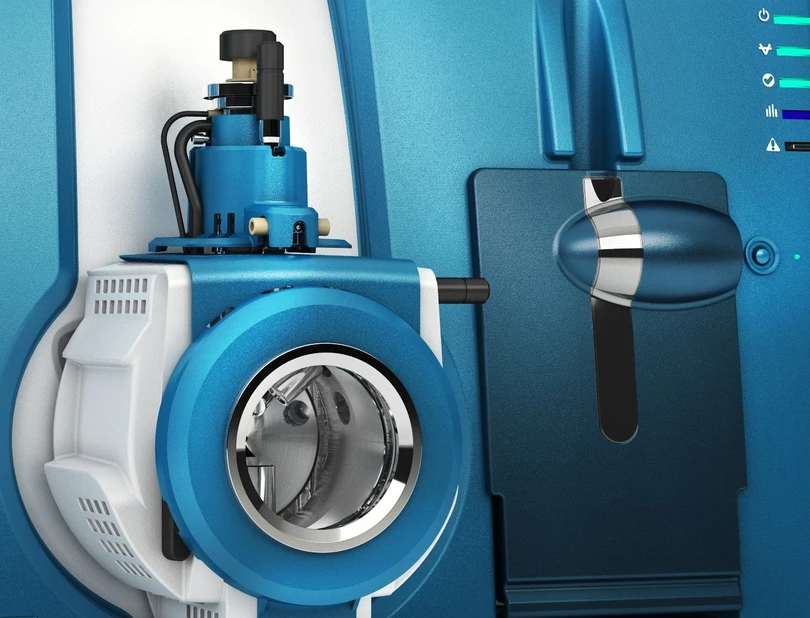
LCMS
More information
WebinarsAbout usContact usTerms of use
LabRulez s.r.o. All rights reserved. Content available under a CC BY-SA 4.0 Attribution-ShareAlike
Manufacturer
Bioanalytic
Bioanalytic
Bioanalytic started its operations in 1998. The company was born from a passion for science and the need to provide innovative solutions in the laboratory equipment market, from a small business to a dynamically developing company with an established position.
Distributor
Bioanalytic
For more than 25 years, we have been providing unique laboratory solutions that improve and optimize work in laboratories in Poland and Europe.
Bioanalytic Basic LC-MS/MS trainingBasic LC-MS/MS training covers the theoretical basics of mass spectrometry and familiarization with the basic operation of the instrument.
Features

Bioanalytic Basic LC-MS/MS training

BASIC INFORMATION

  • TITLE: Basic LC-MS/MS training
  • CATEGORY: LC-MS/MS training
  • LOCATION: Lodz, PL
  • TRAINING TIME: 3 days
  • NUMBER OF PARTICIPANTS: up to 5 people
  • EQUIPMENT: SCIEX QTRAP & QTOF LC-MS/MS

Bioanalytic: Bioanalytic Basic LC-MS-MS training.Bioanalytic: Bioanalytic Basic LC-MS-MS training.

TRAINING DESCRIPTION

Basic LC-MS/MS training covers the theoretical basics of mass spectrometry and familiarization with the basic operation of the instrument. Basic LC-MS/MS training is primarily aimed at those who are new to LC-MS/MS equipment or who wish to become familiar with this analytical technique. During the training, the following will be presented:

  • principles of developing and optimizing quantitative and qualitative methods on low (triple quadrupole, QTRAP) and high resolution (QTOF) instruments,
  • basic functionality of the software,
  • procedures and objectives of instrument calibration,
  • principles of maintaining the cleanliness of mass spectrometer operation.
Basic LC-MS/MS training - the program

Day I

Theoretical classes:

  • Introduction to LC
  • Introduction to mass spectrometry (basics)
  • Quantitative analysis.

Practical part:

QTRAP:

  • QTRAP scanning modes on the instrument - Q1, , MS2, MRM, demonstration and discussion on the example of a selected pesticide of the fragmentation spectrum and its fragmentation pathway.
  • MRM pair formation (manual, semi-automatic, automatic).
  • optimization of ion source parameters -T-conector
  • explanation of the main parameters related to LC (column selection, gradient vs isocrat, autosampler)
  • LC-MS/MS method setup and optimization

QTOF:

  • manual and automatic optimization of MRMHR
  • ion source and LC parameters (transfer from method developed above)

Sequence of quantitative analysis on both instruments.

Day II

Quantitative analysis:

  • data processing and analysis,
  • reporting - Sciex OS (QTRAP, QTOF).
  • Discussion of types of integration algorithms (MQ4, autopeak) and integration parameters.
  • independent selection of integration parameters and plotting of master curves.
  • independent data analysis and generation of analysis report.

Qualitative analysis:

  • Theoretical introduction - introduction to qualitative analysis:
  • qwadrupole modes (Prec/NL),
  • trap modes (EMS, EPI, MS3),
  • QTOF modes (TOF MS, TOF MS/MS).
  • mixed methods,
  • targeted vs. untargeted analysis,
  • DDA (IDA) - discussion of method development,

Practical part:

  • creation of qualitative methods on QTRAP (Prec-IDA, MRM-IDA), other parameters (LC, ion source) as the previous day,
  • LightSight - discussion of operation, creation of MRM-IDA multimethod for selected pesticide and analysis of samples (night).
  • QTOF - creation of IDA method, other parameters (LC, ion source) as the previous day.

Sequence of qualitative analysis overnight.

Day III

Qualitative data analysis:

QTRAP:

  • Discussion of Prec-IDA, MRM-IDA results - what we see in different types of MS and MS/MS scans. Manual review of data and via IDA Explorer (SciexOS).
  • Analysis of results in LightSight, comparison with Prec-IDA, for example - advantages/disadvantages

QTOF:

  • search for potentially present compounds in the sample,
  • manual comparison of blank vs. test sample,
  • manual by XIC extraction (by sum formula),
  • Formula finder - derivation of sum formula on TOF MS data and verification of fragmentation on TOF MS/MS data
  • search in IDA Explorer mode - application of filters: similarity, isotopic distribution, mass defect,
  • database searching,
  • Molecule Profiler - demonstration of software capabilities on selected pesticide example,

Instrument calibration:

  • resolution, mass-to-charge ratio, intensity,
  • Q1 and Q3, LIT (MS and MS/MS), TOF MS and TOF-MS/MS
  • Automation vs. manual calibration,

LC-MS/MS application examples

Summary

Discussion

Manufacturer
Bioanalytic
Bioanalytic
Bioanalytic started its operations in 1998. The company was born from a passion for science and the need to provide innovative solutions in the laboratory equipment market, from a small business to a dynamically developing company with an established position.
Distributor
Bioanalytic
For more than 25 years, we have been providing unique laboratory solutions that improve and optimize work in laboratories in Poland and Europe.
Other projects
GCMS
ICPMS
Follow us
More information
WebinarsAbout usContact usTerms of use
LabRulez s.r.o. All rights reserved. Content available under a CC BY-SA 4.0 Attribution-ShareAlike