Analytical wide pore phase for the determination of biomolecules bigger than 2000 Da
Eurosil Bioselect C18 has been specifically developed for the determination and purification of peptides, proteins, and oligonucleotides up to a molecular weigth of approximately 5 kDa.
Properties
- Ultra pure, spherical wide pore HPLC phase based on silica gel
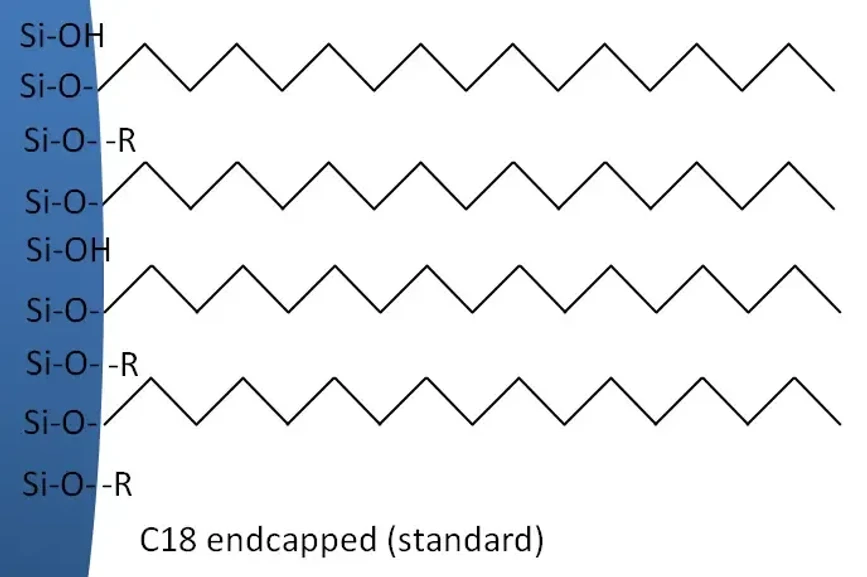
- Unpolar, monomeric C18 (Octadecyl) modification, endcapped
- 7.5 % carbon content (conventional endcapping)
- Separation mechanism: hydrophobic interaction
 KNAUER: C18 Endcapped standard
Recommended application areas
- Hydrophilic biomolecules, peptides, peptide mapping after enzymatic digestion
 KNAUER: Eurosil Bioselect - Phases and recommended sizes of molecules
Tip: Caused by the larger pore size of 300 Å, Eurosil Bioselect phases are not as mechanical stable as classical silica gel phases with up to 150 Å and should not be used above 200 bar pressure.
KNAUER Wide pore HPLC columns
For enhanced resolution, capacity and recovery of proteins and other biomolecules
- Material: Silica or polymer particles
- Separation Ranges: 2–100 kDa
- Column Brands: Eurosil Bioselect or AppliChrom®
- Particle sizes: 3–10 µm
- Pore Sizes: 300 or 100–1000 Å
- Specific surface: 90 ± 5 m2/g
- Pore volume: 0.8 ml/g
- Density: 450 g/l
- Applications: Peptides exceeding approximately 50 amino acids and oligonucleotides greater than 25 residues
- Customize: Bioanalysis requires a lot of flexibility in the pore size, the pH range, the temperatures and the solvents used. To achieve this, we cross phase limits.
Characteristics
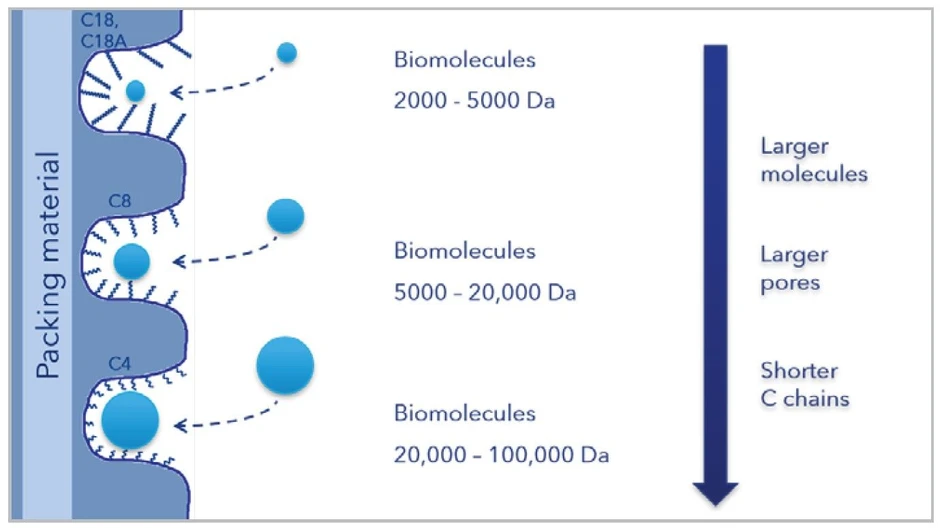
- Eurosil Bioselect columns are available in 4 modifications, useful for a wide range of separation tasks involving large molecules up to 100 000 Da.
- Strict manufacturing procedures ensure a very narrow pore size distribution.
- Interfering anions or heavy metal ions on the silica surface are not present in Eurosil Bioselect columns because only ultra pure silica gel and high quality chemical modifications are employed.
 KNAUER: Eurosil Bioselect
Separation mechanism of Eurosil Bioselect
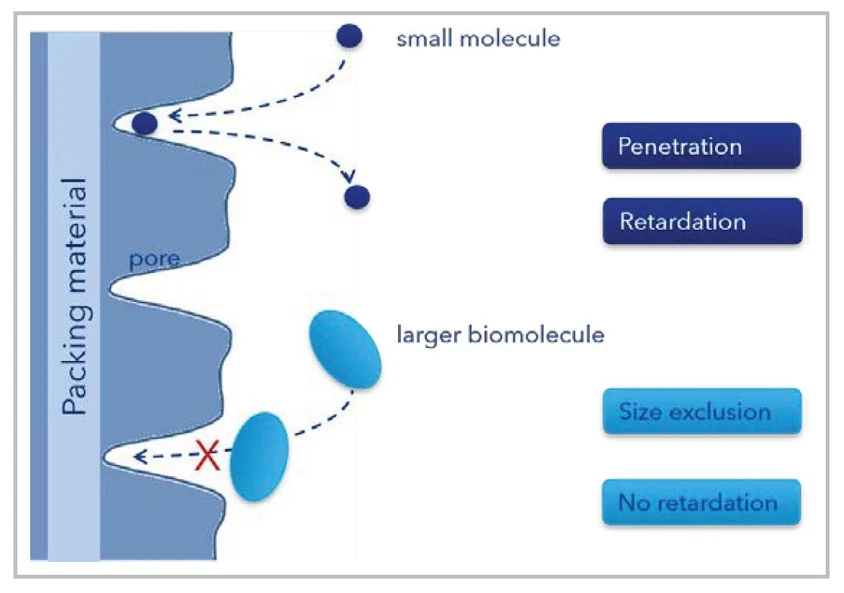
To separate larger molecules, they need to freely access the interior of the pores of the packing material. Therefore, the analytes’ diameter must be smaller than the average pore diameter.
For higher molecular weight solutes, the use of lower pore size materials (60-120 Å) as typically used for the analysis of small molecules may result restricted diffusion in the material´s pores and therewith reduced column efficiency.
Modifications
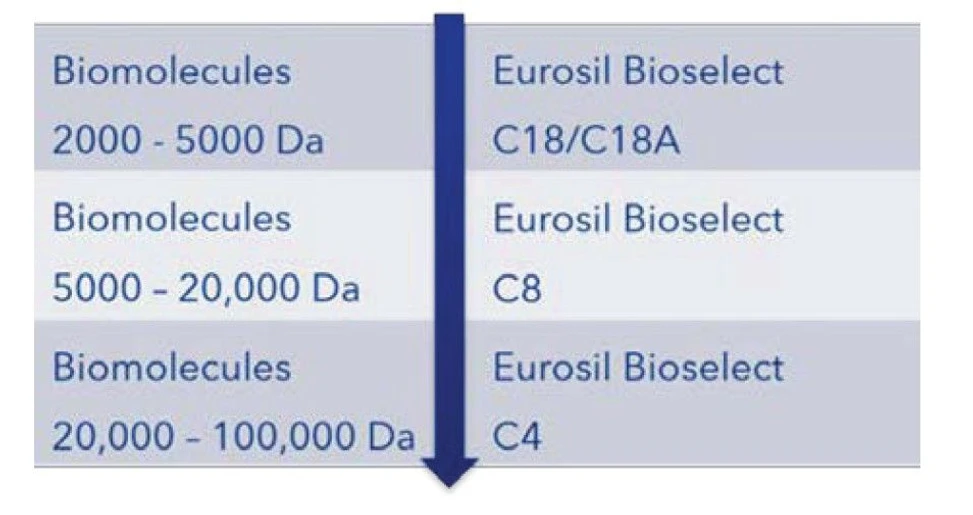
The recommended modification of Eurosil Bioselect depends on the molecular weight of the analytes.
 KNAUER: Eurosil Bioselect - chemical modifications



