Optimizing HPLC Analysis with Alltesta™ Automated Analyzer

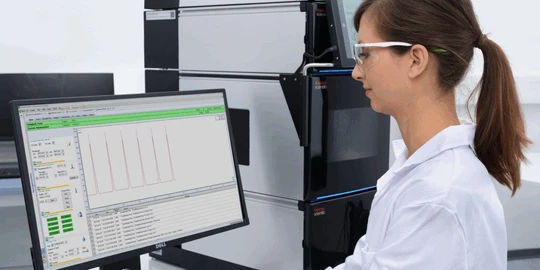
- Photo: Bioanalytic: Optimizing HPLC Analysis with Alltesta™ Automated Analyzer
- Video: SIELC Technologies: Walkthrough of the Alltesta™ Analyzer HPLC SystemWalkthrough of the Alltesta™ Analyzer HPLC System
High Performance Liquid Chromatography (HPLC) is widely recognized as a premier chemical analytical technique in many industries vital for human existence. Its ability to separate and detect numerous classes of organic and inorganic compounds, as well as determine their concentration in various matrices make HPLC by far the most popular analytical tool in the world.
However, its high costs, operational complexity, and the need for highly qualified specialists present significant challenges. Alltesta™ Automated Analyzer, simplifies the HPLC analysis process, making it more accessible without compromising quality or accuracy.
Challenge
The laboratory in question faced the challenges of:
- High costs of HPLC instrumentation and separation columns
- Significant space requirements – traditional HPLC systems take up a large amount of laboratory space, limiting flexibility and accessibility.
- The need for a specialized laboratory environment and employ highly educated and well-trained scientific personnel
- Extensive analytical method development, even for simple analyses.
These factors limit the accessibility of HPLC and restrict its use outside specialized laboratories.
Solution: Alltesta™ Automated Analyzer
The laboratory decided to explore SIELC’s offerings and quickly found an Alltesta™ Automated Analyzer that met their requirements. Designed to simplify HPLC workflows and address key user challenges, the system offers:
- Compact size – Alltesta™ Automated Analyzer features a space-saving design, making it ideal for small laboratories and research environments with limited workspace.
- Ease of use – operates from a standard power outlet and connects to a HPLC.cloud via Wi-Fi, Ethernet, or a mobile network.
- Automated method setup – The company SIELC removes the major burden of analytical method development from an inexperienced system operator, allowing them to focus on obtaining analytical results in minimal time. This is accomplished by SIELC’s experienced staff, who identify the optimal columns, solvents (mobile phases), and gradient parameters for a particular analysis—free of charge for clients. The company also maintains a vast library of analytical methods for numerous compounds and produces a wide variety of HPLC columns to support their implementation.
- Cloud-based control and data processing – server-hosted software enables remote operation and provides analytical results in an easy-to-read format.
- Advanced HPLC technologies – the system features a pulse-free syringe pump (up to 5000 psi) (Alltesta™ Mini Syringe Pump), an autosampler (Alltesta™ Mini-Autosampler), and a multi-wavelength UV detector (Alltesta™ Mini UV-Vis Detector), ensuring reliable analytical performance.
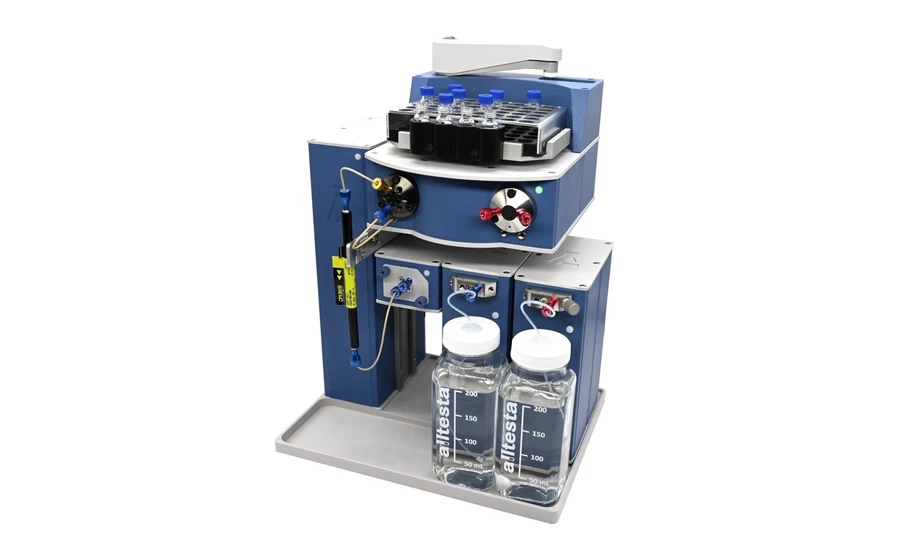 Bioanalytic: SIELC Alltesta™ Gradient Automated Analyzer.
Results & Impact
The implementation of Alltesta Automated Analyzer has significantly streamlined the HPLC analysis process. Laboratory report:
- Reduced costs by minimizing expenses on consumables and cutting method development time.
- Simplified workflow – even individuals without specialized training can perform analyses and obtain accurate results.
- System reliability – extensive testing has shown no hardware or software failures.
- Enhanced data security – HPLC.cloud ensures safe data storage, reliable processing, and secure remote access.
Dr. Michael Z. Kagan, PhD, Senior Chromatographer with 28 years of experience at Pfizer, AbbVie, and Coca-Cola, highlights:
"During six months of testing, I did not encounter a single hardware or software issue. The system is easy to use, offers flexible column and method configurations, and benefits from expert chromatographic support, making Alltesta a reliable and user-friendly solution."
Conclusion
Alltesta™ Automated Analyzer removes the main barriers associated with HPLC analysis, making it accessible, simple, and efficient. With automation and cloud-based technologies, users can focus on obtaining results rather than dealing with complex instrument settings.