Enhancing Routine HPLC Analysis with a Compact LED-Based System

- Photo: Bioanalytic: Enhancing Routine HPLC Analysis with a Compact LED-Based System
- Video: SIELC Technologies: Walkthrough of the Alltesta™ Analyzer HPLC SystemWalkthrough of the Alltesta™ Analyzer HPLC System
Summary
High Performance Liquid Chromatography (HPLC) is an essential analytical tool in laboratories across various industries, enabling precise separation and detection of complex compounds. While traditional diode-array HPLC systems are valuable for method development, they can be unnecessary when routine analyses are performed. Our laboratory sought a streamlined solution for standardized separations using a pre-optimized protocol—one that was intuitive, space-efficient, and required minimal hands-on expertise.
We adopted the SIELC Alltesta™ Automated Analyzer compact HPLC system with LED-based detection, which provided an ideal balance of performance, ease of use, and automation. This system significantly improved workflow efficiency, reduced operational demands, and empowered even non-specialist staff to reliably perform high-quality analyses.
Challenge
Our laboratory faced several key constraints that limited the scalability and efficiency of HPLC analyses:
- Staffing limitations – Traditional HPLC setups often require experienced analytical chemists, creating bottlenecks in routine workflows.
- Space constraints – Larger HPLC systems demand significant bench space, reducing flexibility in smaller lab environments.
- Multitasking difficulties – Monitoring experiments manually detracted from other research activities, limiting productivity.
To overcome these challenges, we sought an HPLC system that could provide accurate, repeatable results without requiring specialized personnel or extensive lab resources.
Solution: SIELC’s compact LED-Based Alltesta™ Automated Analyzer
After evaluating available options, our laboratory implemented a compact HPLC system featuring LED detection. This choice allowed us to optimize efficiency while maintaining analytical integrity. The key advantages of this system included:
- Compact footprint – The small-scale design seamlessly integrated into our lab setup, freeing up valuable workspace.
- User-friendly interface – Intuitive software enabled streamlined control and monitoring, even when multitasking on other unrelated tasks.
- Automated sampling – The high-performance autosampler facilitated unattended operation, reducing manual intervention and improving throughput.
- Simplified detection – LED-based detection was ideal for our needs, providing highly stable and reproducible results for pre-optimized protocols.
- Versatile usability – Interns and non-specialist personnel could operate the system with minimal supervision, lowering staffing requirements.
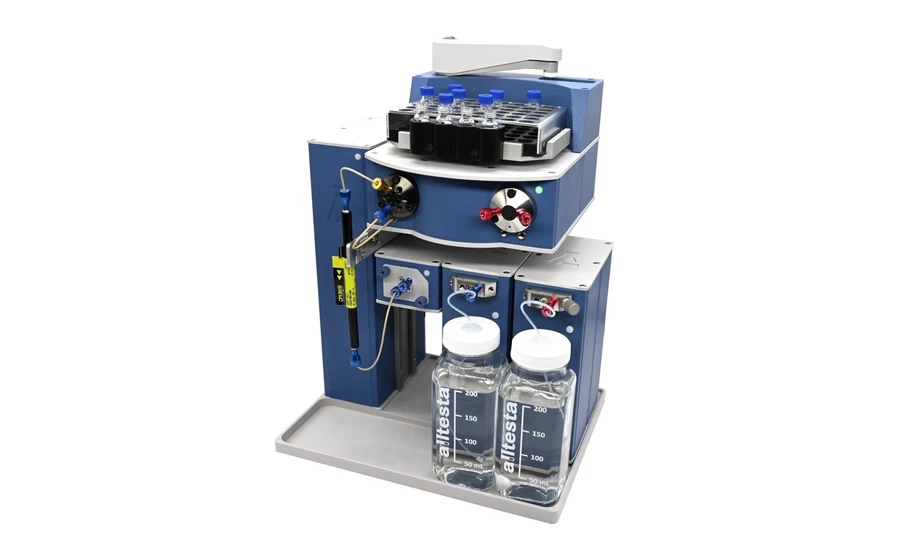 Bioanalytic: Enhancing Routine HPLC Analysis with a Compact LED-Based System: SIELC Alltesta™ Gradient Automated Analyzer.
Results & Impact
The adoption of the compact LED-based HPLC system led to substantial improvements in laboratory efficiency and accessibility. Key benefits included:
- Reduced staffing demands – The system’s simplicity enabled non-specialist operators to perform analyses, minimizing reliance on dedicated analytical chemists.
- Increased productivity – Automated sampling and remote monitoring capabilities allowed researchers to focus on other projects while experiments ran in the background.
- Optimized lab space – The system’s compact design enabled seamless integration into our lab, maximizing workspace utility.
- Reliable performance – Routine analyses were executed with high precision and reproducibility, ensuring consistent experimental outcomes.
Dr. Nikolai Braun, PhD, Research Scientist at Luna Labs, highlights:
"Compact, intuitive, and reliable: the Alltesta™ Automated Analyzer has everything you need for routine measurements, revolutionizing what you expect from an HPLC system."
Conclusion
By integrating a compact LED-based Alltesta™ Automated Analyzer into our workflow, we successfully enhanced efficiency, reduced operational complexity, and expanded analytical capabilities beyond specialized personnel. This case study highlights the transformative impact of accessible, intuitive chromatography solutions—empowering laboratories to maintain high-quality analyses while minimizing overhead costs and staffing requirements.