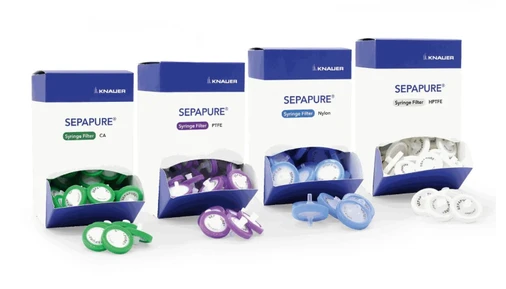
Small but Essential Laboratory Helpers: Syringe Filters
- Photo: Watrex Praha: Small but Essential Laboratory Helpers: Syringe Filters
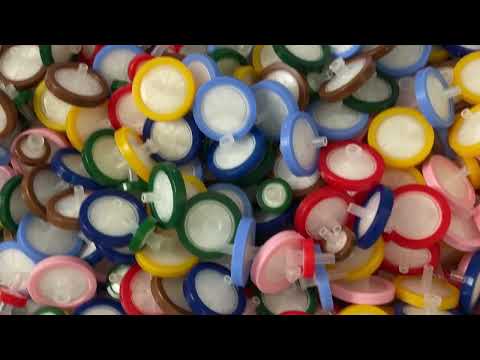
- Video: Watrex Praha: Watrex syringe filters
Syringe filters are a fundamental piece of laboratory equipment that often determines the quality of results. Although they are small and seemingly inconspicuous tools, their proper use can significantly affect sample purity and the reliability of analytical methods. They are used to remove particulate matter, protect instruments (such as HPLC columns), and sterilize solutions.
 Watrex Praha: Small but Essential Laboratory Helpers: Syringe Filters
Watrex Praha Syringe Filter Offerings
Watrex Praha offers a wide range of syringe filters to cover various application needs:
- Nylon – a versatile membrane suitable for aqueous solutions and some organic solvents.
- PTFE – highly resistant to aggressive organic solvents, ideal for HPLC applications.
- PES (Polyethersulfone) – filters with high flow rates and low protein binding, suitable for biological samples.
- MCE (Mixed Cellulose Ester) – hydrophilic membrane for general laboratory use, often used in microbiology.
- PVDF (Polyvinylidene Fluoride) – filters with low protein adsorption, especially suitable for protein solutions and biological applications.
All of the above materials are available in 4 mm, 13 mm, 25 mm, and 30 mm sizes, with pore sizes of 0.22 μm or 0.45 μm. All filters come with a convenient Luer Lock closure for secure and stable connection.
Tips and Tricks for Using Syringe Filters
Choosing the right filter can save time, money, and hassle. Here are some practical recommendations:
Correct Selection
- Pore size: 0.45 μm for general particle removal, 0.22 μm for sterilization and finer filtration.
- Membrane material: select based on sample type and solvent – PTFE for solvents, PES/PVDF for proteins, Nylon as a versatile option.
Practical Use
- Pre-rinsing the filter: helps reduce contamination risk and stabilizes the membrane.
- Minimizing sample loss: for expensive or small-volume samples, use low-binding filters with minimal dead volume.
- Avoiding rupture: filter viscous or dense solutions through larger diameter filters (e.g., 25–30 mm).
Filtration Technique
- Correct flow direction: always ensure the larger membrane surface faces the sample.
- Careful handling: slow and even pressure on the syringe plunger prevents air bubbles and protects the membrane.
Special Recommendations
- HPLC and LC-MS: choose certified filters with low extractables.
- Proteins and biological samples: PES or PVDF minimize loss of valuable molecules.
- Archiving: label used filters for traceability of samples.
Syringe filters may be small, but their importance in the laboratory is immense. Using the right filter correctly ensures reliable results and protects not only your samples but also expensive instruments.
Do not hesitate to contact us at [email protected] or visit our website www.watrex.com and we will be happy to help you with your selection. We are here for you!