Single-Ended HPLC Column by SIELC
SIELC: Single-Ended HPLC Column
A New Standard in HPLC Column Connection by SIELC
SIELC Technologies, a pioneer in chromatography innovation, introduces a single-ended HPLC column — a revolutionary new design that redefines how columns are connected and used in high-performance liquid chromatography. For decades, laboratories have relied on the same standard column format — and have dealt with the same recurring problems: leaky fittings, clogged junctions, dead volume, and the constant hassle of tubing and connection selection.
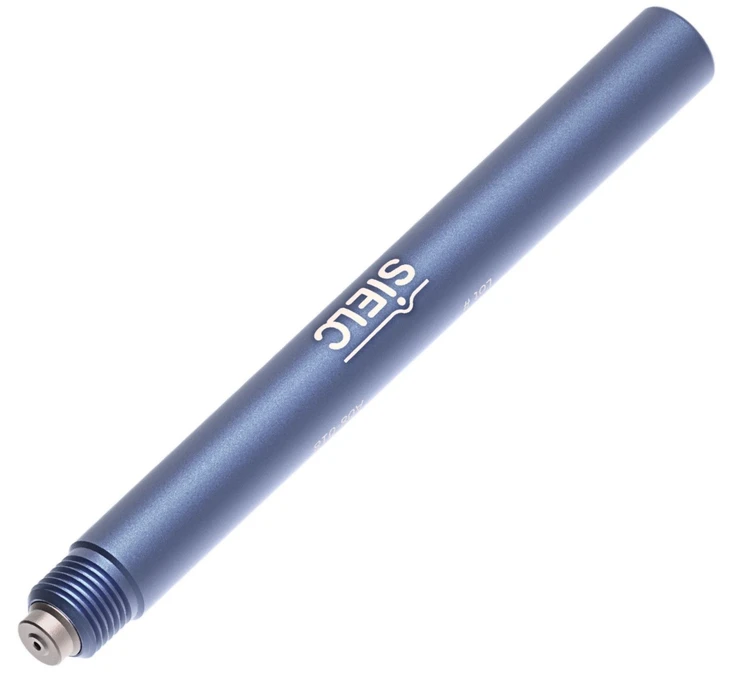
SIELC has developed a single-ended HPLC column design.
This new system redefines how columns are installed, used, and replaced — streamlining your workflow and eliminating common points of failure.
Key Benefits of the New Design:
- No fittings or tubing required — eliminates leaks, complex installation, and the need to match tubing length or ID.
- Zero dead volume thanks to a direct connection via a dedicated adapter.
- Leak containment — in case of pressure failure, solvent remains inside the adapter with no external leakage.
- Tool-free column replacement — disconnect the column without touching the fittings.
- Aluminum body — ensures efficient heat transfer and provides a smooth, label-friendly surface even on the shortest columns.
 SIELC: HPLC column
HPLC Column Adapter
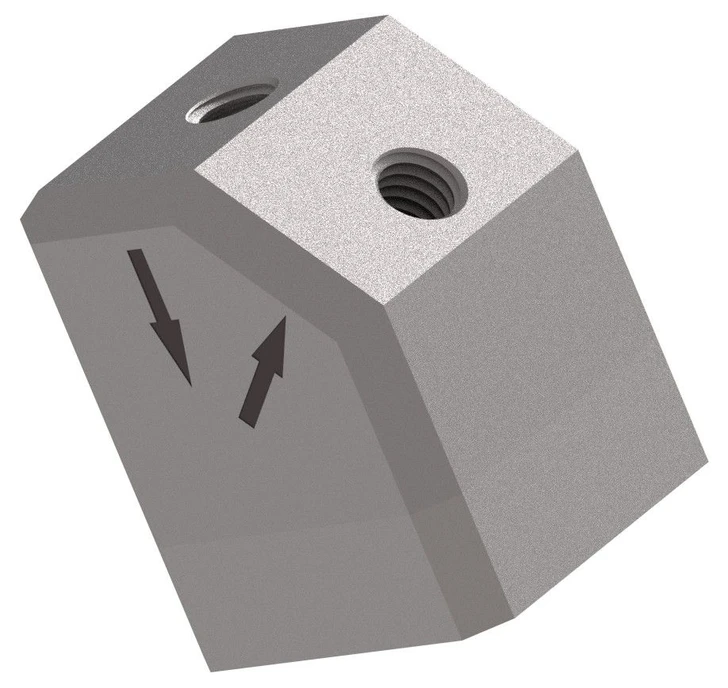
The SIELC adapter is a key component of the new single-ended column system, designed to eliminate leaks, dead volume, and connection complexity in HPLC setups.
This adapter is an engineering solution that ensures perfect sealing, precise flow alignment, and reliable performance under high pressure — all without traditional fittings, ferrules, or tools.
- Dimensions: 21 × 21 × 26 mm (0.83 × 0.83 × 1.02 in)
 SIELC: HPLC Column Adapter
Special offer: First-time buyers receive a Free Single-Column Adapter with their purchase. Experience the new connection standard — no fittings, no leaks, no extra cost.
How the Single-Ended HPLC Column Works?
SIELC: How the Single-Ended HPLC Column Works?
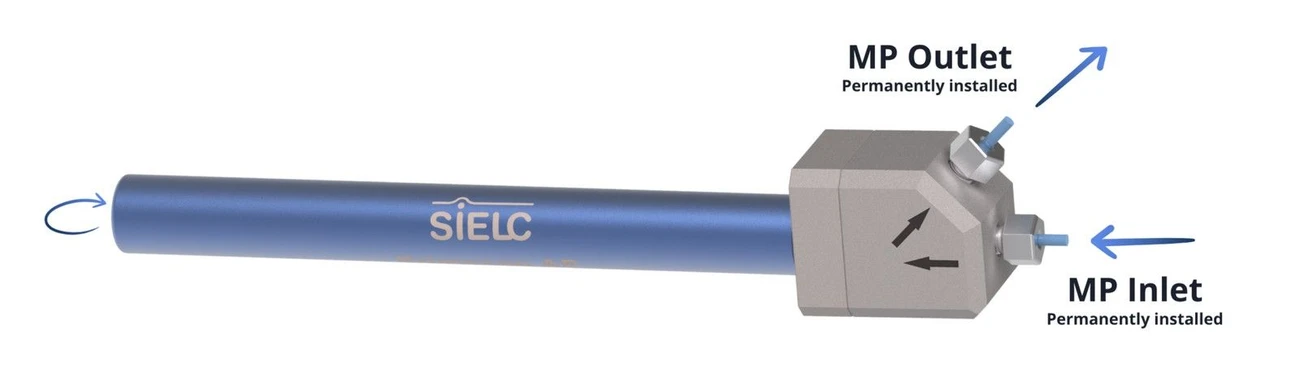
As the mobile phase enters through the MP Inlet, it flows into the adapter’s internal capillary aligned with the column axis. When the mobile phase passes through the column packing bed, it exits through the bypass channel connected with the MP Outlet.
This design eliminates dead volume, prevents mobile-phase leakage, and provides a simple way to remove and replace the column when needed.
Dual-Ended vs. Single-Ended HPLC Columns
Dual-Ended HPLC Columns
- Column connections: Dual-ended HPLC columns have two separate ends. Each connection requires fittings, ferrules, and tubing to connect the column to the LC system.
- Installation: Installation requires manual alignment of fittings and precise adjustment of tubing length to minimize dead volume. This process can be time-consuming and is prone to user error.
- Dead volume: Dead volume is typically present at both the inlet and outlet connections. These junctions can cause peak broadening and reduced chromatographic efficiency.
- Leakage risk: Leakage risk is relatively high because solvent connections rely on ferrules and fittings that may loosen or wear over time.
- System integration: Dual-ended columns require separate tubing and careful fitting when installed in column heaters or coolers.
- Thermal performance: Heat transfer may be less uniform due to multiple connections and tubing interfaces.
- Guard column option: Using a guard column requires additional hardware and extra connections, which can introduce additional dead volume into the system.
- Available phases: Dual-ended columns are typically available in standard stationary phases such as C18, HILIC, ion exchange, and others.
Single-Ended HPLC Columns
- Column connections: Single-ended columns use a single coaxial connection with an integrated adapter. No fittings, ferrules, or tubing are required.
- Installation: The adapter is installed only once. After that, the column can be replaced in seconds without tools, making maintenance faster and simpler.
- Dead volume: Near-zero dead volume is achieved because the internal capillaries are precisely aligned within the adapter.
- Leakage risk: The mobile phase is fully contained inside the adapter, creating a leak-free design even under high pressure conditions.
- System integration: A compact stainless-steel adapter allows easy installation in column heaters or coolers.
- Thermal performance: The aluminum outer body provides efficient and uniform heat transfer across the column.
- Guard column option: An integrated zero-dead-volume guard column option is available, allowing quick cartridge replacement without tools.
- Available phases: All SIELC phases as well as traditional chromatographic phases (C18, HILIC, ion exchange, mixed-mode, BIST™, etc.) are available in this format.
Adapter for Guard Column
If your workflow requires a guard column or a filter to be installed inline with the main column, then a specialized adapter with a guard option should be used.
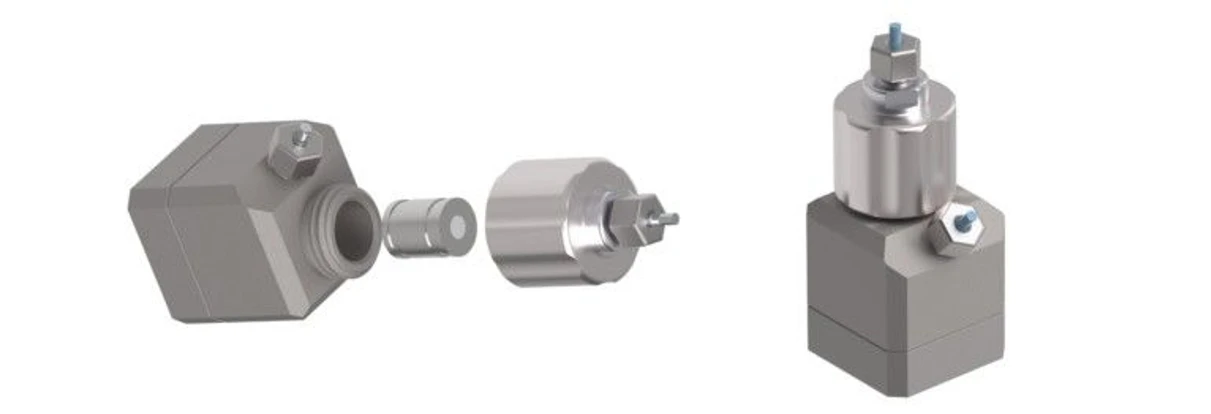
The SIELC HPLC Single-Column Guard protects the analytical column by capturing particulates and strongly retained contaminants before they reach the stationary phase. Its unique direct-insert design provides a zero-dead-volume connection and allows quick, tool-free replacement of a used guard with a new one. Guards are available for all SIELC stationary phase types — Primesep™, Newcrom™, Chromni™, PEI™, BIST™, and for generic phases such as C18, HILIC and IE.
Guard Cartridges (2 per pack)
- Guard Adapter — Dimensions: 21 × 21 × 42 mm (0.83 × 0.83 × 1.65 in)
 SIELC: Guard cartridges
Why This Matters
This new column system removes the guesswork and fragility from high-pressure liquid chromatography. By eliminating traditional high-pressure fittings and minimizing dead volume, you gain more consistent results, lower the risk of system failure, and reduce downtime.
Whether you’re running routine analyses or complex separations, this design enhances reliability and usability — so you can focus on your science, not your setup.
All SIELC and Traditional Columns and Guards Available in a New Format
C18, HILIC, Ion Exchange, Mixed-Mode, Ion Exclusion, Protein, BIST, and more.
📄 Want to learn more? Download our brochure to learn about a single-ended HPLC column design.