Let´s Connect a whole (U)HPLC system without tools and trouble
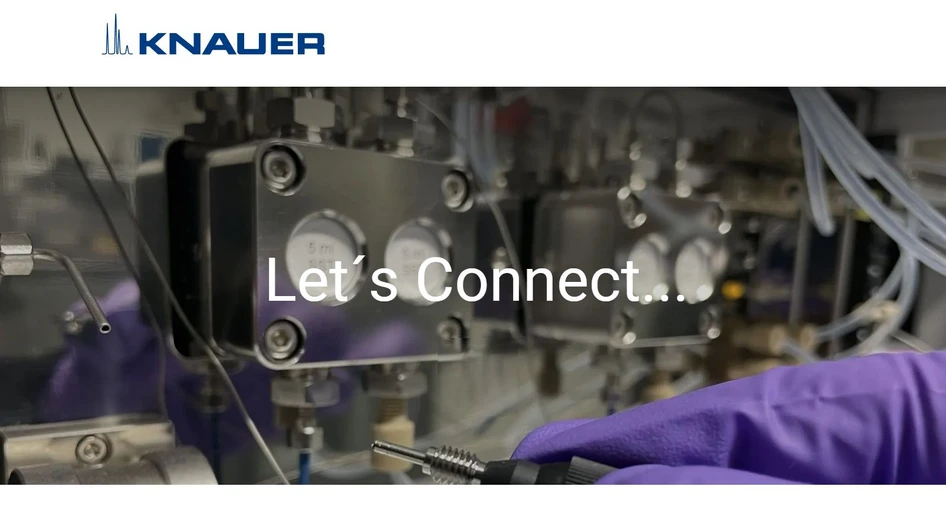
KNAUER: Let´s Connect a whole (U)HPLC system without tools and trouble
How long does it actually take to install all the capillaries and fittings on a conventional HPLC system?
The Small Components That Matter Most
When people think about HPLC systems, they often focus on pumps, detectors, columns, or software. Capillaries and fittings are usually seen as minor components because they are relatively inexpensive and physically small. However, every chromatographer eventually discovers that these tiny parts can have a major influence on system performance.
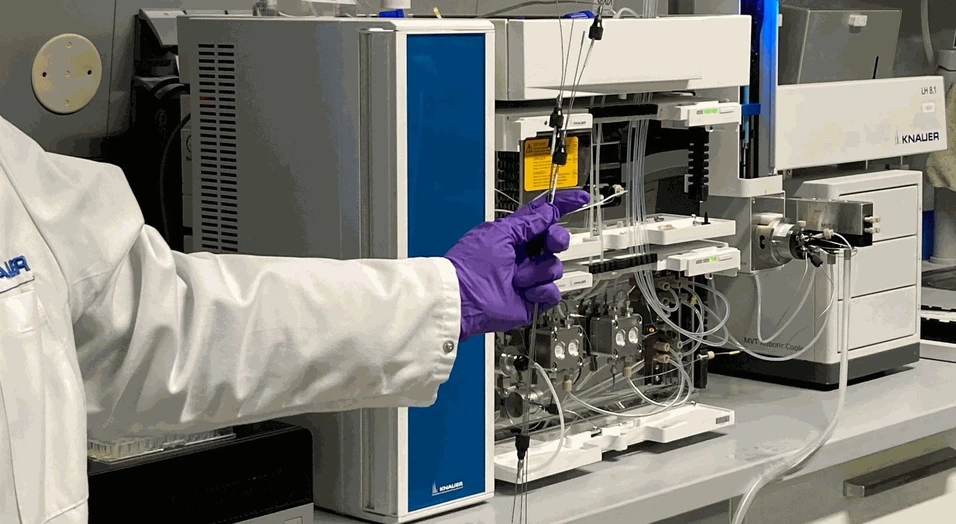
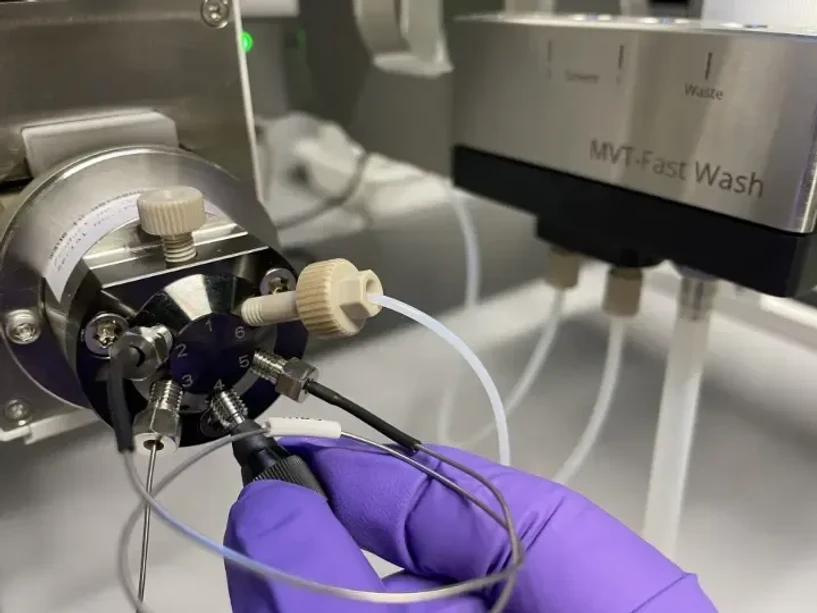 KNAUER: Connecting a (U)HPLC system can be difficult at some poorly accessible locations
Even decades ago, chromatographers recognized the importance of proper connections. In the 1980s, long before UHPLC became common, John Dolan wrote about minimizing dead volume through correct fitting installation. Today, with UHPLC systems operating at extremely high pressures and using columns with very small particle sizes, dead volume is even less tolerable than before. The topic remains just as relevant today as it was back then.
Interestingly, despite what many users assume, the chromatographic column itself is often not the primary source of HPLC or UHPLC problems. In my experience, poor connections are far more commonly responsible for issues such as peak broadening, leaks, or loss of efficiency.
The Early Days of HPLC Capillaries
Anyone who has been working with HPLC for many years will probably remember the era of rigid 1/16" stainless steel tubing. Whenever PEEK tubing was unsuitable, stainless steel capillaries were the standard choice.
Setting up a system back then was far from convenient. You first had to locate an appropriate length of tubing somewhere in a drawer full of capillaries. Usually, this meant finding a several-meter-long piece and cutting it yourself using a dedicated capillary cutter. After cutting, you needed to ensure the tubing end was smooth and undamaged, hoping that the previous person using the cutter had not accidentally crushed the inner diameter.
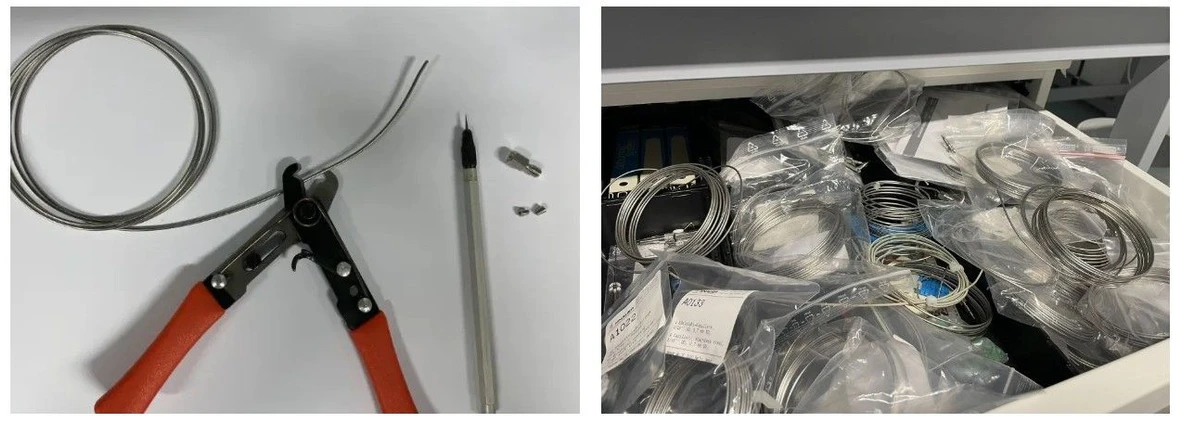 KNAUER: Standard 1/16” Capillary and needed tools and the drawer we all know pretty well
Once cut, the tubing often required additional preparation. You might need to deburr the capillary using a grater, shape it carefully with bending tools, and then finally install it using separate fittings and ferrules. And of course, everyone remembers the frustration of dropping a ferrule onto the laboratory floor, where it effectively disappeared forever.
At the same time, laboratories often accumulated drawers filled with pre-assembled capillaries that had fixed fittings attached. Reusing these assemblies was risky. If the fitting geometry did not perfectly match the receiving port, users could unintentionally introduce dead volume into the system. The result was often degraded chromatographic performance, broad peaks, and frustrating troubleshooting sessions involving the entire laboratory team. In worse cases, excessive force could damage threads or receiving ports while attempting to stop leaks.
During that period, assembling and connecting a complete HPLC system could easily consume half a day of work.
The Improvement: Flexible and Pre-Cut Capillaries
Later, laboratories gradually adopted pre-cut tubing and flexible capillaries, which represented a significant improvement over manually preparing stainless steel tubing.
With these newer capillaries, users simply selected the correct length and installed the tubing directly. Flexible capillaries adapted naturally to the required shape, eliminating much of the manual bending and shaping work. Installation became faster, easier, and far less stressful.
Still, these systems had limitations. Although the capillary itself improved, the fitting technology remained largely unchanged. Many of these capillaries were still effectively single-use components. If a connection was installed incorrectly because the tubing was not fully inserted into the receiving port before tightening, the result was often another unusable capillary destined for the growing “capillary drawer.” Sustainability was certainly not a strong point of these systems.
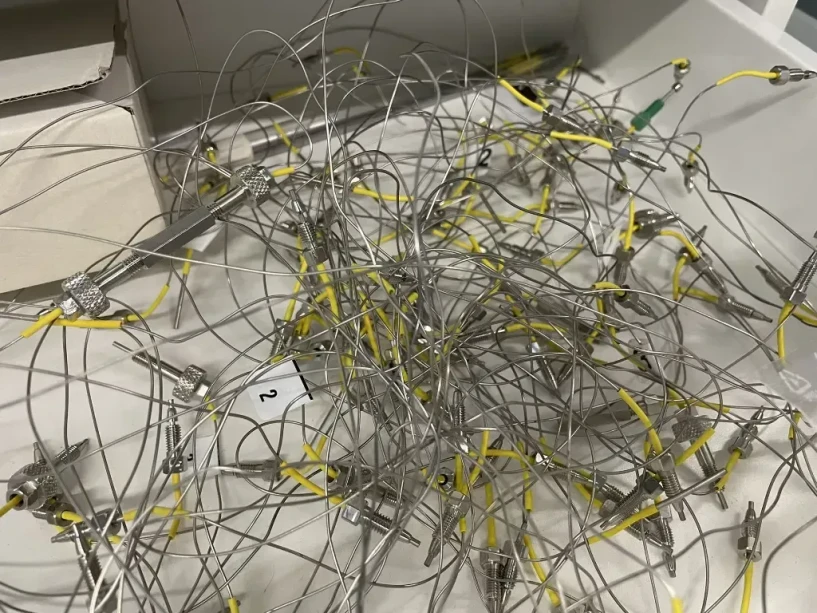 KNAUER: A typical capillary drawer. It was tricky to open and close it sometimes
Even with these advancements, system setup still required considerable time and effort.
The Real Breakthrough: Modern Tool-Free Connection Systems
A major breakthrough finally arrived when manufacturers introduced a completely redesigned fitting and capillary concept aimed specifically at simplifying UHPLC connections.
These newer systems came with fittings pre-installed directly on the capillary. Unlike traditional ferrule-based systems, the fittings automatically adjusted to different port depths and sealed directly at the bottom of the port. This dramatically reduced the amount of torque required and eliminated the need for complicated installation techniques.
Perhaps the biggest advantage was convenience. These capillaries could be connected and disconnected more than 100 times without tools, while remaining entirely finger-tight. And best of all, ferrules no longer disappeared onto the laboratory floor.
 KNAUER: The little things that do the “click”
The system I currently use includes an especially useful feature: a patented torque-limiting mechanism that prevents both under-tightening and over-tightening. Once the correct torque is reached, the fitting produces a tactile “click,” providing immediate feedback that the connection is secure and properly installed every time.
From Half a Day to Fifteen Minutes
Thanks to these modern connection systems and pre-configured startup kits, installing an HPLC or UHPLC system today is dramatically faster than it used to be.
What once consumed hours of work can now be completed in less than 15 minutes. The improvements in usability, reproducibility, and sustainability over recent years have been remarkable.
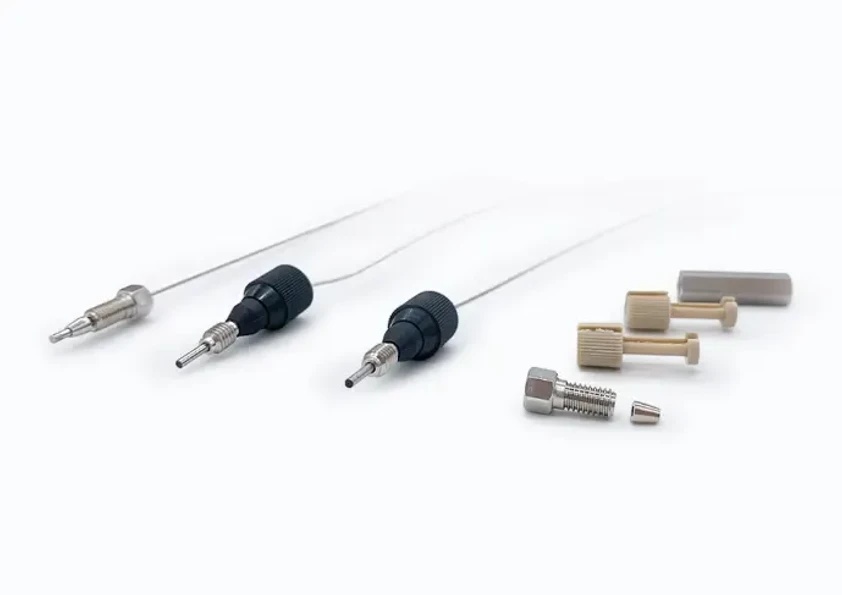 KNAUER: Trouble-free connection systom for HPLC and UHPLC
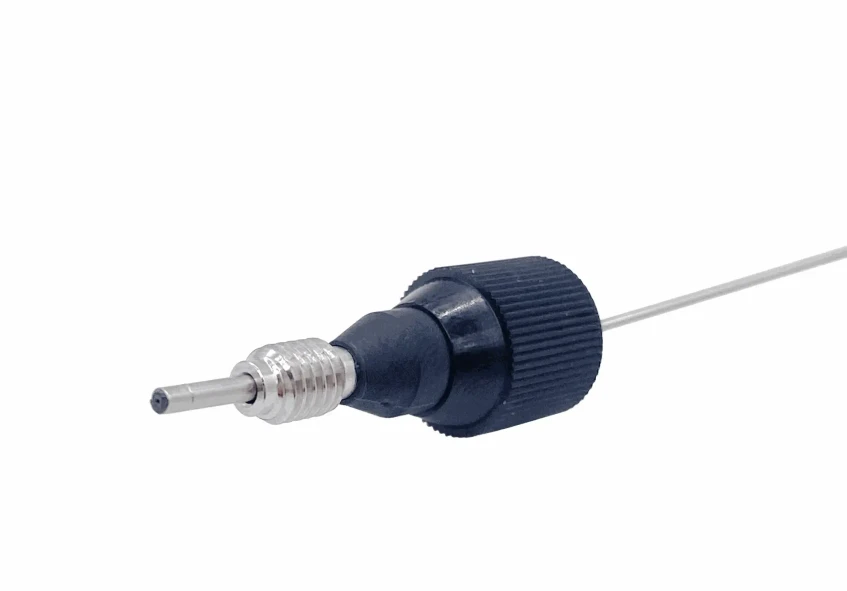 KNAUER: Trouble-free connection systom for HPLC and UHPLC
And while today’s solutions already represent a huge leap forward, the evolution of HPLC connection technology is certainly not over yet. Looking ahead, it will be exciting to see how future innovations continue to simplify chromatography workflows even further.
If you want to learn more about KNAUER´s capillaries, fittings and (U)HPLC system start-up kits and are interested in details and numbers, I highly recommend our brand new tech note "Benefits of KNAUER´s trouble-free analytical capillaries in terms of HPLC and UHPLC system performance" and a visit to our products online.
[1] 1984-1. Chromatographic Fittings: Proper Use to Minimize Dead Volume, January 1, 1984 LCGC 2(1) 20-21 (1984) John W. Dolan and Vern V. Berry
[2] Fittings and Connections for Liquid Chromatography—So Many Choices!, LCGC NORTH AMERICA VOLUME 36 NUMBER 5 MAY 2018, Dwight R. Stoll