HPLC method conversion free and easy
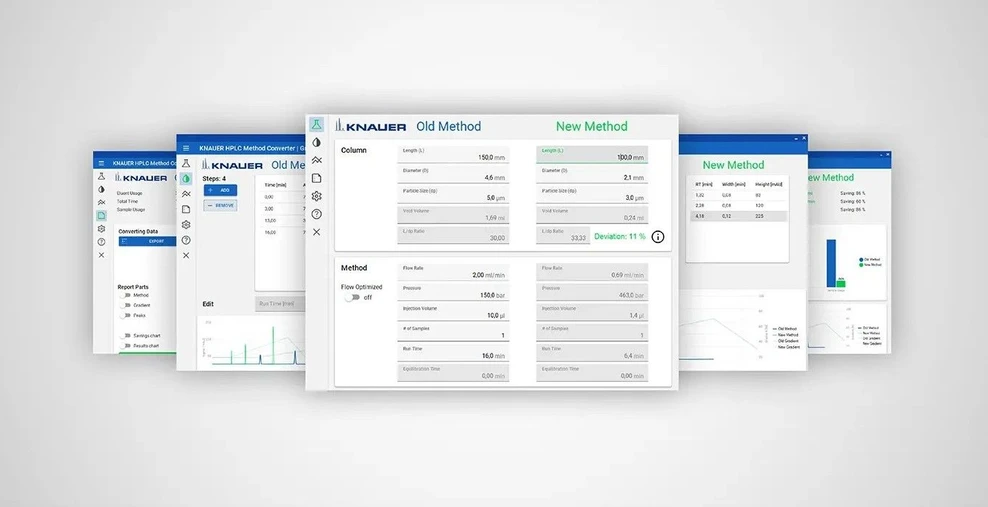
KNAUER: HPLC method conversion free and easy
How to Easily Adapt Your Existing HPLC Methods
Developing and optimizing an HPLC method is essential for achieving reliable separations, accurate quantification, and reproducible analytical results. As chromatography technology advances, one of the most common optimization strategies is transferring established methods to modern columns with smaller dimensions.
Although the benefits are clear, many analysts hesitate when it comes to modifying a validated method.
Questions quickly arise: How should the flow rate be adjusted? What injection volume is appropriate? Does the gradient need to be recalculated? Will the retention times change?
Even with the necessary equations available, performing all these calculations manually can be time-consuming and prone to errors. Instead of simplifying the workflow, method transfer often becomes an unnecessary obstacle.
Fortunately, there is an easier solution.
Simplify Your HPLC Method Transfer
Moving an existing method to a different column does not have to be complicated.
The KNAUER HPLC Method Converter is designed to automate the calculations required for method transfer. Simply enter the parameters of your current method, including the original column dimensions, and specify the dimensions of the new column—length, internal diameter, and particle size. The software instantly calculates the recommended flow rate and injection volume for the new conditions.
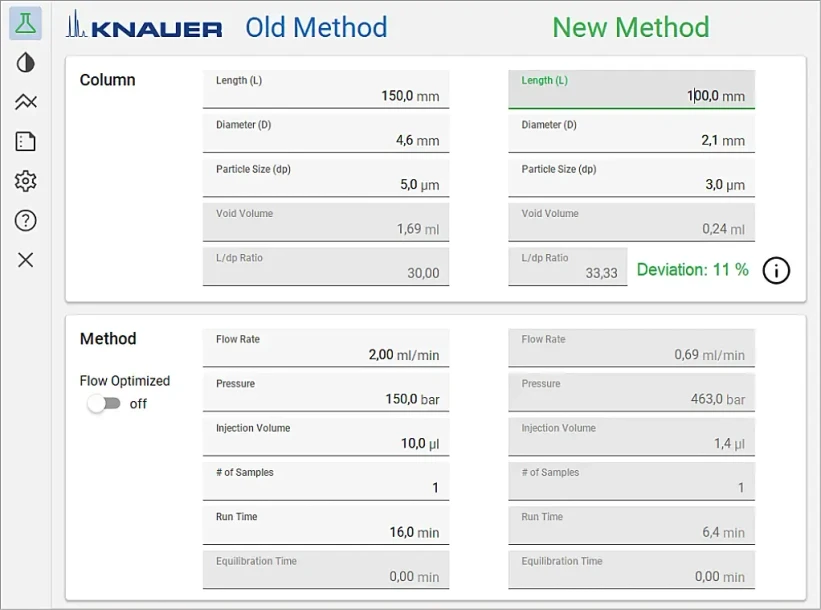 KNAUER: HPLC Method Converter
The next step is equally straightforward. Copy the original gradient profile into the converter, and the software automatically generates the corresponding gradient program for the new column.
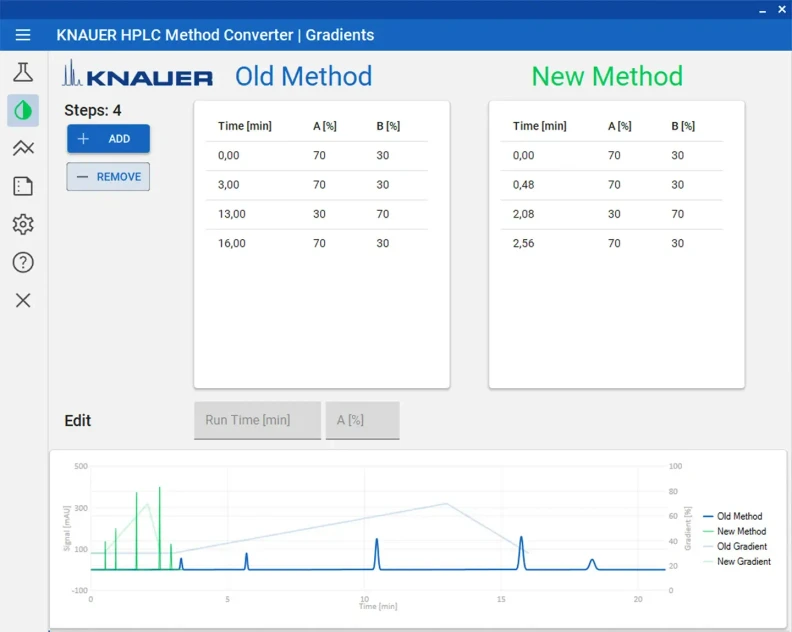 KNAUER: HPLC Method Converter - Gradients
For even greater confidence, the converter also allows you to enter chromatographic peak information. Based on these data, it predicts the expected retention times under the new conditions. While experimental verification on the HPLC system is still recommended, these predictions provide an excellent starting point for method optimization.
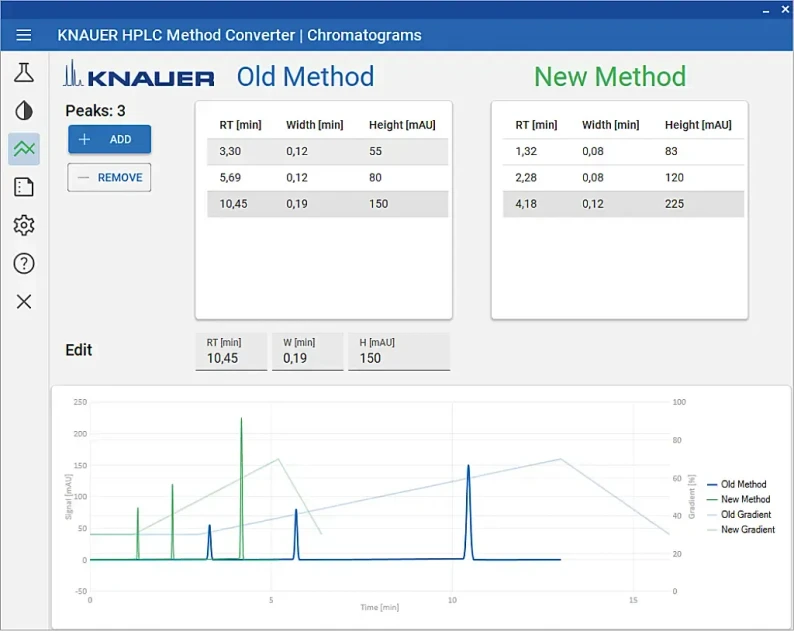 KNAUER: HPLC Method Converter - Chromatograms
The converter was developed with one primary objective: making HPLC method adaptation faster, easier, and more reliable while reducing the effort required from the user. Its intuitive interface, modern design, and automatic calculations help save valuable laboratory time—and it is available free of charge.
Modernize Your Methods and Improve Laboratory Efficiency
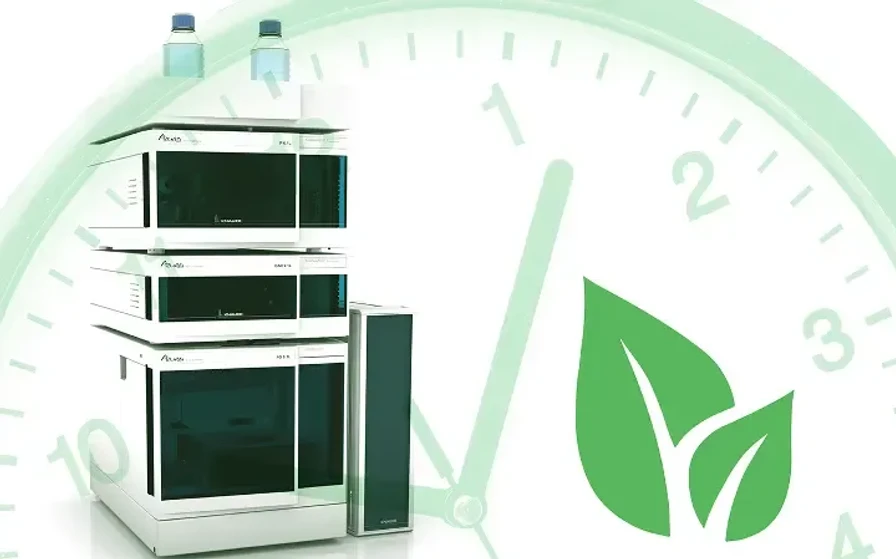 KNAUER: Modernize Your Methods and Improve Laboratory Efficiency
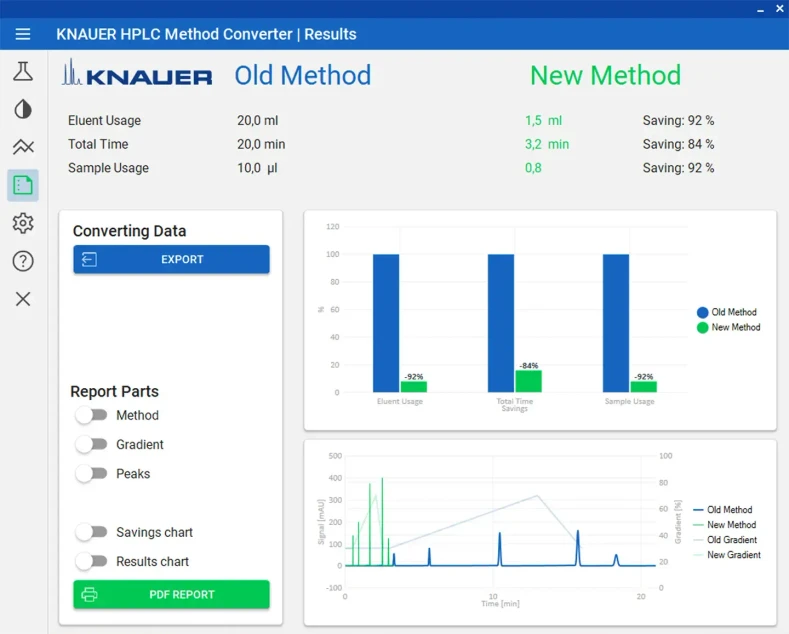 KNAUER: HPLC Method Converter - Results
One of the major advantages of the KNAUER HPLC Method Converter is its compliance with USP General Chapter <621>.
For pharmaceutical laboratories, chromatographic methods must comply with pharmacopeial requirements that ensure product quality and patient safety. Historically, many USP methods were developed using larger HPLC columns that no longer reflect the capabilities of modern chromatography systems.
Current USP, European Pharmacopoeia (Ph. Eur.), and Japanese Pharmacopoeia (JP) guidelines now permit specific adjustments to column dimensions and particle size for both isocratic and gradient methods. These changes are allowed provided that defined relationships between chromatographic parameters are maintained.
The KNAUER Method Converter automatically checks whether the selected column dimensions remain within the permitted USP limits. If the proposed changes comply with the guidelines, the software confirms that the method can be transferred while remaining pharmacopeia compliant. This removes uncertainty from the method conversion process and helps laboratories modernize their analytical workflows with confidence.
 Unsplash: Illustrative picture
Increase Productivity While Reducing Solvent Consumption
Updating HPLC methods is not only about shortening analysis times—it also supports more sustainable laboratory practices.
Using shorter columns together with optimized flow rates significantly reduces solvent consumption, lowering operating costs and decreasing the amount of hazardous chemical waste generated during routine analyses. Faster separations also improve instrument throughput, enabling more samples to be processed within the same amount of time.
Modernizing chromatographic methods therefore delivers a dual benefit: greater laboratory productivity and a smaller environmental footprint. With only a few simple adjustments, laboratories can improve efficiency while supporting more sustainable analytical workflows.