
Menu
More information
WebinarsAbout usContact usTerms of use
LabRulez s.r.o. All rights reserved. Content available under a CC BY-SA 4.0 Attribution-ShareAlike


Products from category Analytical HPLC columns focused on LC columns - page 14

Phenomenex Kinetex Core-Shell C8 HPLC Columns
The Kinetex C8 HPLC column is a core-shell-based particle with a bonded silica phase ideal for the analysis of very hydrophobic compounds.
Phenomenex Kinetex PAH Core-Shell HPLC Columns
Controlled pore processing and a proprietary polymer-bonded phase ensure excellent resolution of priority PAHs.
Phenomenex Kinetex Core-Shell HILIC HPLC Columns
Kinetex HILIC is a core-shell particle with unbonded silica, providing selectivity for retaining and separating polar compounds in HILIC chromatography.
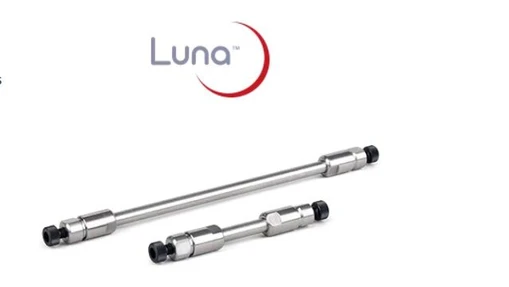
Phenomenex Luna PFP(2) HPLC Columns
The Luna PFP(2) is a pentafluorophenyl phase with strongly electronegative fluorine groups to provide polar selectivity for cationic compounds.
Phenomenex Luna C18(2) HPLC Columns
The Luna C18(2) phase is an octadecyl silane with ligands bound to the silica surface, resulting in a C18 HPLC column with a very hydrophobic stationary phase.
Phenomenex Luna NH2 HPLC Columns
High performance silica and bonding techniques produce a rugged, highly reproducible amino phase.
Phenomenex Luna C8(2) HPLC Columns
The C8 column provides less hydrophobic retention than our C18 columns, but the density of the ligand bonding creates more steric based selectivity.
Phenomenex Luna HILIC HPLC Columns
The Luna HILIC is a diol based silica phase that allows for an denser aqueous layer for increase polar selectivity.


Other projects

Follow us


More information
WebinarsAbout usContact usTerms of use
LabRulez s.r.o. All rights reserved. Content available under a CC BY-SA 4.0 Attribution-ShareAlike