

News from LabRulezLCMS Library - Week 18, 2026
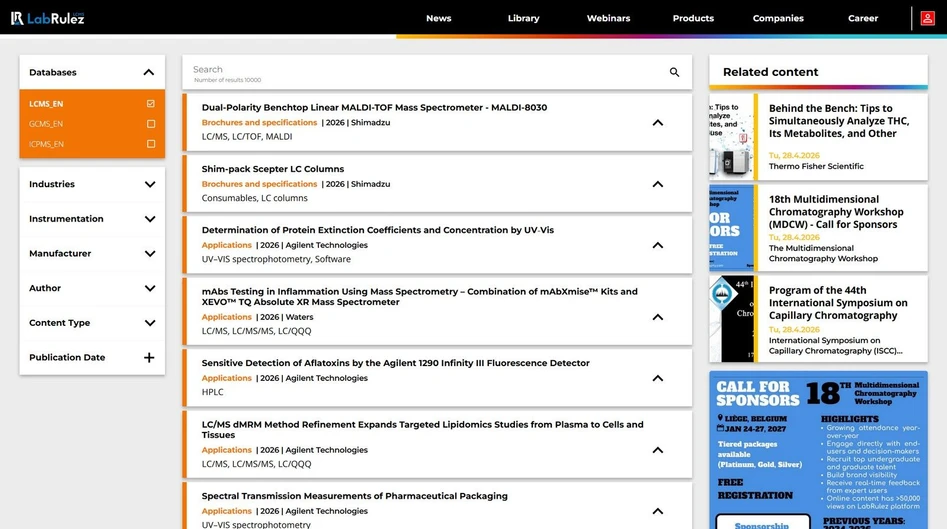
LabRulez: News from LabRulezLCMS Library - Week 18, 2026
Our Library never stops expanding. What are the most recent contributions to LabRulezLCMS Library in the week of 27th April 2026? Check out new documents from the field of liquid phase, especially HPLC and LC/MS techniques!
👉 SEARCH THE LARGEST REPOSITORY OF DOCUMENTS ABOUT LCMS AND RELATED TECHNIQUES
👉 Need info about different analytical techniques? Peek into LabRulezGCMS or LabRulezICPMS libraries.
This week we bring you application notes by Agilent Technologies, Metrohm, Shimadzu and Waters Corporation and technical note by Thermo Fisher Scientific!
1. Agilent Technologies: Rituximab Biosimilar Analysis Using the Agilent InfinityLab Pro iQ Plus LC/MS
- Application note
- Full PDF for download
Monoclonal antibody (mAb) therapeutics represent a fast‑growing area in today’s pharmaceutical market.¹ Innovator mAbs require substantial investments during discovery, development, and manufacturing. This has contributed to the high cost of treatment. As patents for many innovator molecules expire, demand for more affordable generic versions of innovators called biosimilars continues to increase.
To obtain regulatory approval, biosimilar manufacturers must establish that their products show no meaningful differences from the originator in terms of purity and potency.² A critical component of this process is a comprehensive analytical comparison to assess physicochemical similarities between the originator and biosimilars. Protein-based therapeutics production is inherently complex and ensuring product quality often requires various analyses. Among the most critical quality attributes are protein molecular weight and glycosylation profiles, which are closely monitored throughout the development and production process. Single quadrupole‑based LC/MS platforms have been adopted in the quality control (QC) environment for monitoring complex biomolecules. These instruments enable rapid, cost-effective evaluation of intact proteins and their subunits to detect variations in mass and glycosylation forms.
This application note demonstrates the suitability of the InfinityLab Pro iQ Plus single quadrupole LC/MS system, featuring a mass range up to m/z 3,000, for determining mAb masses at both intact and subunit levels. Two marketed rituximab biosimilars were evaluated against the innovator product as model systems.3 The LC/MS analysis of protein species from 23 to 147 kDa molecular weight mAb species included glycoform patterns in both innovator and biosimilars. All samples were analyzed using the InfinityLab Pro iQ Plus coupled to Agilent 1290 Infinity II Bio LC and controlled via Agilent OpenLab software. Molecular masses for each chromatographic peak were obtained using the spectral deconvolution tool in OpenLab CDS software and compared against theoretical average masses to evaluate mass comparison between the innovator and the biosimilar samples.
Experimental
Instrumentation
For LC/MS analysis, the Agilent 1290 Infinity II Bio LC coupled to the Agilent InfinityLab Pro iQ Plus mass detector system was used, including:
- Agilent 1290 Infinity II bio high-speed pump (G7132A)
- Agilent 1290 Infinity II bio multisampler (G7137A)
- Agilent 1290 Infinity II multicolumn thermostat (G7116B)
- Agilent InfinityLab Pro iQ Plus mass detector (G6170A)
Software
Agilent OpenLab CDS software version 2.8 was used for data acquisition and data processing. The spectral deconvolution tool in OpenLab CDS was used to determine the molecular mass of the proteins. The theoretical average mass of the protein compounds was calculated using NIST Mass and Fragment Calculator (v2.0) with NIST defined elemental average mass.4
Conclusion
The result of this study demonstrated minimal sample preparation, deconvolution for molecular mass, and major glycoform profiling using InfinityLab Pro iQ Plus mass detector. Both intact and reduced subunit deconvoluted spectra showed highly comparable mass profiles between the innovator and the biosimilars. The profiles of the innovator and biosimilar 1 were closely aligned, whereas biosimilar 2 exhibited greater variance. Reduced subunit analysis enabled clear assignment of LC and HC glycoforms. Observed masses matched theoretical values with good agreement across intact, LC, and HC measurements. Consistent detection of G0F, G1F, and G2F species demonstrated workflow robustness and reproducibility. The InfinityLab Pro iQ Plus LC/MS platform enabled rapid, reliable intact and subunit analysis for biosimilar comparability studies. The InfinityLab Pro iQ Plus mass detector demonstrated the capability to resolve more complex IgG variants as seen with biosimilar 2. The compact, cost‑effective design make the platform well suited for routine applications such as lot release testing, early clone screening, and biosimilar development.
2. Metrohm: ECL detection of fentanyl
Simple system for the detection of fentanyl using electrochemiluminescence
- Application note
- Full PDF for download
Electrochemiluminescence (ECL) is a highly sensitive analytical technique that combines electrochemical processes with light emission. Due to its versatility, sensitivity, and compatibility with a wide range of luminophores, it is used in clinical analysis, environmental detection, and bioanalytical research. Fentanyl is a synthetic opioid used for its analgesic and anesthetic properties. It is approximately 100 times more potent than morphine and 50 times more potent than heroin. Despite its medical applications, illicit fentanyl is regularly found on the black market, contributing to a growing global health concern.
Most current methods used to detect fentanyl are time-consuming, expensive, or require complex instrumentation. This Application Note presents an ECL method, that offers a fast, accessible, and costeffective alternative for the detection of fentanyl.
INSTRUMENTATION AND SOFTWARE
ECL experiments were performed using the SpectroECL instrument with either a microspectrometer cell (Figure 1) or with a photodiode cell (ECLPHOTODIODCELL) as detector. Gold screen-printed electrodes (SPEs, 220AT) were used to perform the ECL experiments. SpectroECL was controlled with the DropView SPELEC software, which allows the collection of the electrochemical and emitted light signal simultaneously. Furthermore, the software includes tools for data treatment and analysis. Table 1 lists all hardware and software used for this study.
CONCLUSION
ECL is a powerful technique that provides reliable results in the study of a variety of luminophores. The combination of the microspectrometer cell for the ECL emission spectra and the photodiode detector for improved sensitivity by measuring total ECL intensity, enables a clear understanding of the analyzed system and supports quantification of the target analyte. As proof of concept, this Application Note demonstrates the detection of fentanyl based on the characteristic ECL emission of Rubpy in presence of this compound. As the ECL signal depends on the concentration of fentanyl in solution, the obtained results open new paths for the development of ECL sensors for opioids detection.
3. Shimadzu: Ion-Pair Reversed-Phase LC/MS Analysis of GalNAc-siRNA Conjugates under Denaturing and Non-Denaturing Conditions
- Application note
- Full PDF for download
User Benefits
- The LCMS-2050 single quadrupole mass spectrometer and the LabSolutions Insight Biologics analysis software can be used to confirm the molecular weight of GalNAc-siRNA conjugates.
- LabSolutions Insight Biologics enables analysis of multiple oligonucleotide sequences at the same time. Nucleobases, linkers, riboses, and base modifications can be added and removed as required.
Among oligonucleotide therapeutics, antisense and siRNA therapeutics are actively studied as new modalities for treating genetic and intractable diseases. Oligonucleotide therapeutics modified with N-acetylgalactosamine (GalNAc) have attracted attention as drug delivery systems (DDS) designed to enhance the uptake of these therapeutics into the liver. GalNAc binds to the asialoglycoprotein receptor (ASGPR), which is highly expressed in the liver, and is subsequently internalized into hepatocytes. By exploiting this mechanism, GalNAc-modified oligonucleotide therapeutics can be efficiently delivered into hepatocytes. In many cases, a tri-antennary GalNAc (Tri-GalNAc) structure containing three GalNAc residues is used as a highly efficient ligand for ASGPR.
This application describes an example of ion-pair reversedphase LC/MS analysis of GalNAc-siRNA conjugates using a single quadrupole mass spectrometer under denaturing and non-denaturing conditions.
Analytical Conditions
Analysis was performed with Nexera XS inert UHPLC and LCMS-2050 single quadrupole spectrometer systems. The analytical conditions are shown in Table 1. The LCMS-2050 is equipped with a heated DUIS ion source for ionization, which offersthe advantages of both ESI and APCI methods.
Results of Identification by LC/MS
Insight Biologics displays , identified oligonucleotide sequences as component chromatograms based on the MS1 spectrum, with all valence differences and isotopes added. Fig. 4 and 5 show the component chromatograms obtained by LC/MS analysis of GalNAc-siRNA conjugates at 25 and 60 °C column oven temperatures, respectively. At the 25 °C column oven temperature, the sense strand and antisense strand sequences were identified at the same retention time. On the other hand, at a 60 °C column oven temperature, the antisense and sense strand sequences were respectively identified in the order they were eluted. That confirmed that the two peaks detected in the UV chromatogram (Fig. 3) were eluted in the single-stranded (denatured)state.
The sense and antisense strand sequences were identified with a mass error of 1 Da from their theoretical molecular weights at both 25 and 60 °C column temperatures. As an example, Fig. 6 shows the identification results for the sense strand at a column temperature of 60 °C.
Conclusion
LC/MS analysis of GalNAc-siRNA conjugates under denaturing and non-denaturing elution conditions was performed using an LCMS-2050 single quadrupole mass spectrometer. Under denaturing conditions with a column temperature of 60 °C, the GalNAc-siRNA conjugate was eluted in a dissociated singlestranded state, but with a column temperature of 25 °C, it was eluted in a double-stranded state. Both sense and antisense strands were detected with a mass error of less than 1 Da from the theoretical molecular weight value.
Single quadrupole mass spectrometers cannot be used for MS/MS analysis, but they are easy to use and can be operated similarly to an LC system, so they are increasingly popular for confirming molecular weights, such as for quality control. Quadrupole time-of flight mass spectrometers are useful for sequence analysis by MS/MS, as described in Application News No. 01-01176.
4. Thermo Fisher Scientific: Unveil plasma proteomics with cutting-edge hybrid-DIA methods utilizing two strategies on the Orbitrap Astral Zoom MS
- Technical note
- Full PDF for download
Traditional proteomic approaches encompass two main segments: targeted quantitation and discovery proteomics. One of the most representative and widely used acquisition methods for discovery proteomics is DIA. DIA provides comprehensive proteome coverage, reduces missing values, and enables high-accuracy, large-scale studies by fragmenting all peptides in a sample simultaneously. However, DIA can sometimes lack the specificity needed for targeted studies. Targeted quantitation is better suited for achieving the highest sensitivity and accuracy for a specific list of low-abundance peptides but is limited in the number of peptides it can analyze. Deciding between comprehensive discovery proteomics profiling and sensitive targeted quantitation is often a predicament for scientists in translational research, especially when analyzing large sample cohorts. The hybrid-DIA method addresses these challenges by combining the strengths of both targeted and discovery proteomics.
Hybrid-DIA integrates targeted peptide quantitation with DIA discovery proteomics, enabling dynamic coordination of DIA scans and precise measurement of MS² scans for predefined peptide targets. This approach ensures accurate quantification of specific peptides of interest while maintaining the broad, unbiased nature of DIA, making it a powerful tool for translational research applications.
One key application of hybrid-DIA in translational research is the study of plasma samples from patients with various diseases. Plasma is a readily accessible biological fluid rich in information about physiological states. Hybrid-DIA combines the specificity of targeted quantitation with the comprehensive coverage of DIA. This dual capability allows researchers to precisely quantify known low-abundant protein biomarkers while also exploring and identifying new biomarkers and protein signatures in plasma.
To leverage these advantages, we developed and evaluated hybrid-DIA methods using two strategies, targeted MS² (tMS²) and the Thermo Scientific™ SureQuant™ Internal Standard Targeted Quantitation Workflow. The first approach combines a DIA scan with a targeted MS² experiment, involving an MS¹ scan, a targeted MS² acquisition with a mass list table of all peptides to be quantified, followed by a DIA experiment. The second approach integrates a DIA experiment with on-the-fly triggering scans. The results from the two hybrid-DIA approaches were compared with traditional acquisition strategies for standard DIA and targeted parallel reaction monitoring (PRM) analysis. Both hybrid-DIA approaches demonstrated promising results when compared to standard DIA and PRM methods. The established hybrid-DIA methods can be readily adapted to various sample matrices.
Materials and methods
Instrumentation
- Thermo Scientific™ AccelerOme™ Automated Sample Preparation Platform
- Thermo Scientific™ Vanquish™ Neo UHPLC System
- Thermo Scientific™ Orbitrap™ Astral™ Zoom Mass Spectrometer
- Thermo Scientific™ Easy-Spray™ Source
Data analysis and visualization
- University of Washington, MacCoss Lab. Skyline™ software (ver. 23.1.1.503)
- Spectronaut™ software (v20.1) (Biognosys, AG) with HTRMS converter
- Python™ software 3.0.1
Conclusions
Overall, the data demonstrated that both the SureQuant hybridDIA and tMS² hybrid-DIA methods are effective for simultaneously achieving targeted peptide quantitation and DIA discovery scans. Table 4 highlights the pros and cons of tMS² hybrid-DIA and SureQuant hybrid-DIA approaches.
The tMS² hybrid-DIA method does not require heavy peptide standards, has a straightforward setup, ensures peak completeness, and supports adaptive retention time (adaptive RT). The data showed that there are sufficient data points per peak, even with 300 targeted peptides in the PRM panel. However, users should be cautious about the number of data points per peak when using excessively large, targeted peptide panels. Additionally, users may experience potential interference in peptide identification without heavy-labeled peptide confirmation.
SureQuant hybrid-DIA includes more targeted peptides, provides more data points per peak, and offers improved confidence and accuracy in peptide identification. On the downside, it requires heavy peptide standards, has a more complex setup, does not ensure peak completeness, and does not need adaptive RT.
Each method has its own advantages and features, making it suitable for different experimental needs.
Highlights of hybrid-DIA methods:
Hybrid-DIA still maintains a good depth of protein group and peptide numbers compared to the standard DIA method. The increased number of targeted peptides did not impact the protein group number in the DIA acquisition of the hybrid-DIA method.
The Orbitrap Astral Zoom MS demonstrated exceptional sensitivity for targeted peptides in hybrid-DIA analysis. The DIA acquisition in the hybrid-DIA method did not significantly affect the sensitivity of targeted peptide scans compared to the standard PRM method. More than 92% of peptides had a LOD below 25 amol, and more than 82% of peptides had a LOQ below 50 amol.
Data from the hybrid-DIA method showed a very strong positive correlation with data from both the standard DIA and standard PRM methods. Protein intensities measured using the hybrid-DIA method exhibited a strong correlation with those obtained from the standard DIA method. Similarly, targeted peptide intensities from the hybrid-DIA method showed a strong correlation with the standard PRM method.
The two hybrid-DIA approaches, SureQuant hybrid-DIA and tMS² hybrid-DIA, demonstrated consistent results.
5. Waters Corporation: MALDI and DESI: Complementary Lipid Imaging on a Single Mass Spectrometry System
- Application note
- Full PDF for download
Benefits
- A significant number of lipid species can be detected and putatively identified using both MALDI and DESI Mass Spectrometry Imaging (MSI) techniques. Either technique could be implemented independently and provide the user with a large lipid coverage
- MALDI and DESI are complementary, with each ionization technique offering a number of putative lipid identifications not identified by the alternate ionization method. Therefore, lipid coverage can be increased
utilizing both ionization techniques together on the same tissue - Images generated by both MALDI and DESI are comparable when displayed in High-Definition™ Imaging (HDI™) Software
MSI is a powerful tool that allows a user to not only identify marker compounds within a complex matrix – such as tissue sections – but also allows visualization of spatial localization of these compounds. This enables a deeper dive into biological relevance versus homogenized tissue extracts analyzed by more traditional liquid chromatography-mass spectrometry (LC-MS) applications. Additionally, with LC-MS applications, tissue requires considerable and lengthy sample preparation that can lead to compound losses: homogenization to release the compounds of interest, extraction to solubilize the intended classes of compound, and clean-up to ensure no solid material is injected onto the column causing blockage. Whereas with MSI, significantly less sample preparation is required once a tissue has been sectioned, MALDI only requires the section to be coated in a suitable matrix prior to analysis, and DESI analysis needs no further sample preparation.
Historically MSI has relied heavily on MALDI and many advances have been made within this technique. However, in the last few years, the availability and increased usability of DESI has increased popularity of this imaging technique and allowed these two orthogonal imaging platforms to become equally valid.
MALDI requires the application of a matrix layer on the surface of the tissue section. The matrix selectively draws out compounds from the tissue and then crystallizes as it dries, enabling compound ionization when desorbed by laser irradiation. As such, the selection of the matrix can be optimized toward the detection of compounds of interest, producing a much more targeted approach. The method of matrix application can have a large effect on analyte intensity and image resolution.
DESI utilizes a spray of charged microdroplets to desorb and ionize molecules from the sample surface, thus requiring minimal sample preparation and without the need for application of matrices. Another advantage to DESI is that, upon analysis, minimal disruption or damage is caused to the surface of the tissue making it a much ‘softer’ ionization than MALDI. This allows for multiple analyses of the same tissue area or the ability to utilize the same tissue section for orthogonal techniques such as MALDI or histological staining.
Having access to two distinctly different ionization modes provides the user with a more tailored approach to their MSI analyses. This can improve study outcomes by offering complementary ionization modes to increase compound coverage and potentially improve the study outcome.
Atherosclerosis is a condition whereby lipids accumulate in the blood-vessel wall causing the formation of plaques.1 If these plaques break from the blood-vessel wall, a thrombus is released, which can travel to another area of the body and cause blockage leading to heart attacks, strokes, or localized tissue damage/death. Understanding the different lipid compositions of these plaques could help identify the stability of the plaques and their likelihood of detachment from the blood-vessel wall. Being a lipid-rich target application, it was important to detect and identify as many lipid analytes as possible. With this in mind, the analysis was conducted using both MALDI and DESI Imaging techniques. These are complementary to one another with their sample preparation and ionization modes favoring different lipid species to one another. Here, a SYNAPT™ XS Mass Spectrometer (MS) is utilized to image sections of atherosclerotic plaques by both MALDI and DESI ionization to investigate lipid profile and distribution.
Results and Discussion
For this analysis, 14 carotid artery atherosclerotic plaque sections were imaged, each taken from individual patients undergoing a carotid endarterectomy. The MSI was performed on consecutive sections to ensure comparable analyses between the two ionization modes. Initially, data from all 28 individual images were imported into HDI Software for visualization. It was observed that all analyses strongly detected a lipid signal with an m/z 725.5560, putatively identified as SM 34:3. As such, this was chosen for display purposes. It can be seen in Figure 1 that the images generated by both DESI and MALDI MSI techniques are comparable and the distribution of the analyte is consistent. For these images, the data has been normalized by total ion count (TIC) and the scale maximum set to be the same for each tissue section to simplify the visual. From this, it can be seen that the distribution and relative intensity of the analyte varies between the individual plaques and that the DESI may ionize this lipid slightly better than the MALDI. The DESI images also appear to have sharper definition between the features of the section suggesting a slightly higher image resolution than seen with the MALDI. This could be due to MALDI matrix application. These analyses were acquired using large 100 µm x 100 µm pixels. As such, should a user require a higher image resolution, the pixel size could be reduced for either technique.
Conclusion
Here, it has been demonstrated that a wide range and large number of lipids can be ionized and detected by either DESI or MALDI imaging. The results show that these ionization modalities are complementary to each other, both in the lipid species detected and also in lipid classes, with a significant number of unique lipids ionized by each technique respectively.
Analyses can be tailored to focus on certain classes depending upon the analytical question. Alternatively, running a tissue section by DESI (a non-destructive imaging technique) prior to analysis by MALDI would give a much wider lipid coverage than a stand-alone analysis using just one of the two ionization modalities.
This workflow utilizes the Analyte Browser MicroApp and demonstrates its utility to putatively identify a number of lipid species from both DESI and MALDI analyses simply and rapidly.


