Why Micro Inserts Are Essential for Precision in HPLC Analysis
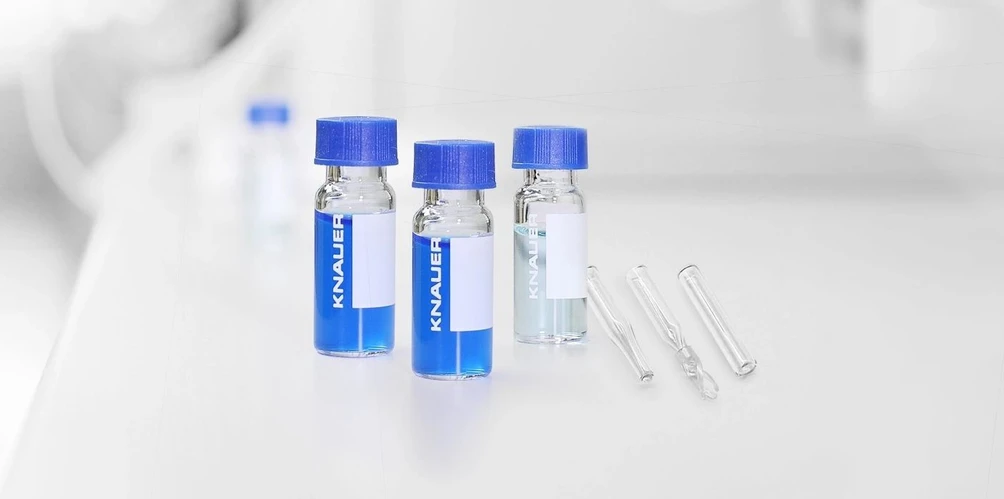
KNAUER: Why Micro Inserts Are Essential for Precision in HPLC Analysis
In analytical chemistry, achieving reliable results often depends on attention to seemingly minor details. One such detail is the use of micro inserts—small inserts placed inside standard HPLC vials that can significantly improve analytical performance when working with limited sample volumes. Although modest in size, these accessories help laboratories maximize sample utilization, improve reproducibility, and enhance measurement sensitivity.
For laboratories handling valuable, scarce, or low-volume samples, incorporating micro inserts into daily workflows can be a simple yet highly effective way to improve chromatographic results.
Understanding Micro Inserts and Their Importance
Micro inserts are small vessels designed to fit inside conventional 1.5 mL autosampler vials. Their primary purpose is to reduce the effective sample volume required for analysis while ensuring that even very small quantities of sample remain accessible to the autosampler needle.
This capability is particularly valuable in applications where sample availability is limited. Whether working with pharmaceutical compounds, environmental extracts, forensic specimens, or food safety samples, analysts often need to obtain reliable results from only a few microliters of material.
By concentrating the sample into a smaller space, micro inserts help improve sample recovery and analytical sensitivity. As a result, laboratories can detect low-level compounds more effectively while minimizing unnecessary sample consumption.
Ultimately, micro inserts contribute to more efficient analyses, improved data quality, and better utilization of valuable samples.
Key Benefits of Using Micro Inserts in HPLC
Although simple in design, micro inserts offer several important advantages that can improve both analytical performance and laboratory productivity.
Optimized Use of Small Sample Volumes
One of the primary reasons for using micro inserts is their ability to accommodate very small sample quantities. Samples in the low-microliter range can be analyzed efficiently without dilution or excessive waste.
This is especially beneficial when dealing with expensive, rare, or difficult-to-obtain materials, as it ensures that nearly all available sample can be used for analysis rather than remaining inaccessible within the vial.
Protection Against Sample Loss Through Evaporation
Small liquid volumes are particularly susceptible to evaporation, which can alter sample concentration and compromise analytical accuracy.
Micro inserts help minimize this risk by reducing exposed surface area and providing a more contained environment for the sample. This added protection is particularly useful when handling volatile compounds that may otherwise be lost before analysis.
Improved Sensitivity and Analytical Precision
The design of micro inserts allows the autosampler to access a greater proportion of the available sample. More efficient sample uptake often translates into improved chromatographic performance.
Benefits may include:
- Better peak shapes
- Increased signal intensity
- Enhanced signal-to-noise ratios
- Improved reproducibility
These advantages become especially important when quantifying trace-level analytes or working near detection limits.
Lower Risk of Carryover
Carryover remains a common concern in chromatographic analysis, particularly when highly concentrated samples are followed by low-level samples.
Because micro inserts confine the sample to a smaller and more controlled space, they can help reduce residual contamination between injections. The result is cleaner analyses and greater confidence in reported data.
Compatibility with Automated Systems
Modern laboratories increasingly rely on autosamplers and automated workflows to maximize productivity.
Micro inserts are specifically designed to function seamlessly within these systems, enabling reliable sample positioning and injection while reducing the likelihood of handling errors. This makes them particularly valuable in high-throughput environments where consistency and efficiency are critical.
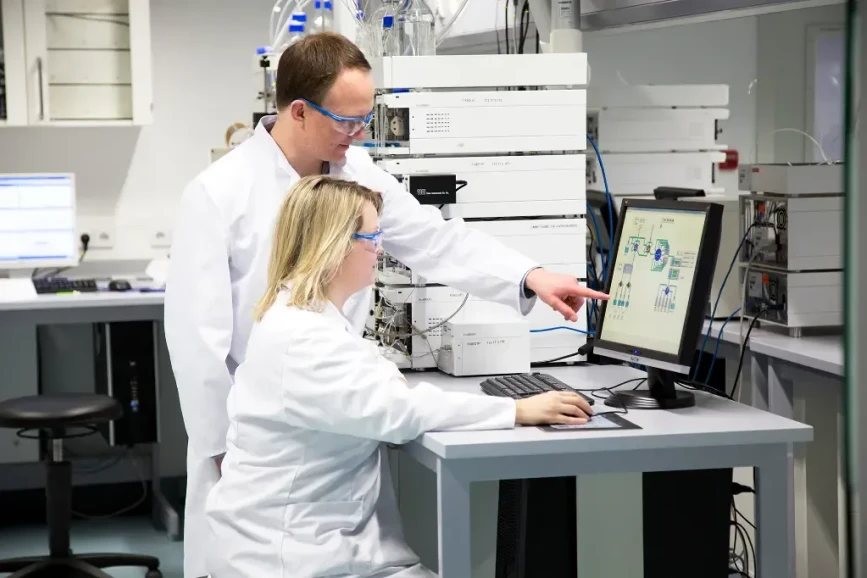 KNAUER: HPLC Lab - Application Development
By improving sample handling, reducing waste, and supporting automation, micro inserts can significantly enhance overall HPLC performance.
Selecting the Best Material: Glass or Plastic?
The choice of insert material can influence both analytical quality and operational costs. Selecting the appropriate insert depends largely on sample composition and solvent compatibility.
Glass Inserts
Glass inserts are often preferred for demanding analytical applications.
Their advantages include:
- Excellent chemical resistance
- Compatibility with organic solvents
- Minimal risk of analyte interaction
- Reduced contamination potential
For sensitive analyses and reactive samples, glass inserts typically provide the highest level of confidence in sample integrity.
Plastic Inserts
Plastic inserts offer a practical and economical alternative.
Advantages include:
- Lower cost
- High durability
- Reduced breakage risk
However, certain solvents may interact with plastic materials, making them less suitable for some applications involving aggressive chemical environments.
Common Micro Insert Designs and Their Applications
Different insert geometries are available to accommodate specific analytical requirements.
Flat-Bottom Inserts
Flat-bottom inserts represent the most versatile option and are widely used for routine analyses.
Key benefits include:
- Excellent sample accessibility
- High sample recovery
- Broad autosampler compatibility
These inserts are suitable for most standard HPLC workflows.
Conical Inserts
Conical inserts feature a tapered bottom that concentrates the sample into a very small area.
This design is particularly advantageous when:
- Sample volumes are extremely limited
- Maximum recovery is required
- Trace-level analysis is being performed
The conical geometry helps ensure that even minute sample quantities remain accessible to the autosampler needle.
Spring-Fitted Inserts
Spring-fitted inserts incorporate a plastic spring mechanism that secures the insert within the vial.
Advantages include:
- Stable positioning
- Reduced insert movement
- Improved performance in automated systems
These inserts are especially useful in laboratories operating high-throughput autosampler platforms.
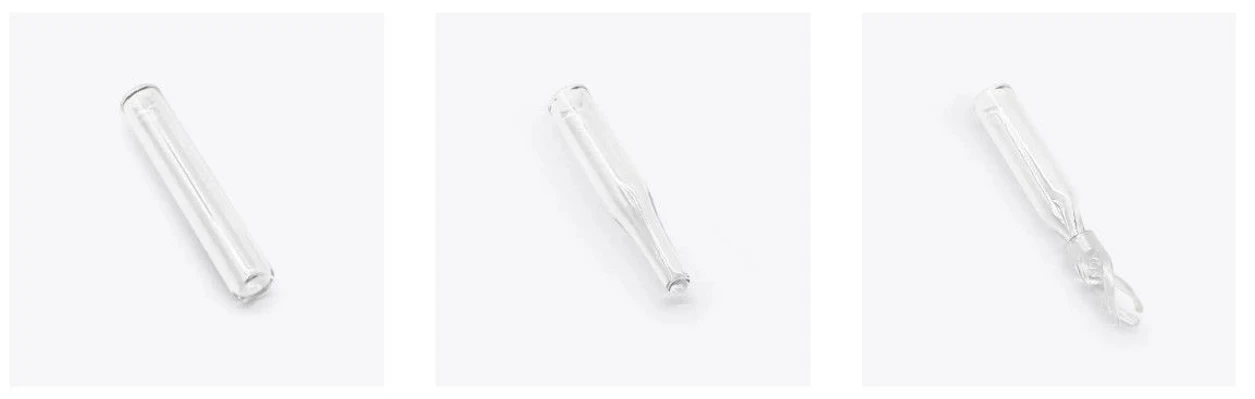 KNAUER: Fig. 1–3 Flat Bottom Insert (left), Conical Insert (center), Spring-fitted Insert (right)
Selecting the appropriate insert design can improve recovery, reduce variability, and enhance overall analytical reliability.
Applications Where Small Volumes Matter Most
Micro inserts are widely used in analytical fields where sample quantities are limited and measurement accuracy is critical.
Pharmaceutical Analysis
Drug development and quality control frequently involve precious samples and low-concentration impurities.
Micro inserts help maximize recovery and ensure accurate quantification, supporting reliable pharmaceutical testing and regulatory compliance.
Environmental Analysis
Environmental laboratories often work with trace contaminants present at extremely low concentrations.
Micro inserts improve sensitivity and help preserve valuable extracts, making them useful for pollutant monitoring and environmental investigations.
Forensic and Toxicological Testing
In forensic science, sample quantities are frequently limited and cannot be replaced.
Micro inserts enable efficient analysis of small biological specimens while preserving as much material as possible for potential repeat testing.
Across these disciplines, the ability to obtain high-quality results from minimal sample volumes makes micro inserts an indispensable analytical tool.
Supporting Sustainable Laboratory Practices
Sustainability has become an increasingly important consideration in analytical laboratories.
Micro inserts contribute to greener workflows by:
- Reducing sample consumption
- Lowering solvent usage
- Minimizing reagent waste
- Improving overall analytical efficiency
These benefits align well with laboratory initiatives aimed at reducing environmental impact and operating costs.
Future developments may introduce inserts manufactured from recyclable or biodegradable materials, further enhancing their sustainability profile. Even today, however, micro inserts represent a straightforward way to improve resource efficiency without compromising analytical performance.
 KNAUER / unsplash.com: Sustainability
Small Components, Significant Benefits
Although micro inserts occupy only a small space inside an HPLC vial, their influence on analytical quality can be substantial.
By improving sample recovery, enhancing sensitivity, minimizing evaporation, reducing carryover, and supporting automated workflows, these simple accessories help laboratories achieve more reliable and reproducible results. Careful selection of insert material and design allows analysts to tailor performance to specific applications while making better use of valuable samples.
Micro inserts serve as a reminder that in chromatography, attention to the smallest details often delivers the greatest improvements in analytical success.