
Menu
More information
WebinarsAbout usContact usTerms of use
LabRulez s.r.o. All rights reserved. Content available under a CC BY-SA 4.0 Attribution-ShareAlike

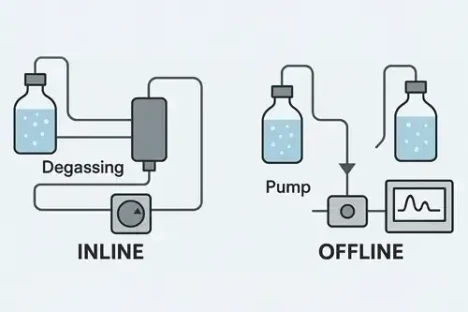
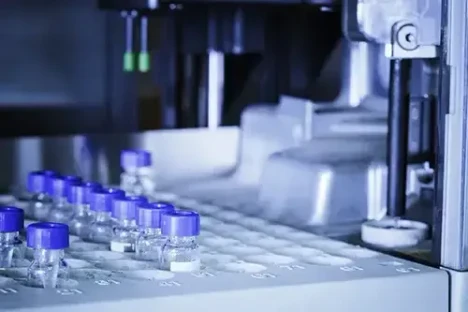
Article | Academy
Protein Purification by HPLC: Methods, Benefits, and Best Practices
Discover how HPLC enables efficient protein purification for biopharmaceuticals, proteomics, and biotechnology. Learn about purification modes, key benefits, optimization strategies, and best practices.
Th, 9.7.2026
Phenomenex



Article | Academy
What is the most appropriate way to approach scaling up your analytical method when transferring it to preparative chromatography scale? Part 1
Learn how to balance purity, yield, and throughput when scaling analytical HPLC methods to preparative chromatography.
We, 19.11.2025
Phenomenex


Article | Academy
Basic analytes and the benefits of modified silica supports in reversed-phase liquid chromatography
C18 columns with residual positive charge improve peak shape of basic analytes at low pH by reducing silanol interactions and enabling 100% aqueous mobile phases.
We, 6.8.2025
Phenomenex

Article | Academy
Overcoming Peak Tailing of Basic Analytes in Silica Type A Stationary Phases in RP
Struggling with peak tailing of basic compounds in RP-LC using type A silica columns? Discover how low-pH buffers and silanol suppressors can improve peak shape—plus why type B silica is a better choice.
We, 23.7.2025
Phenomenex


Other projects

Follow us


More information
WebinarsAbout usContact usTerms of use
LabRulez s.r.o. All rights reserved. Content available under a CC BY-SA 4.0 Attribution-ShareAlike