AZURA® SEC is KNAUER's line of GPC and SEC systems that offer solutions for different applications and labs. These systems can analyze, separate and fractionate sample components based on size and molecular weight, making them useful for industries such as polymer, food, biochemistry, and pharmaceuticals, as well as research.
The systems come in different variants, each tailored to specific lab needs, such as the AZURA SEC Compact for budget-friendly solutions or the Lab for highest analytical performance.
 KNAUER: AZURA GPC/SEC Systems - Application areas
GPC/SEC – Principles and parameters
Principle of GPC/SEC
How does GPC/SEC work?
Gel Permeation Chromatography (GPC) and Size Exclusion Chromatography (SEC) separate analytes by size using special columns with a porous matrix. The basic separation principle relies on the fact that smaller molecules will be more likely to enter those pores, making their travel time through the matrix longer than that of larger molecules. Separations (typically of a mixture of polymers, polysaccharides or biomolecules) are facilitated by choosing optimal particle and pore sizes, as well as column length. GPC/SEC is often used in quality control and R&D.
 KNAUER: AZURA GPC/SEC Systems - principle of GPC
GPC, SEC or GFC
Terminology in GPC/SEC
Gel Permeation Chromatography (GPC), Size Exclusion Chromatography (SEC) and Gel Filtration Chromatography (GFC) all essentially describe the same methodology, but the term GPC tends to be used in polymer chemistry by those working with aggressive, organic solvents, while SEC and GFC are more commonly used by those separating biomolecules using aqueous solvents (buffers) or to reflect the use of aqueous buffers in polymer separations. Systems with organic solvents or aqueous-based solvents present some inherent challenges.
The solvents used in polymer analysis are chosen for their ability to dissolve polymeric substances – and therefore may damage certain components of a device. And the use of salt buffers in SEC is harmful to metal components of the system. Hence, all liquid-contacting system components, from the valves and seals to tubing, must be carefully considered when developing such systems.
What does GPC require?
What do I need for GPC?
GPC columns are typically long and runs are performed at low flow rates of up to 1 ml/min and at low (<100 bar) pressures. For the precise molecular weight determination, which is the goal of most GPC/SEC users, a good isocratic pump is essential for a steady baseline. Also a degasser suitable for a wide range of partly highly aggressive solvents is very important to ensure reproducible results. Additionally, temperature is crucial for many GPC applications so a thermostat to control the column temperature is essential.
Due to the often very aggressive media used in polymer analysis, all wetted parts need to be compatible with the used solvent. Depending on the polymer it is important to keep this in mind when configuring a GPC system.
What is GPC Cleanup?
GPC Cleanup is a sample preparation method based on gel permeation chromatography (GPC). It is primarily employed for performing general cleanup tasks on a wide range of sample matrices such as foodstuffs, tissues, plants, and environmental samples. High-weight molecular substances, such as lipids, proteins, natural resins, cellular components, and steroids, interfering with subsequent analysis e.g. of pesticides are efficiently removed.
Components for GPC/SEC systems
Columns
Columns GPC/SEC separation efficiency is driven by long columns with large diameters, and the matrix is often based on porous silica or polymer material – the pore size determines the molecular weight range of the separation, and columns with different pore sizes are determines the molecular weight range of the separation, and columns with different pore sizes are combined to broaden separation and increase resolution.
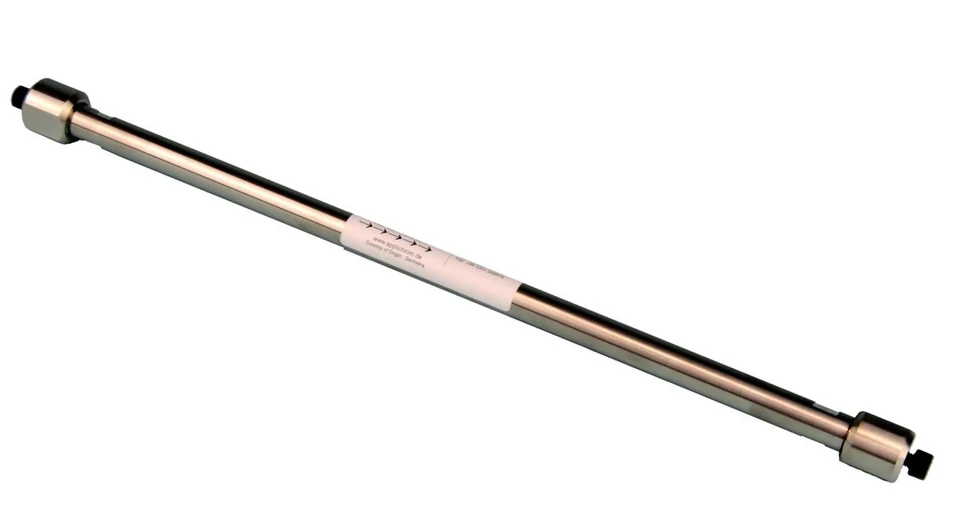 KNAUER: AZURA GPC/SEC Systems- Column
Software
The main goals are the determination of molar mass averages and the distribution of molar masses, which is performer through calibration using general standards with molar masses in a given range. Many chromatography data systems (CDS) are incapable of processing this data. With the GPC/SEC extension to our well-known ClarityChrom CDS software we offer our customers the possibility to continue working with a familiar software.
 Knauer: ClarityChrom Workstation
Extensions
AZURA also affords customers the flexibility to extend their GPC/ SEC systems with autosamplers, valves, feed pumps, and column thermostats. In fact, many GPC runs are conducted at higher temperatures (<60°C), so the AZURA column thermostat is of great interest.
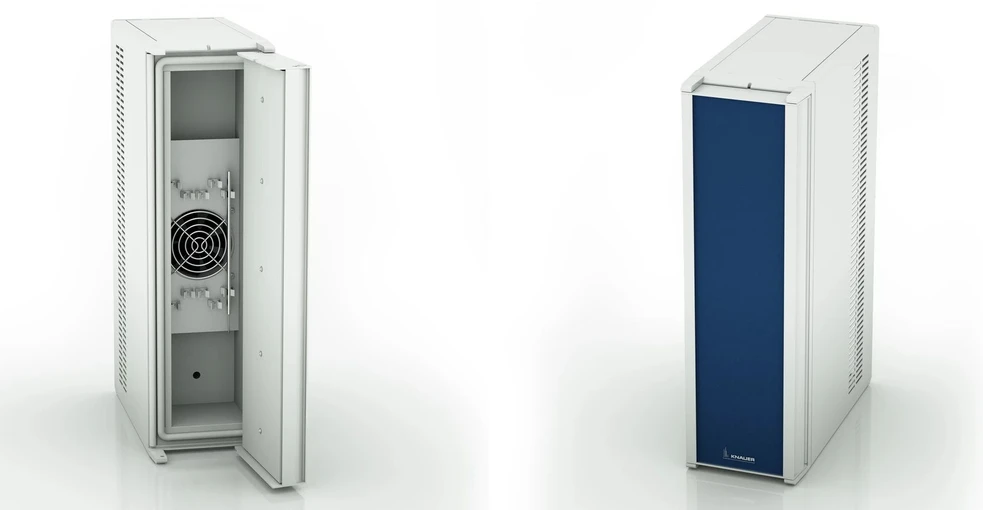 KNAUER: AZURA GPC/SEC Systems - column thermostats
Pumps
GPC/SEC analyses necessitate lower flow rates and lower pressure than HPLC. GPC/SEC runs are conducted isocratically, so a good isocratic pump is essential for a steady baseline. The AZURA excellent isocratic pump has been optimized to meet the requirements of GPC applications.
Options:
- Normal phase
- Aqueous eluents
- Reversed phase pump with integrated solvent selection valve and degasser
 Knauer: AZURA GPC/SEC Systems - pumps
Detectors
Our AZURA RI detector has been optimized for a better performance with organic solvents. Especially we have worked on significantly lower the drift with THF.
Yu can alternatively choose between our UV/VIS detectors, variable single wavelength, multi- wavelength, or diode array.
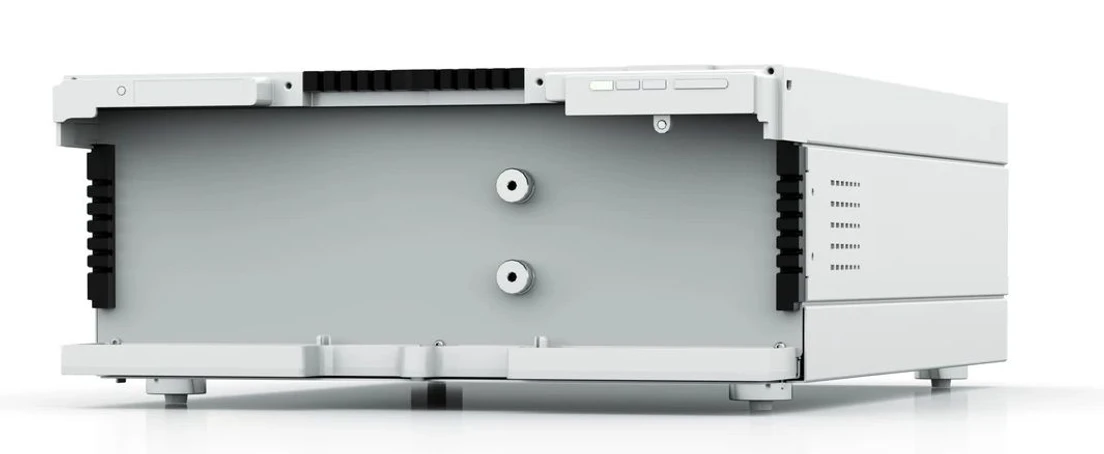 KNAUER: AZURA GPC/SEC Systems - RID 2.1 detector