How to investigate poor performance in proficiency testing
Article | Academy

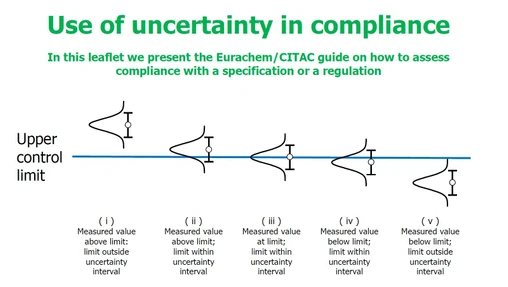
How to investigate poor performance in proficiency testing

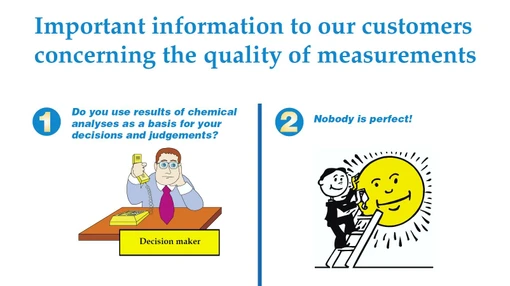
Learn how laboratories should investigate poor proficiency testing results, identify root causes, implement corrective actions, and improve quality management to prevent recurring issues.
Tu, 2.6.2026
Eurachem
tag
share
more
How to investigate poor performance in proficiency testing
SPE Troubleshooting: Understanding and Resolving Low Recovery in Solid Phase Extraction
Article | Academy

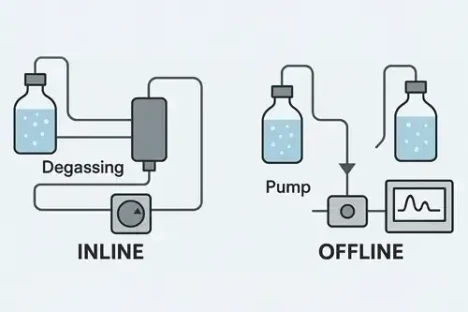
SPE Troubleshooting: Understanding and Resolving Low Recovery in Solid Phase Extraction

Low SPE recovery does not have to mean method failure. Learn how fraction collection and analysis can identify analyte losses and guide effective troubleshooting steps.
We, 27.5.2026
Phenomenex
tag
share
more
SPE Troubleshooting: Understanding and Resolving Low Recovery in Solid Phase Extraction
Use of surplus proficiency test items
Article | Academy

Use of surplus proficiency test items

Learn how surplus proficiency testing (PT) items can support method verification, analyst training, internal quality control, troubleshooting, and performance assessment in analytical laboratories.
Tu, 26.5.2026
Eurachem
tag
share
more
Use of surplus proficiency test items
Configuring and Navigating Chromatogram Window NIST26
Article | Academy

Configuring and Navigating Chromatogram Window NIST26

Learn how to configure, customize, and navigate the new NIST 26 Chromatogram Window. This practical guide covers layouts, zooming, filtering, structure display, and efficient data review workflows.
Tu, 26.5.2026
James Little/Mass Spec Interpretation Services
tag
share
more
Configuring and Navigating Chromatogram Window NIST26
Proficiency testing schemes for sampling
Article | Academy

Proficiency testing schemes for sampling

Learn how ISO/IEC 17043 applies to proficiency testing schemes for sampling, including evaluation models, statistical design, homogeneity, assigned values, and sampling uncertainty.
Tu, 19.5.2026
Eurachem
tag
share
more
Proficiency testing schemes for sampling
A comprehensive guide for selecting the appropriate HPLC detector
Article | Product

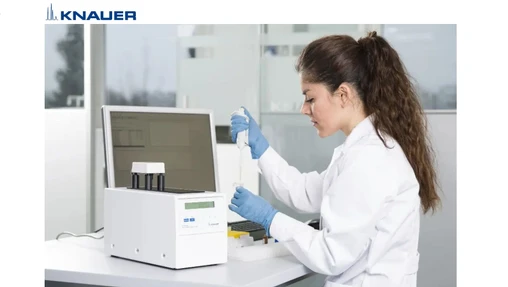
A comprehensive guide for selecting the appropriate HPLC detector

Learn how to select the right HPLC detector by comparing sensitivity, selectivity, compatibility, and performance across common detection technologies.
We, 13.5.2026
KNAUER
tag
share
more
A comprehensive guide for selecting the appropriate HPLC detector
Pre- and post-analytical proficiency testing
Article | Academy

Pre- and post-analytical proficiency testing

Pre- and post-analytical PT/EQA schemes help evaluate the entire routine chemical analysis process, from sampling and preparation to interpretation and reporting of results.
Tu, 12.5.2026
Eurachem
tag
share
more
Pre- and post-analytical proficiency testing
Extending the Lifetime of Size Exclusion Columns
Article | Academy

Extending the Lifetime of Size Exclusion Columns

How to extend SEC column lifetime: key degradation causes and best practices for contamination prevention, storage, and column protection.
We, 6.5.2026
Phenomenex
tag
share
more
Extending the Lifetime of Size Exclusion Columns
Proficiency testing – How much and how often?
Article | Academy

Proficiency testing – How much and how often?

How to define a PT strategy? Eurachem guidance explains how to set scope, frequency, and risk-based participation while integrating PT with broader QA tools.
Tu, 5.5.2026
Eurachem
tag
share
more
Proficiency testing – How much and how often?
Troubleshooting Retention Time Shifts in Liquid Chromatography
Article | Academy

Troubleshooting Retention Time Shifts in Liquid Chromatography

Troubleshoot LC retention time shifts using T₀. Learn how to quickly distinguish between system-related and chromatographic issues.
Th, 30.4.2026
Phenomenex
tag
share
more
Troubleshooting Retention Time Shifts in Liquid Chromatography
Other projects
GCMS
ICPMS
Follow us
FacebookX (Twitter)LinkedInYouTube
More information
WebinarsAbout usContact usTerms of use
LabRulez s.r.o. All rights reserved. Content available under a CC BY-SA 4.0 Attribution-ShareAlike