


The Academy employs over 8,000 employees, more than a half of whom are researchers with university degrees.
The primary mission of the CAS and its institutes is to conduct research in a broad spectrum of the natural, technical and social sciences and the humanities. This research, whether highly specialised or interdisciplinary in nature, aims to advance developments in scientific knowledge at the international level, while also taking into account the specific needs of both the Czech society and the national culture. Researchers of the Academy institutes also participate in education, particularly through doctoral study programmes for young researchers and by teaching at universities as well. The Academy also fosters collaboration with applied research and industry. The integration of the Czech science into the international context is being promoted by means of numerous joint international research projects and through the exchange of scientists with counterpart institutions abroad. The CAS is financed primarily from the state budget.
The CAS has also been assigned financial responsibility for 71 specialised Czech scientific societies associated with the Council of Scientific Societies.
Institutes according to Research Areas
I. Mathematics, Physics, and Earth Sciences
1. Section of Mathematics, Physics, and Computer Science
- Astronomical Institute of the CAS
- Institute of Physics of the CAS
- Institute of Mathematics of the CAS
- Institute of Computer Science of the CAS
- Nuclear Physics Institute of the CAS
- Institute of Information Theory and Automation of the CAS
2. Section of Applied Physics
- Institute of Photonics and Electronics of the CAS
- Institute of Physics of Materials of the CAS
- Institute of Plasma Physics of the CAS
- Institute of Scientific Instruments of the CAS
- Institute of Theoretical and Applied Mechanics of the CAS
- Institute of Thermomechanics of the CAS
3. Section of Earth Sciences
- Institute of Geophysics of the CAS
- Institute of Geology of the CAS
- Institute of Atmospheric Physics of the CAS
- Institute of Geonics of the CAS
- Institute of Hydrodynamics of the CAS
- Institute of Rock Structure and Mechanics of the CAS
II. Life and Chemical Sciences
4. Section of Chemical Sciences
Chemical research continues in the tradition of such distinguished Czech chemists as Rudolf Brdička, Jaroslav Heyrovský, František Šorm, and Otto Wichterle. In physical chemistry, theoretical as well as experimental, research is oriented toward the selected fields of chemical physics, electrochemistry, and catalysis. Inorganic chemistry is directed at the preparation and characterisation of new compounds and materials, such as boranes. Research in organic chemistry and biochemistry focuses on medicine, biology, and ecology, seeking to synthesise new potential medicaments, especially anti-virals. Macromolecular chemistry involves developing, preparing, and characterising new polymers for use in biomedicine, such as those for contact lenses and the separation of compounds. Analytical chemistry is also directed at separation techniques, but on a microscale in capillaries and in spectral methods. Thermodynamics and phase behaviour of fluids, dynamics of multiple phase reacting systems, homo- and heterogeneous catalysis, and modern separation methods are studied in the domain of chemical engineering science.
The section is comprised of six institutes which have a total of 1563 employees, of whom 1106 are graduate research workers.
- Institute of Analytical Chemistry of the CAS
- Institute of Inorganic Chemistry of the CAS
- J. Heyrovský Institute of Physical Chemistry of the CAS
- Institute of Chemical Process Fundamentals of the CAS
- Institute of Macromolecular Chemistry of the CAS
- Institute of Organic Chemistry and Biochemistry of the CAS
5. Section of Biological and Medical Sciences
The aim of research in this section is to increase knowledge about processes in living organisms, from the molecular and cellular levels to the whole organism. Biophysical research is oriented toward studies of DNA – protein interaction and the effect of environmental factors on organisms. In molecular genetics and cell biology, signalling pathways which trigger target reactions and the responses of the target genes to these signals are investigated; special attention is paid to cell mechanisms of immune responses. Studies of microbial genomes and processes lead to modern technologies for preparing metabolites with defined biological effects. Research in mammalian and human physiology and pathophysiology is centered on cardiovascular physiology, neurosciences, physiology of reproduction, and embryology, aimed at creating theoretical bases of preventive medicine. In entomology, insects are studied both as common pests, but also as model objects, as in the case of the silk moth. Research in experimental botany is oriented toward genetics, physiology, and pathophysiology, as well as modern plant biotechnologies.
The section is comprised of seven institutes which have a total of 2214 employees, of whom 1422 are graduate research workers.
- Institute of Biophysics of the CAS
- Institute of Biotechnology of the CAS
- Institute of Physiology of the CAS
- Institute of Microbiology of the CAS
- Institute of Experimental Botany of the CAS
- Institute of Experimental Medicine of the CAS
- Institute of Molecular Genetics of the CAS
- Institute of Animal Physiology and Genetics of the CAS
6. Section of Bio-Ecological Sciences
Research in this section is concentrated on interactions between organisms and environment, and also between organisms. Studies involve earth ecosystems, water ecosystems, and parasite-host systems. Investigations are carried out mostly on the territory of the Czech Republic, and contribute to the bio-ecological mapping of the country. Long-term observations focus on typical ecosystems in selected localities studied from the point of view of geobotany, hydrobiology, soil biology, chemistry and microbiology, and on the eutrophization of selected lakes and dams. Taxonomy of higher and lower plants, especially of algae, is investigated and the information is used by conservationists. The Institute of Botany oversees the care of Průhonice Park, an important part of Czech natural and cultural heritage.
The section is comprised of four institutes which have a total of 1275 employees, of whom 777 are graduate research workers.
- Biology Centre of the CAS
- Institute of Botany of the CAS
- Institute of Vertebrate Biology of the CAS
- Global Change Research Institute of the CAS
III. Humanities and Social Sciences
7. Section of Social and Economic Sciences
- Library of the CAS
- Economics Institute of the CAS
- Institute of Psychology of the CAS
- Institute of Sociology of the CAS
- Institute of State and Law of the CAS
8. Section of Historical Sciences
- Institute of Archaeology of the CAS, Brno
- Institute of Archaeology of the CAS, Prague
- Institute of History of the CAS
- Masaryk Institute and Archives of the CAS
- Institute of Art History of the CAS
- Institute of Contemporary History of the CAS
9. Section of Humanities and Philology
News

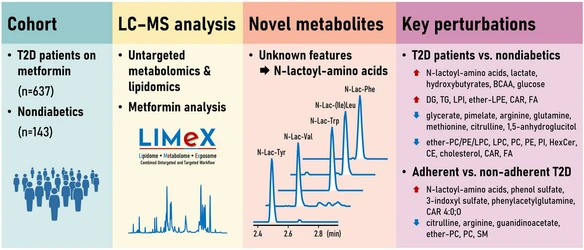
New blood biomarkers reveal how faithfully diabetes patients take metformin


Publication in Nature Microbiology describes a new type of light-harvesting apparatus in marine archaea
Wrote about us

Prague Metabolism and Signaling Symposium brought together leading researchers in metabolism
Library
Tips and tricks for LC–MS-based metabolomics and lipidomics analysis
Job offers



Related content
Benefits of Agilent Altura Ultra Inert HPLC Column Hardware
Vinylene carbonate water determination via coulometric Karl Fischer titration
An Isocratic Separation of B Vitamins Using Waters XBridge Biphenyl RP Column with MaxPeak Premier Technology


