A unique company dedicated to serving science helping our customers drive productivity and accelerate results. Through our premier brands – Thermo Scientific, Applied Biosystems, Invitrogen, Fisher Scientific and Unity Lab Services.
Distributor
Thermo Fisher Scientific (EMEA)
Thermo Fisher Scientific Inc. is the world leader in serving science, with annual revenue of approximately $40 billion. Our Mission is to enable our customers to make the world healthier, cleaner and safer.
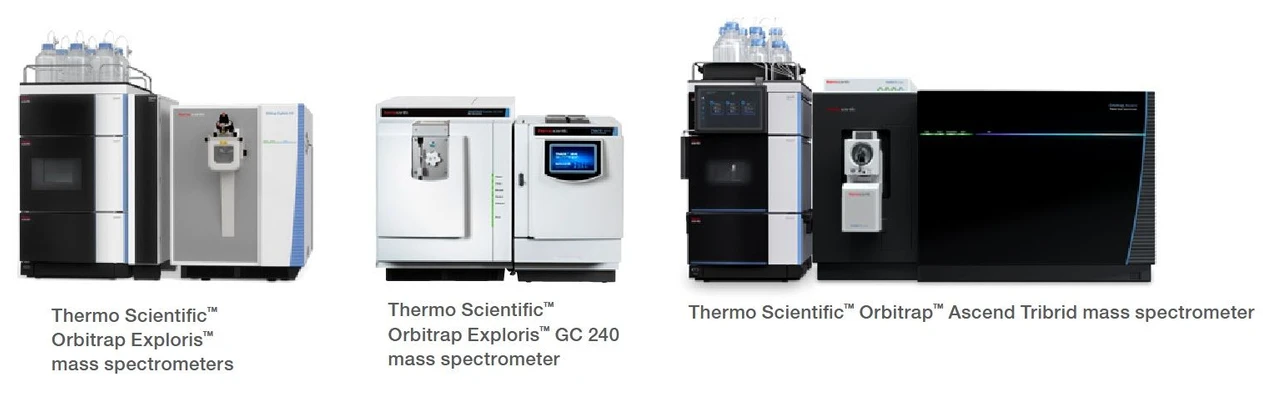
Thermo Scientific™ Orbitrap™ mass spectrometers produce information-rich data. The challenge for small-molecule analysis is to efficiently extract meaningful information from this overwhelming data, without the need for an expert user.
Thermo Scientific™ Compound Discoverer™ software solves this challenge. With a comprehensive, integrated set of libraries, databases, statistical analysis, and visualization tools linked in customizable workflows, the software streamlines unknown identification, determination of real differences between samples, and elucidation of the biological pathways involved in the processed studies.
Thermo Scientific Compound Discoverer software: Reveal the highest confidence data using Compound Discoverer software on LCMS and GCMS data.
Sample to structure-pathways to insight
Know more unknowns
Increase certainty using multi-factorial Peak Quality scoring to reveal, identify, and quantify with confidence
Determine elemental composition using the isotopic fine structure of full scan HRAM data
Separate co-eluting components by auto-deconvolution in GC workflows and identify components with dedicated high resolution GCMS libraries
Gain confidence in ID with automated MS n tree search against Thermo Scientific™ mzCloud™ library
Go from spectra to structure
Automatically search spectral libraries with integrated identity and similarity search modes to identify compounds
Annotate spectra with predicted fragmentation, automatically
Query chemical databases for putative candidates and rank these candidates according to spectral properties to accelerate compound identification process
Find real differences
Perform differential statistical analysis using univariate paired and non-paired t-tests, ANOVA, multiple-hypotheses testing adjusted p value, fold-change
Mine your data deeper with multivariate statistical analysis of HCA, PCA, PLS-DA, and plots
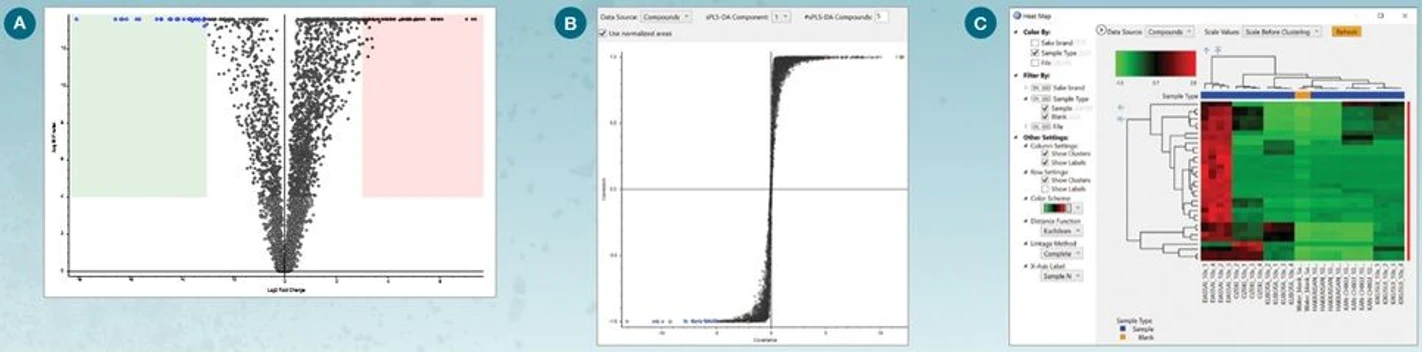
Visualize statistical results using volcano plots, box-and-whisker plots, heatmaps, user-defined 2D- and 3D- plots, and more
View trend charts to visualize peak areas, average peak area per group, or fractional label incorporation over time
Understand biological pathways
Map detected compounds, statistical data and fractional label incorporation to pathways
View pathways using Metabolika and BioCyc databases
Analyze stable-isotope labelling data in an untargeted, hypothesis-free process and gain unlimited insights about biological changes
Supports a breadth of applications
Impurities and degradants
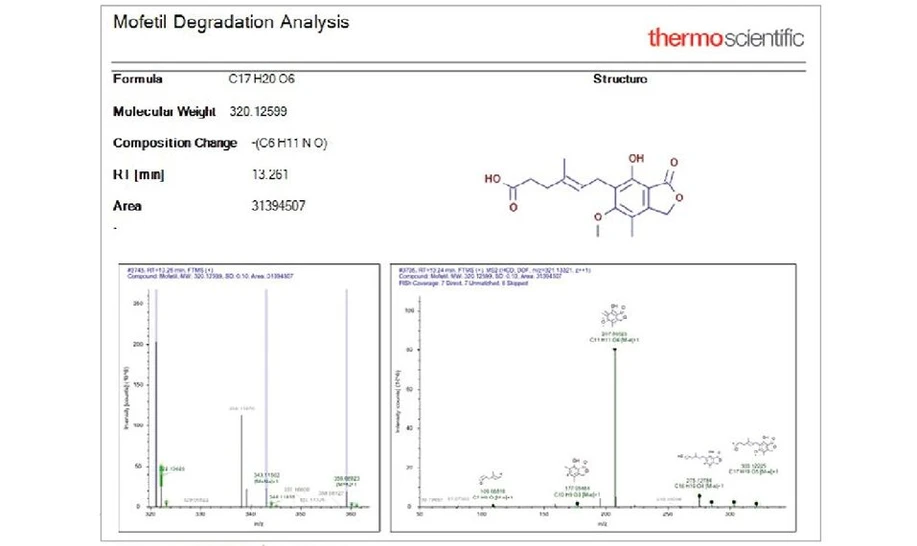
Identification of impurities and degradation products in drugs and foods is a critical aspect of product safety testing. Compound Discoverer software tools and customizable approaches enable confident detection of related components in complex samples.
Environmental and food safety
Food and environmental fate studies, and the analysis of contaminants in soil and water, often require identification of unknown compounds. Compound Discoverer software is ideally applicable to the analysis of metabolic fate and unknown compound identification of food and environmental degradants and contaminants.
Metabolite identification
The detection of related components in biological samples and the subsequent determination of their structures are key aspects of drug discovery research. Compound Discoverer software allows you to find, identify and flexibly report metabolites of interest.
Forensic toxicology
Targeted screening applications only find what is targeted. Compound Discoverer software enables forensic toxicologists to find unknown metabolites of drugs of abuse and structurally related designer drugs. This information can then be transferred back to screening methods to help you.
Metabolomics
By integrating the tools necessary to determine components of interest in small and large-scale, complex metabolomics datasets, Compound Discoverer software offers an ideal solution for processing large-scale studies, correcting signal drift, and quickly finding and identifying compounds of univariate and multivariate statistical significance between sample groups. Compound Discoverer software also provides a unique approach to Stable-Isotope Labelling (SIL) studies, with a completely untargeted, hypothesis-free analysis to maximize potential for discovery. The visualization of fractional label incorporation over times or sample groups, along with overlaying results with metabolic pathways, eliminate the tedious manual steps used to examine production and consumption of metabolites, paving the way for subsequent qualitative flux analyses.
Extractables and Leachables
Extractables and leachables (E&L) analysis is crucial in the development of pharmaceuticals, food packages, and medical devices to ensure product safety and quality. The complexity of this analysis mandates extensive investigations for known and unknown and the use of multiple analytical techniques for volatile & semi-volatile (GCMS) and non-volatile (LCMS). Compound Discoverer software is positioned to match the required needs with its powerful unknown analysis tools in both GCMS and LCMS data files, and its integrated search of mzCloud library which contains over 500 E&L compounds with >40,000 spectra.
Speed, simplicity, and flexibility match your requirements
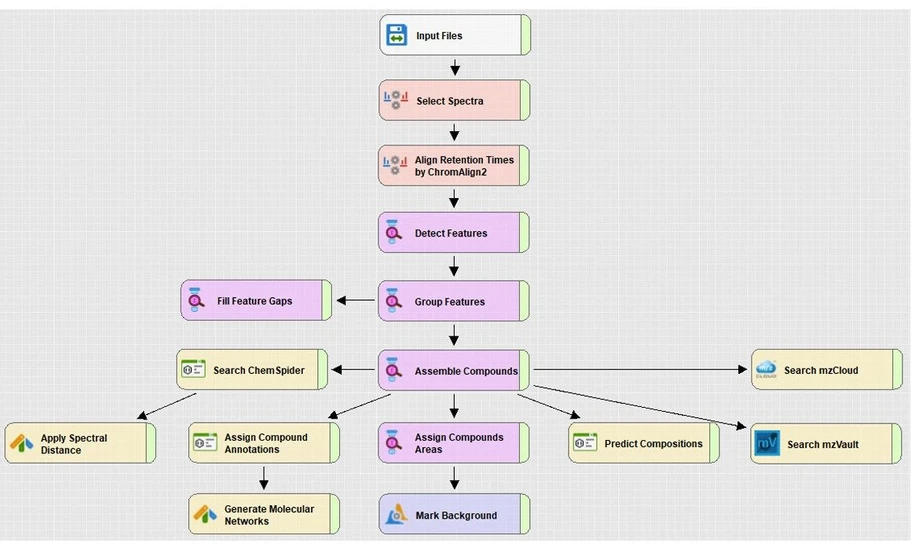
Easily customizable workflows
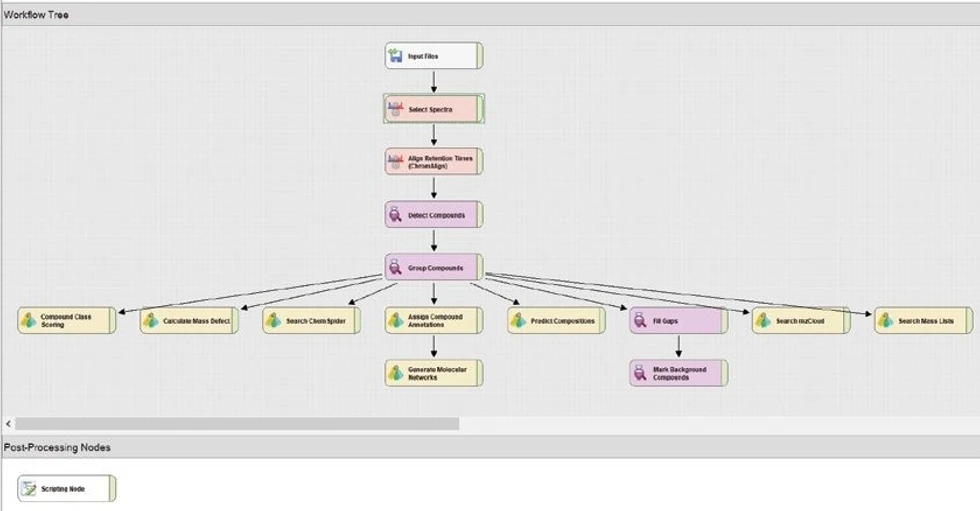
Compound Discoverer software empowers data processing with its customizable workflows. Drag and drop workflow nodes, from an extensive list of processing tools, into workflow trees that specify your desired data flows. Save your workflow as a template or pick from many pre-made templates to simplify setup. Get up and running quickly with the Study and Analysis Wizard. Add your data, define your study and sample groups, pick a workflow template and start processing. You can also save time by partially re-running a workflow if needed.
Interactively linked results
Compound Discoverer software makes it easy to visualize results in a meaningful way. Customizable data visualization allows you to review only the data you choose. Configurable layouts let you quickly change between views. Multiple monitor support ensures that you can view more data at once. Expand your processing horizon with the scripting node which allows the integration of your code, made in R or Python™, to process results and add functionalities to Compound Discoverer software.
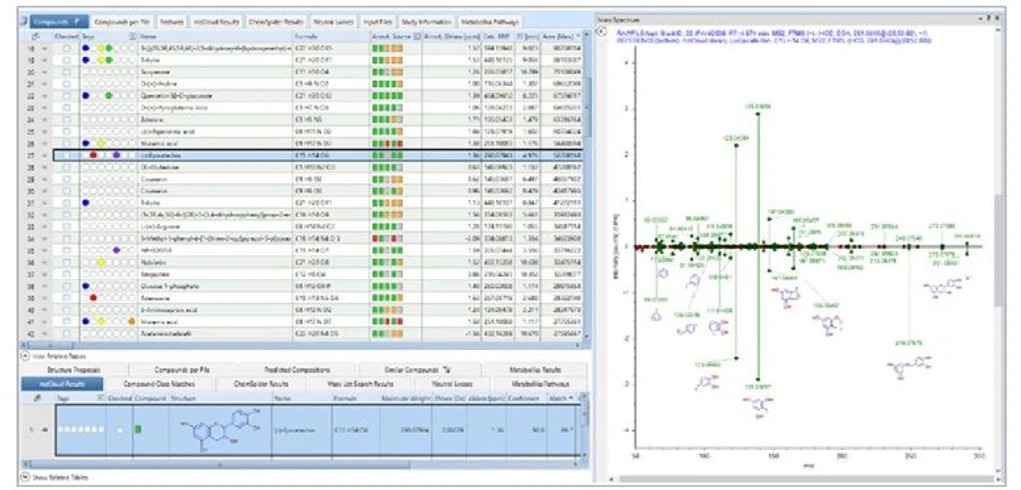
Thermo Scientific Compound Discoverer software: Compound Discoverer workflows reduce the processing clicks needed to transform mass spectral data into results.
Share results with customizable reporting
Powerful data-processing tools quickly create valuable results, but these results and supporting information must also be shared. Compound Discoverer software provides customizable reporting so results can be easily transferred to others that need them. Multiple output formats also allow you to transfer data to informatics software.
Thermo Scientific Compound Discoverer software: Customized reporting helps you make real use of results.
Reveal higher quality chromatographic peaks
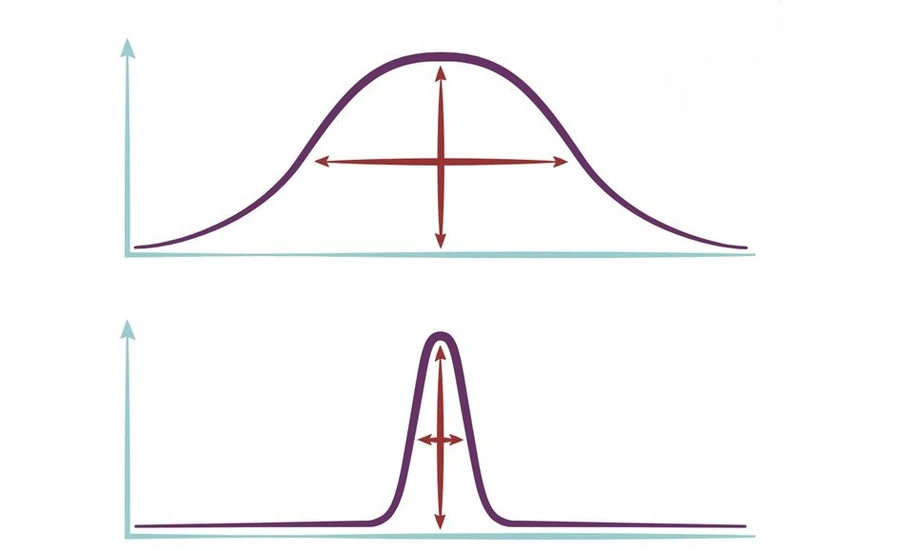
Peak Quality Factors provide a dedicated scoring mechanism to identify high-quality chromatographic peaks, by measuring certain properties such as jaggedness or symmetry, which describe the overall peak quality. The aggregated Peak Quality Factor score can then be used to filter out low-quality peaks, resulting in higher quality data.
Unknown identification is one of the toughest challenges in many small-molecule analyses. It requires both comprehensive high-quality spectral acquisition, such as those achieved when using Thermo Scientific™ AcquireX™ software workflow, as well as a collection of matching algorithms. By seamlessly integrating multiple tools for gathering identification information, Compound Discoverer software provides a faster route towards solving this challenge and enables you to identify more of your unknowns.
Automatically identify components
Identify more unknowns automatically and faster - with onlinemzCloud spectral libraries or local Thermo Scientific™ mzVault™ spectral libraries:
Search mzCloud libraries, in exact or similarity modes, to gain even more information to use for unknown identification
Effortlessly export spectra and compounds with spectra to mzVault librariesdirectly from Compound Discoverer software to expand your scope of identified compounds
Determine elemental composition - including fine isotopes, using HRAM MS, MS/MS, and MSn data
Access further annotations - use compound information to search online user-defined or local user-made multiple chemical databases for annotation
Thermo Scientific Compound Discoverer software: Automatically identify unknown compounds using the mzCloud spectral library, within the environment of Compound Discoverer software.
Elucidate structures
Compound Discoverer software simplifies determination of compound structure by predicting and displaying fragments onto spectra using the built in HighChem Fragmentation Library of reference fragmentation mechanisms.
This feature allows annotation of either expected compounds such metabolites, impurities, or breakdown products, and of putative structures supplied by chemical databases or the user.
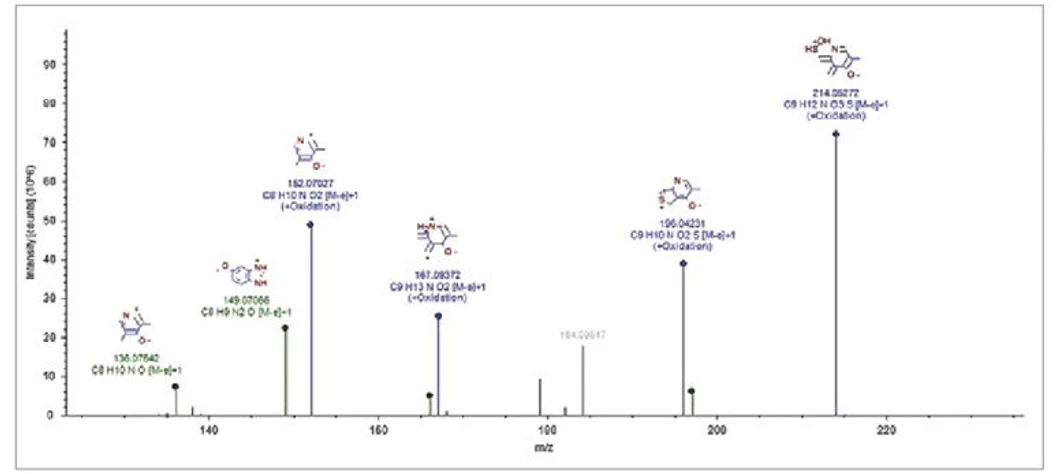
Thermo Scientific Compound Discoverer software: Structurally annotated peaks provide more certainty in results and allow visualization of modified portions of expected compounds.
Rank order putative results
Database searches alone only produce putative candidates for identification. With Thermo Scientific™ mzLogic™ algorithm, you can use the extensive fragmentation spectral information in mzCloud library to rank order putative database results.
mzCloud library, a multi-dimensional comprehensive mass spectral library
mzCloud library is the world’s most extensively curated mass spectral fragmentation library, with over 8 million spectra in the repository. Beyond generating matches for identification, integrated batch searching of mzCloud library can also produce similarity matches. Searching makes use of stepped collision energy scans to automatically model results using the library’s multiple energy levels of reference fragmentation data.
mzCloud library
Extensively-curated online library with highest quality data
Includes small molecule compounds relevant to all applications
Highly-curated, highest-quality data
Multiple energy levels, multiple activation types, and MS n spectral trees
Supports both research and targeted screening workflows
Know more with molecular networks
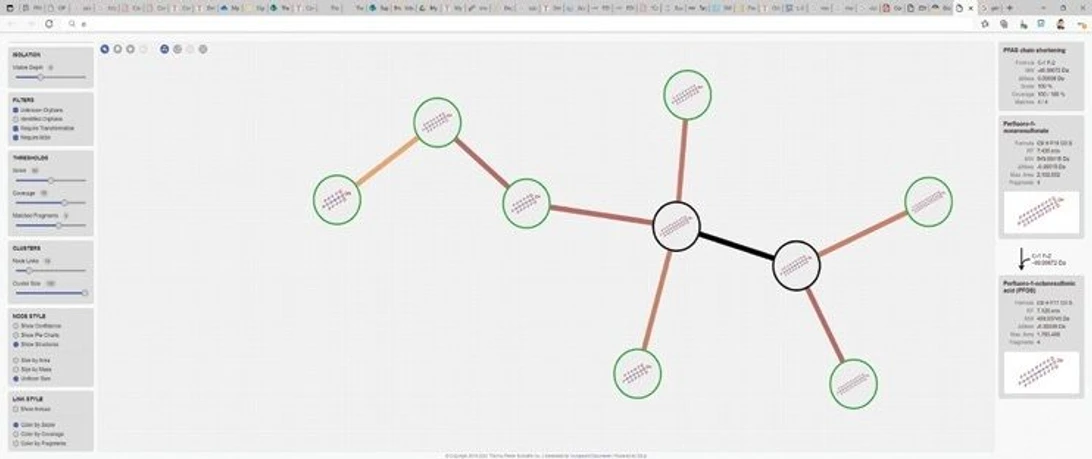
While the journey to discovery often focuses on connections between samples, the intrinsic relationship between compounds within a study offers a great added value. Compound Discoverer software enables the exploration of such links through molecular networks, where you can interactively explore relationships between compounds in your analysis based on transformations and spectral similarity. These interactive networks can reveal insights, for example, in Phase I and Phase II transformations, in emerging contaminants, and even in unknown identification via the transitive relation of an identified linked compound or via homologous series/clusters.
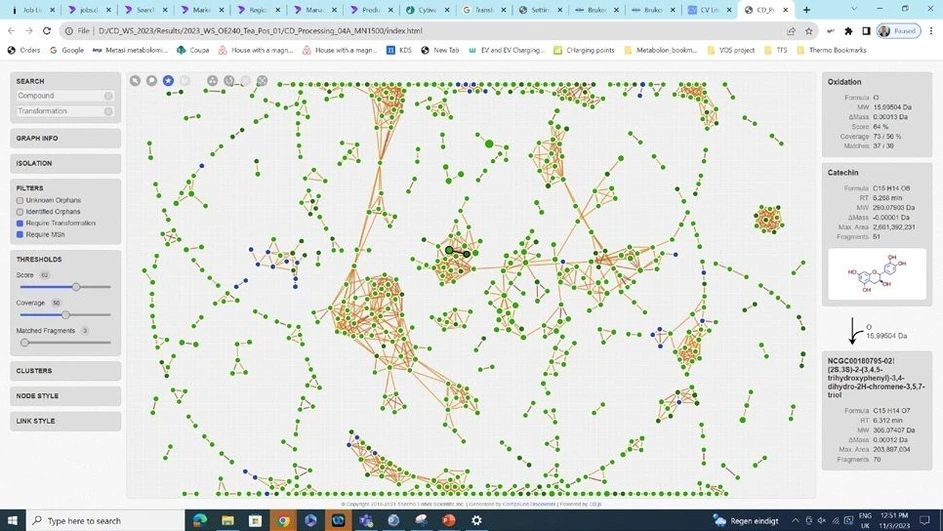
Thermo Scientific Compound Discoverer software: Compound Discoverer software builds intrinsic compound-based molecular networks. The networks are interactive with dynamic data visualization through node and edges coloring and annotation in the associated panes. Parameters are adjustable from within the network page and important findings can be tagged back in Compounds table.
Identify drug metabolites more confidently
Metabolite identification is a critical part of drug discovery research. Scientists in this field are often challenged to characterize the metabolic fate and rate of the parent molecule once it is introduced into the subject’s biological system. Compound Discoverer software provides the tools to predict metabolic transformations in a combinatorial system, query these predictions in the study samples, and help elucidate the structure of the found metabolites utilizing matching to mzCloud and mzVault spectral libraries and the advanced spectral annotation algorithms powered by Thermo Scientific™ Mass Frontier™ spectral interpretation software.
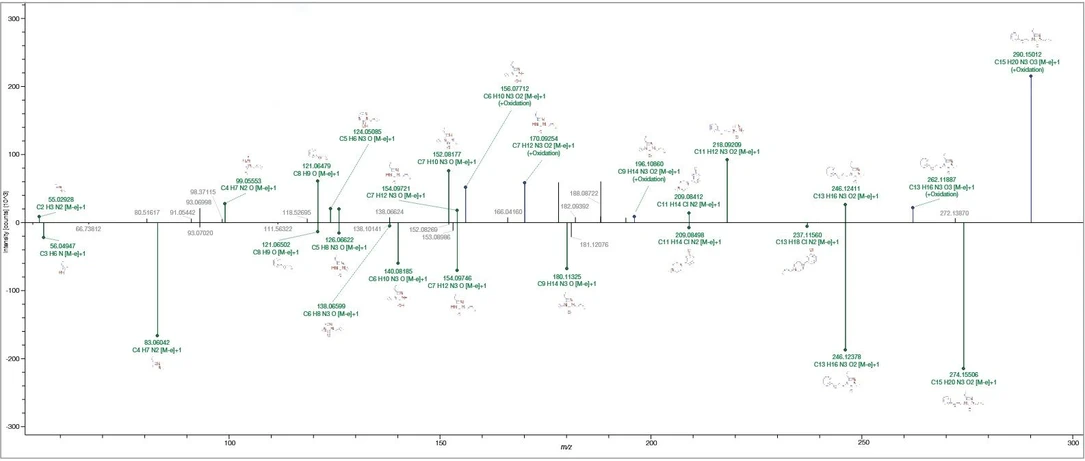
Thermo Scientific Compound Discoverer software: Compound Discoverer software helps in impurity profiling and metabolite identification by comparing the suspect MS n spectra (up) to those of the parents (down), using FiSH scoring and fragment annotation, and taking into consideration preserved fragments (green sticks) and transformation-associated modified fragments (blue sticks).
Untargeted per- and polyfluoroalkyl substances (PFAS) analysis workflow
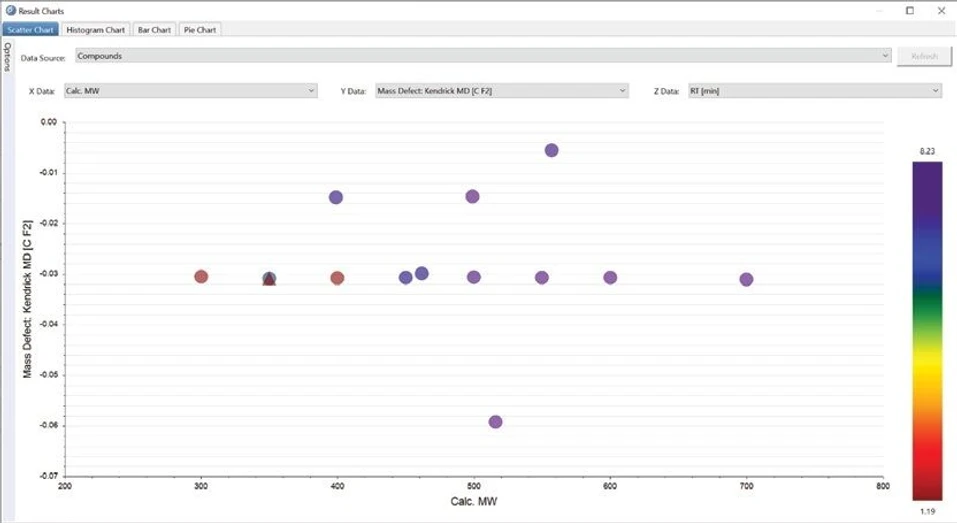
PFAS, an expansive class of enduring toxic chemicals surpassing 15,000 members, is globally monitored by regulatory agencies. In addition, thousands of potential transformation products are actively being discovered in the environment. Regulatory methods typically use conventional quantitative analysis based on available reference standards. However, this approach fails to see the whole picture, as non-targeted workflows are critical to help define the true extent of PFAS contamination. Untargeted analysis utilizes tools which deploy PFAS’ intrinsic properties such as negative mass defect (MD), homologous series formation, and progressive retention times tied to chain length. These tools are vital to ensure the consideration of all PFAS in evaluating health and environmenta l outcomes.
Thermo Scientific Compound Discoverer software: Compound Discoverer workflows reduce the processing clicks needed to transform mass spectral data into results.
Compound Discoverer software unifies and extends these tools in a pre-defined turnkey workflow by adding spectral library matching against mzCloud library, in-silico compound databases containing over 48,000 structures, screening for over 700 PFAS signature fragments via the integrated Fluoromatch suite database, and molecular networking using a CF2 transformation to connect homologous series. Additionally, suspect compounds can be ranked bymzLogic algorithm, through their spectral similarity to known compounds, adding a layer of confidence in PFAS subclass assignment.
Thermo Scientific Compound Discoverer software: Molecular network cluster of PFAS related compounds.Thermo Scientific Compound Discoverer software: Mass Defect plot, showing a PFAS related homologous series of compounds.
Turn data into knowledge
Compound Discoverer software supports your study with a suite of tools that turn raw data into knowledge. This powerful software has the ability to reduce data complexity, provide flexible data visualization, advanced statisics, including multiple-hypothesis testing corrections, and biological pathway mapping through BioCyc and Metabolikia databases. These tools build on the certainty provided by Compound Discoverer’s unique identification and structural elucidation capabilities because confidence in pathway analysis is dependent on the confidence in underlying identifications.
Find and visualize real differences
Whether you are performing metabolomics research or looking for emerging environmental contaminants, the powerful Compound Discoverer software toolset enables you to quickly find real statistical differences—the differences that matter-between sample groups. Quickly view trends in components across a study or identify the key components of interest between multiple sample groups using interactively linked displays. Move quickly from high-level PCA visualizations to individual components with one click.
Capabilities
Differential statistical analysis: univariate (t-test, ANOVA, fold-change) with multiple-hypothesis testing correction, and multivariate (PCA, HCA, and PLS-DA)
Visualization of fractional label incorporation for multiple samples (isotopologue plot) and for trends over time (trendline chart)
Monitoring of study performance at compound level with area, CV%, and median values at sample group and quality control levels
Pathway mapping and visualization using Metabolika and BioCyc databases Interactive heatmaps with hierarchical clustering analysis
Automatic background removal with powerful and flexible filtering, single compound, or multiple compound selection, and assigning compounds into customized tagged groups
Thermo Scientific Compound Discoverer software: (A) 33 compounds were selected (blue) in the volcano plot based on p-value (ANOVA, Tukey test) and fold change. (B) The same set of compounds is automatically highlighted in the S-plot of (C) the PLS-DA and the heat map. When clicking on a point in a plot, Compound Discoverer software will navigate to the corresponding compound in the table and display XIC and spectrum.
Streamline stable isotope labeling analysis
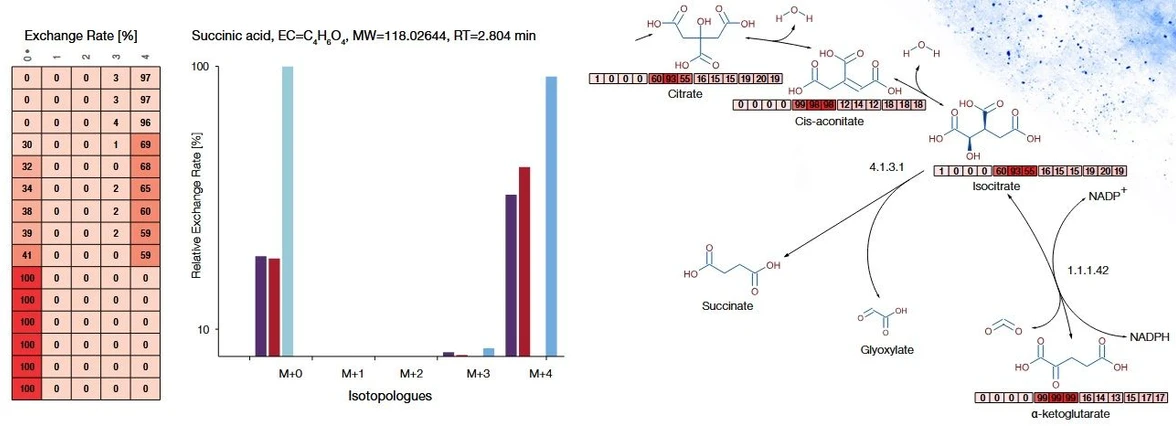
Stable isotope labeling experiments are fundamental to understanding metabolic pathways and providing mechanistic insights into biological processes. Compound Discoverer software makes full use of High-Resolution Orbitrap mass spectrometer data to offer advanced, streamlined untargeted workflows for stable isotope labeling. Using an unlabeled reference sample, Compound Discoverer software automatically detects all compounds, determines their elemental composition, and identifies their labeled counterparts in labeled samples. Any isotopically labeled element can be used for automatic isotopologues detection. Compound Discoverer software reports the fractional label incorporation (exchange rate) after natural abundance correction for each compound. The exchange rate and other statistical data can be overlaid onto pathways using Metabolika, which is integrated with Compound Discoverer software.
Thermo Scientific Compound Discoverer software: Compound Discover software supports untargeted stable isotope labeling workflows with visualizations of fractional label incorporation. Left-to-right: Details for fractional label incorporation (exchange rate) for isotopologues of succinic acid (C4H6O4) across 15 samples; isotopologue plot showing exchange rates for isotopologues of succinic acid measured for 4 samples; Metabolika pathways showing a detail of the TCA cycle with data overlay of the overall exchange rates measured across 4 sample groups with multiple replicates.
Manufacturer
Thermo Fisher Scientific
A unique company dedicated to serving science helping our customers drive productivity and accelerate results. Through our premier brands – Thermo Scientific, Applied Biosystems, Invitrogen, Fisher Scientific and Unity Lab Services.
Distributor
Thermo Fisher Scientific (EMEA)
Thermo Fisher Scientific Inc. is the world leader in serving science, with annual revenue of approximately $40 billion. Our Mission is to enable our customers to make the world healthier, cleaner and safer.
From the Road to the Field: Decoding Chemical Transformation in Aging Tire and Artificial Turf Crumb Rubber
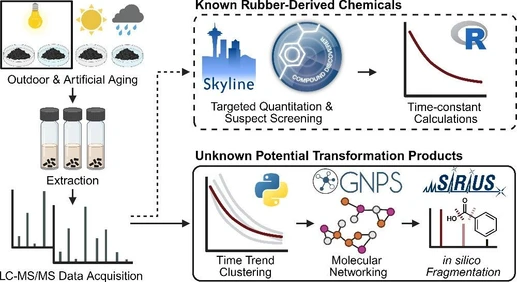
This study investigates chemical aging of tire and turf crumb rubber, identifying hundreds of transformation products and potential aging markers.
LabRulez
Article | Product
Connecting Discovery and Compliance: Compound Discoverer Software Meets Chromeleon CDS
Bridge discovery and compliance with Chromeleon 7.4 and Compound Discoverer 3.5. Seamlessly transfer MS data, streamline workflows, and generate compliant reports without manual steps.